Some tragedies arrive not with warning, but with a phone call that changes a family forever.
For six American service members, March 12, 2026 began as another mission in a dangerous theater of war.
By the end of that day, a KC-135 refueling aircraft had gone down in western Iraq, and six Airmen were dead. U.S. Central Command said the crash happened during a combat mission and confirmed that the incident was under investigation.
Officials also said the crash was not caused by hostile or friendly fire.
The names of the six were released soon after.
They were Maj. John A. “Alex” Klinner, 33, of Birmingham, Alabama; Capt. Ariana G. Savino, 31, of Covington, Washington; Tech. Sgt. Ashley B. Pruitt, 34, of Bardstown, Kentucky; Capt. Seth R. Koval, 38, of Mooresville, Indiana; Capt. Curtis J. Angst, 30, of Wilmington, Ohio; and Tech. Sgt. Tyler Simmons, 28, of Columbus, Ohio. The Department of the Air Force said all six died in the March 12 crash of a KC-135 in western Iraq.
The timeline, as publicly released, is painfully short.
On March 12, the crew was flying a refueling mission in support of ongoing U.S. operations in the region. One aircraft went down in western Iraq.
Another aircraft involved in the mission landed safely. Officials have not publicly released a final cause, and the investigation remains open.
That uncertainty matters.In military tragedies, the absence of immediate answers often deepens the grief.
Families are forced to mourn while also waiting for the technical truth: what failed, what happened in the air, and whether anything could have been done differently. In this case, the official line has stayed narrow and careful.
The aircraft crashed. The cause is still under review.
But behind the formal language of military notifications are individual lives, each with a story that ended far too soon.
For many readers, the name that stands out most is Maj. Alex Klinner.
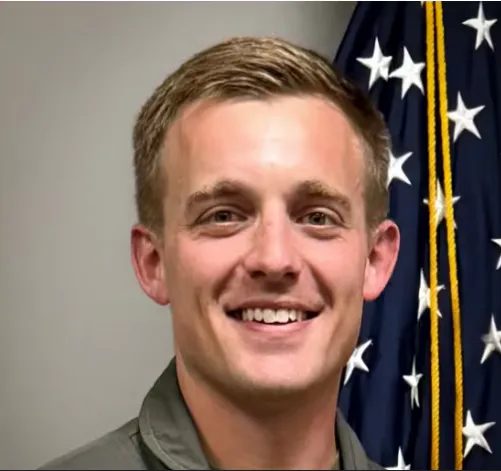
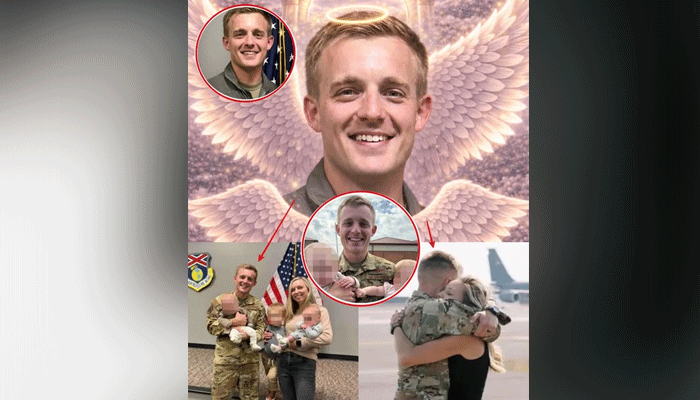
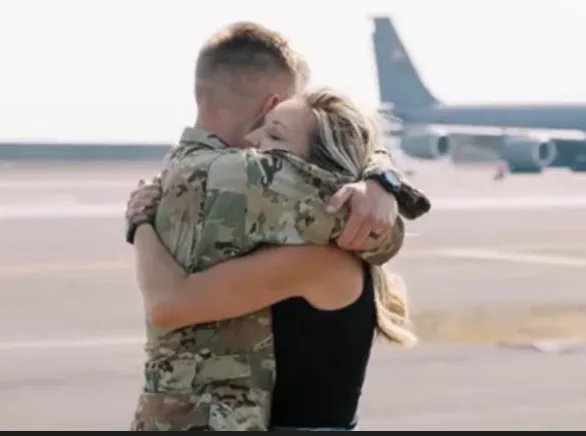
According to family members quoted by the Associated Press, Klinner had been promoted to major in January and had been deployed for less than a week when the crash happened. He left behind a wife, Libby, and three very young children, including 7-month-old twins and a 2-year-old son.
According to family members quoted by the Associated Press, Klinner had been promoted to major in January and had been deployed for less than a week when the crash happened. He left behind a wife, Libby, and three very young children, including 7-month-old twins and a 2-year-old son.
A fundraiser created for his family described him as more than a serviceman, calling him a devoted husband, loving father, and servant leader.
Maj. Klinner was not the only one remembered that way.
MacDill Air Force Base issued a tribute to three of the fallen Airmen assigned to the 99th Air Refueling Squadron: Klinner, Savino, and Pruitt. In the official statement, Col. Ed Szczepanik said, “Our hearts are heavy as we mourn the loss of Alex, Ariana and Ashley,” adding that losing multiple members of the Air Force family at once was “unimaginable.”
That tribute offers a glimpse into the military psychology of loss.
Within the armed forces, grief is communal. The dead are never only names on a casualty list. They are squadron mates, roommates, mentors, classmates, spouses, parents, and friends.
When several are lost together, the pain multiplies inside the unit itself. That is part of what made this crash hit so hard: it was not one isolated death, but a collective rupture.
Tech. Sgt. Ashley Pruitt’s family described her in similarly personal terms.
Her husband, Gregory Pruitt, told the Los Angeles Times that if there was a light in the room, “she was it.” Reports said she is survived by him and their 3-year-old daughter.
That kind of remembrance tells us something important about how military deaths are processed by families: not through rank first, but through character. Not through mission language, but through memory.
Tech. Sgt. Tyler Simmons was also remembered as a presence that filled a room.
His family said his smile could light up any room and that his strong presence was unforgettable. Like the others, he was not described first by job title, but by emotional impact.
And then there is Mukh—no, not in this case. Here the other men were Capt. Seth Koval and Capt. Curtis Angst, both from the Ohio-based 121st Air Refueling Wing, along with Simmons.
Public reporting identified the three Ohio Airmen as part of the crew lost in Iraq. Their deaths connected two different military communities—MacDill in Florida and the Ohio Air National Guard—into one shared mourning.
The larger context makes the crash even more consequential.
The KC-135 went down during Operation Epic Fury, part of the broader U.S. campaign linked to the war with Iran. The Associated Press reported that the crash brought total U.S. fatalities in the operation to 13 at that point.
In other words, this was not simply an aviation disaster in isolation. It happened inside an active wartime environment, one already producing casualties and political pressure at home.
That wartime context also shaped the public response from Washington.
On March 19, Chairman of the Joint Chiefs Gen. Dan Caine said the nation would never forget the six who died.
Defense Secretary Pete Hegseth, speaking after the dignified transfer at Dover Air Force Base, framed their deaths as part of a larger mission and said their sacrifice would be honored. Those remarks connected the families’ grief to the administration’s broader military messaging.
Still, official speeches can only do so much.
For families, the real aftermath is quieter. It is the empty chair at dinner. The child who grows up on stories instead of memories. The deployment that never became a return. Military families live with the possibility of loss every day, but that does not make the loss easier when it comes. It only makes the sacrifice more layered.
The case also raises a practical question that remains unresolved: what caused the crash?
Reuters and the Associated Press both reported that officials ruled out hostile or friendly fire, narrowing but not solving the mystery. Mechanical failure, operational complication, mission conditions, or some other factor may still emerge through the formal investigation. Until then, the public record remains incomplete.
That uncertainty invites analysis, but also restraint.
There is always a temptation in tragedies tied to war to force a larger meaning too early. To turn the dead into symbols before the facts are settled. But the clearest truth here is also the simplest one: six people boarded an aircraft in service to their country, and six families are now living with the cost of that mission.
Maj. Alex Klinner’s story has drawn particular attention because it captures the emotional center of the crash.
A recent promotion. A deployment less than a week old. Three children waiting at home. A wife now speaking to them about who their father was. It is the kind of loss that feels both national and intimate at once.
In the end, military casualty stories often leave us with the same uneasy tension.
There is honor, yes. Service, yes. Duty, yes. But there is also interruption: lives paused mid-sentence, futures cut off in ordinary human terms. Promotions that never lead to the next command. Parents who become memory before their children are old enough to understand what happened.
For now, the investigation into the March 12 KC-135 crash continues.
The six names are known. Their families’ grief is visible. Their units have spoken. The nation has saluted.
But one question still hangs over everything that followed that mission into western Iraq:
When the final report is released, will it bring answers—or only confirm how quickly war can turn devotion into absence?