The 2,800-year-old epic, now adapted for the big screen, is far more than a simple tale of heroism. Although its central character, Odysseus, is a male hero, his journey is shaped by the intelligence, schemes, allure, and influence of the women, nymphs, sorceresses, goddesses, and mysterious figures he encounters along the way. These elements make the story remarkably human and enduringly relevant.
Homer’s The Odyssey tells the story of the legendary Greek warrior Odysseus as he struggles to return to his kingdom of Ithaca after spending years fighting in the Trojan War.
His perilous homecoming lasts an entire decade, during which he faces countless trials, dangers, and adventures. Acclaimed filmmaker Christopher Nolan has now adapted the epic for the big screen, with Matt Damon leading an all-star cast.
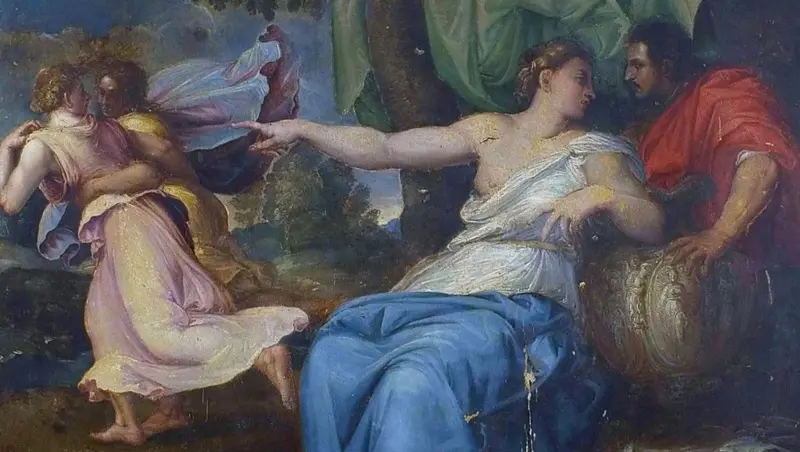
Although the protagonist is a man, The Odyssey is fundamentally a story in which women play dominant roles. At every turn, Odysseus’s quest to return home and reclaim his kingdom is influenced by the wit, manipulation, wisdom, and irresistible charm of the women, nymphs, and goddesses he encounters.
Rather than being merely a straightforward tale of bravery and adventure, The Odyssey is a complex exploration of sex, strategy, and power—a story whose themes remain strikingly relevant today.
The poem famously begins in medias res—in the middle of the action. Odysseus is found weeping on the shores of Ogygia, where he has spent the previous seven years living with the nymph Calypso.
Though Odysseus had earned everlasting glory during the Trojan War, he now appears utterly powerless. This impression is reinforced by the fact that it takes a council of the gods to intervene and secure his release from the island.
Yet Odysseus is, in many ways, as much a prisoner of himself as he is of Calypso. Modern readers may interpret his inability to move forward or return home as a metaphor for the lingering trauma of war.
That interpretation does not diminish Calypso’s hold over him. Odysseus openly admits to her that, in terms of beauty, his wife Penelope cannot compete, for Penelope is only mortal.
Penelope’s Intelligence
While her husband is away, Penelope is anything but passive.
For years she cleverly resists the advances of 108 suitors who wish to marry her, seize Ithaca’s throne, and establish themselves as its new king.
Her famous strategy—pretending to weave a burial shroud for her father-in-law Laertes during the day, only to secretly unravel it each night—stands as one of the epic’s most memorable acts of intelligence. The deception allows her to delay the suitors and buy precious time.
In many respects, Penelope becomes a “moving target” whose success or failure directly determines whether Odysseus will be able to reclaim his kingdom upon his return.
Athena: The Goddess Behind the Hero
It is also significant that Odysseus’s greatest divine supporter is a woman.
Athena, the goddess of wisdom and strategic warfare, aided him during the Trojan War and later becomes the driving force behind his return home.
When Odysseus eventually reaches the land of the Phaeacians, exhausted and vulnerable, Athena carefully orchestrates his rescue. She conceals his weakness, enhances his appearance, and transforms him into a figure of striking dignity and attractiveness—almost godlike—making him worthy of the Phaeacians’ famed hospitality.
Thanks to Athena’s guidance, Odysseus wins the trust of these master seafarers, who shelter him, shower him with gifts, and arrange his safe voyage back to Ithaca.
Interestingly, Athena frequently appears before Odysseus and his son Telemachus disguised as a man—taking forms such as Mentes, an allied king, or a male Phaeacian messenger.
Athena understands that although visible political authority belongs to men, the true course of events is often shaped by women through intelligence, subtle influence, and carefully planned strategies.
Dangerous Women in Disguise
After reaching the Phaeacians, Odysseus recounts the adventures that brought him there—from the Lotus-Eaters to the Cyclops. Yet among all his tales, the women he encounters are often the most mysterious and unsettling because their outward appearances rarely reveal the dangers they conceal.
Many of the female figures in his journey appear gentle, beautiful, or harmless, yet possess extraordinary power capable of shaping his destiny.
The Sirens
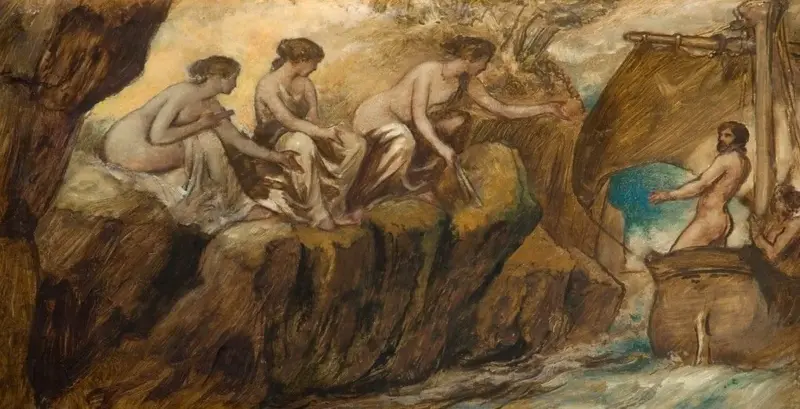
Odysseus openly admits that he longed to hear the song of the Sirens, who lived on a remote rocky island in the western sea.
Later Greek art often portrayed them as bird-women or mermaids, but in The Odyssey, Odysseus emphasizes not their appearance but their irresistibly sweet voices, which lured sailors to their deaths.
Before the Sirens stretched a meadow littered with the bones of countless men who had stopped to listen.
Determined to experience their song without perishing, Odysseus ordered his crew to bind him tightly to the ship’s mast so he could not throw himself into the sea.
Their voices were as beautiful as they were deadly.
Circe
Another captivating yet dangerous figure is Circe.
At first glance, she appears harmless, but like the Sirens, she hides extraordinary magical powers beneath her enchanting exterior. Homer portrays her as a powerful sorceress possessing herbs and potions capable of transforming Odysseus’s companions into pigs.
Yet, like many strange beings encountered during his journey, Circe is not merely an obstacle.
Although she becomes Odysseus’s lover, she also enables him to descend into the Underworld, where he consults the prophet Tiresias.
Tiresias provides the crucial guidance Odysseus needs to complete his journey back to Ithaca.
Balance Between Attraction and Control
The recurring message throughout The Odyssey is that these alluring women and supernatural beings cannot simply be ignored.
To succeed, Odysseus must acknowledge and engage with their influence—but never surrender completely to it.
Again and again, the characters he encounters test his determination, self-control, and moderation—qualities that the ancient Greeks regarded as among the highest virtues.
Readers who suspect that Odysseus exaggerates or even invents many of his adventures to impress the Phaeacians and persuade them to carry him home may find an even deeper symbolic meaning in these stories.
Perhaps Odysseus is not battling literal monsters at all, but confronting his own fears, weaknesses, and psychological struggles.
Many of these inner dangers appear harmless at first glance, yet prove far more destructive than they seem.
A Hero Unlike Any Other
The fluid nature of Odysseus’s storytelling—its grandeur, imagination, ambiguity, and constant challenge to the boundaries between truth and fiction—is one of the epic’s greatest strengths.
As translator Emily Wilson observes, Odysseus is “a complicated man.”
He is elusive because he is a master of deception and adaptability. He changes his stories as easily as he changes his identity, adjusting both to suit the moment.
It is this ability to move between reality and myth, truth and deception, courage and vulnerability that distinguishes him from traditional heroes and makes him one of literature’s most enduringly human characters.
Intelligent, imaginative, and deeply flawed, Odysseus ultimately emerges as the most human hero of the ancient Greek world. His susceptibility to beauty, temptation, and the wonders of places like Phaeacia is both his greatest strength and his greatest weakness.
That is precisely why his story continues to resonate today, speaking to readers across centuries with undiminished power.
About the author: Daisy Dunn is an award-winning classicist and author. Her books include The Missing Thread and The Ladybird Expert Book on Homer.