
A Father’s Grief, a Deputy’s Death, and Two Families Shattered in Ohio 🔫💔
One day after police shot and killed his 18-year-old son, an Ohio father was accused of carrying out an act that would leave another family devastated. What began as grief over one death quickly became a second tragedy, pulling two families, law enforcement, and an entire community into a heartbreaking chain of events. At the center of it all was Rodney Hinton Jr., a 38-year-old father now facing an aggravated murder charge.
The case began with the death of his son, Ryan Hinton. According to authorities, Ryan was shot and killed by police during an investigation connected to a stolen vehicle. Officials said the 18-year-old allegedly pointed a gun toward officers before he was shot.
A firearm was reportedly recovered at the scene. However, authorities also said there was no indication that Ryan fired the weapon. For his family, that detail only deepened the questions, pain, and shock surrounding the final moments of his life.
In the hours after Ryan’s death, his father was reportedly shown video footage of the shooting. According to attorneys representing the Hinton family, Rodney Hinton Jr. viewed the footage only hours before the deadly incident involving the sheriff’s deputy. What he saw, his attorneys suggested, left him emotionally devastated.
For any parent, watching the final moments of a child’s life would be unimaginable. For Rodney Hinton Jr., that pain was allegedly followed by an action prosecutors now say was intentional and planned. Less than a day after Ryan was killed, a sheriff’s deputy would also lose his life.
The deputy was working near the area where the University of Cincinnati graduation ceremonies were taking place. He was reportedly directing traffic when he was struck by a vehicle. The crash happened around 1 p.m. on Friday, May 2, local time.
Authorities later alleged that Rodney Hinton Jr. was behind the wheel. Prosecutors accused him of deliberately accelerating his vehicle and intentionally striking the deputy. The deputy, whose name had not been publicly released in the early reporting, died as a result.
The tragedy immediately stunned the community. What had begun as a police shooting investigation had now become a fatal attack on a law enforcement officer. Cincinnati’s police chief later confirmed that there was “a connection” between the two incidents.
Still, officials said there was no sign that Rodney Hinton Jr. personally knew the deputy who was killed. That detail made the case even more painful and difficult for many people to understand. A man grieving his son was now accused of taking the life of someone who, according to authorities, had no personal connection to him.
At Rodney Hinton Jr.’s court appearance on May 3, prosecutors described the alleged act in severe terms. They said he had calculated and planned the attack. They accused him of intentionally speeding up and causing the death of an on-duty sheriff’s deputy.
The courtroom was reportedly filled with law enforcement officers. Their presence reflected the grief, anger, and solidarity felt after the death of one of their own. At the same time, outside the legal process, another family was still mourning the death of Ryan Hinton.
This case is not simply about one moment on one street. It is about two deaths in two days, each leaving behind unanswered questions and grieving loved ones. It is about the collision of grief, law enforcement, accountability, and irreversible consequences.
Ryan Hinton was only 18 years old. His life ended during an encounter with police connected to a stolen vehicle investigation. For his family, he was not just a name in a police report, but a son whose future ended suddenly.
Authorities said Ryan pointed a gun toward officers. They also said a gun was found at the scene. But the fact that he reportedly did not fire the weapon became one of the details that drew public attention.
In cases involving police shootings, families often search every available detail for answers. They ask what happened in the seconds before the trigger was pulled. They ask whether anything could have been done differently.
For Ryan’s father, seeing the video of the shooting reportedly came only hours before the second tragedy. That timing has become one of the most haunting parts of the case. According to family attorneys, Rodney had just watched the footage before the alleged vehicle attack.
The human mind can break under unbearable grief. But grief does not erase the life of another person. Prosecutors are now arguing that Rodney Hinton Jr. turned his pain into a deliberate act of violence.
The deputy who died had been performing a routine but important duty. He was helping direct traffic near a major public event. Families were gathering for graduation ceremonies, a day normally associated with pride, celebration, and new beginnings.
Instead, the area became the scene of another loss. A deputy went to work and never came home. His family, colleagues, and community were suddenly forced into mourning.
For law enforcement, the death of a deputy in the line of duty carries a particular kind of sorrow. Officers gathered in court, standing together as the legal process began. Their presence sent a message that the fallen deputy’s life and service would not be forgotten.
But for the Hinton family, the pain did not begin with the deputy’s death. It began with Ryan. Before the courtroom, before the murder charge, before the headlines, there was a father who had lost a son.
That is what makes this case so emotionally complicated. One family is mourning an 18-year-old killed by police. Another family is mourning a deputy killed while doing his job.
Two families now carry grief that cannot be undone. Two sets of loved ones are asking why. Two lives were gone within roughly twenty-four hours.
The legal case against Rodney Hinton Jr. is serious. He has been charged with aggravated murder. He is being held without bond.
Prosecutors have made clear that they believe the crash was not an accident. They described the act as intentional. They said the deputy was targeted while performing his duty.
Defense attorneys and family representatives may present a different picture as the case moves forward. They may focus on Rodney’s emotional state after viewing the footage of his son’s death. They may argue that the situation must be understood in the context of overwhelming grief.
But the legal system will have to separate emotion from accountability. A jury or judge will eventually have to weigh evidence, intent, and responsibility. The fact that Rodney was grieving will not automatically answer the question of whether the deputy’s death was planned.
Meanwhile, the police shooting of Ryan Hinton remains a separate but deeply connected part of the story. Officials said he was armed and allegedly pointed a gun at officers. His family and community may still want more answers about the exact circumstances.
Whenever a young person dies in a police shooting, the pain spreads beyond one household. It raises questions about fear, split-second decisions, police training, and the use of deadly force. Those questions often remain long after the official statements are released.
In this case, the questions were followed by another tragedy before the first grief had even settled. There was no time for anyone to process Ryan’s death before the deputy was killed. The community was forced to confront two traumatic events at once.
The story also shows how quickly grief can turn into something larger than one family’s sorrow. When loss is mixed with anger, confusion, and a demand for justice, emotions can become dangerous. One irreversible moment can create another wound that never heals.
Still, it is important to remember that every person in this case was more than a headline. Ryan Hinton was someone’s son. The deputy was someone’s loved one, coworker, and friend.
Rodney Hinton Jr. is now accused of a crime that could define the rest of his life. His alleged actions, if proven in court, ended another person’s life. His own family is now facing not only grief, but the reality of criminal prosecution.
The community is left with a painful question. How did one death lead so quickly to another? And could anything have stopped the chain of events before it reached that second fatal moment?
Some tragedies unfold over years. Others happen in minutes. This one happened across two days, but the impact will last for a lifetime.
For Ryan’s loved ones, May 2025 became the month they lost an 18-year-old. For the deputy’s family, it became the month their loved one died while serving the public. For the city, it became a reminder that grief and violence can collide in devastating ways.
Court proceedings will continue, and more details may emerge. Evidence will be examined, statements will be challenged, and the facts will be tested through the legal process. Until then, much of the case remains emotionally charged and legally unresolved.
What is already clear is that no outcome can fully repair what happened. A son is dead. A deputy is dead. A father is behind bars.
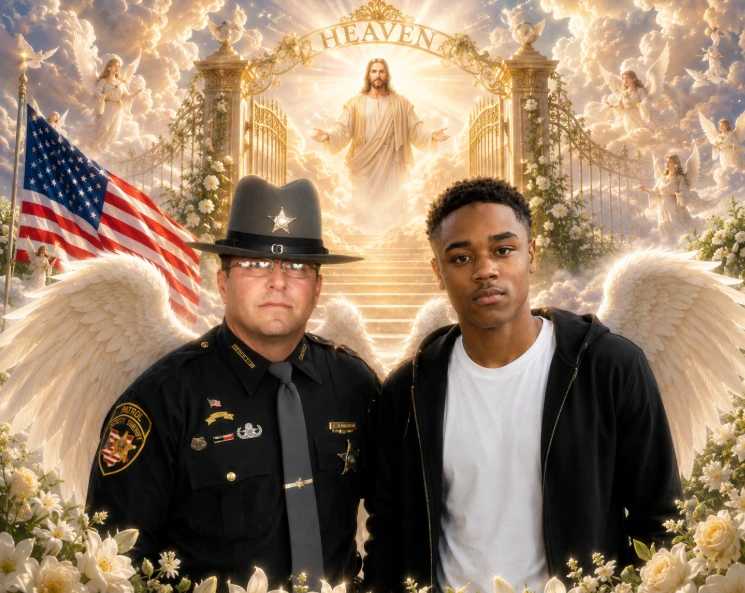
There are moments when a community looks at a tragedy and struggles to find the words. This is one of those moments. The deaths of Ryan Hinton and the sheriff’s deputy have left grief on both sides of the story.
The pain of one family does not erase the pain of another. The loss of a son does not justify the loss of a deputy. The death of a deputy does not erase the questions surrounding Ryan’s final moments.
That is why this case will continue to draw attention. It is not only a criminal case, but also a story about grief, anger, policing, and the fragile line between pain and irreversible action. It forces people to sit with uncomfortable truths.
A father watched the footage of his son’s death. Hours later, prosecutors say, he used a vehicle as a weapon. A deputy who was simply directing traffic never returned home.
Those facts are stark and heartbreaking. They leave no easy side to stand on without acknowledging the suffering of both families. They show how one tragedy can become another before anyone has time to breathe.
For the Hinton family, the death of Ryan remains the beginning of their nightmare. For the deputy’s loved ones, the alleged attack became the start of theirs. Both families now live with empty chairs, unanswered prayers, and memories that cannot be replaced.
In the days ahead, the courts will focus on evidence and law. The public will follow updates, arguments, and official findings. But behind every update are people whose lives have been permanently changed.
There will be discussions about justice. There will be debates about police actions. There will be questions about whether grief can explain, but never excuse, what happened next.
At the heart of it all is a simple and devastating truth. Two lives were lost. Two families were shattered.
What began with the police shooting of an 18-year-old son ended with a sheriff’s deputy dead and a father facing an aggravated murder charge. The story is painful because every part of it carries loss. And for everyone left behind, the consequences will not end when the headlines fade.
Now the community waits for the legal process to unfold. Ryan Hinton’s family waits for answers about the shooting that took him. The deputy’s family waits for justice in the death of their loved one.
One day separated the two tragedies. But one day was enough to change everything. And now, two families are left grieving on opposite sides of the same heartbreaking story. 🔫💔