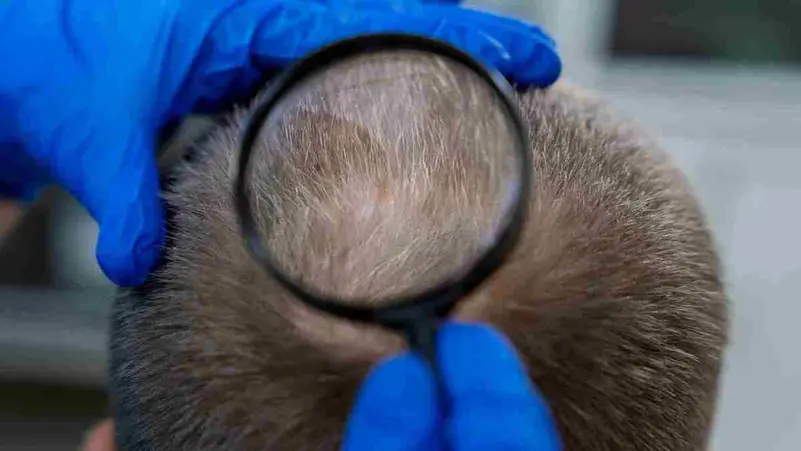
Hair loss is one of the most common cosmetic and medical concerns worldwide, affecting millions of men and women with varying degrees of severity.
Although significant progress has been made in hair restoration over the past few decades, most current treatments can only slow hair loss or stimulate limited regrowth. Restoring full hair density has remained one of the biggest challenges in dermatology.
Now, a wave of groundbreaking research in 2026 is changing that outlook. Scientists are developing advanced technologies designed to regenerate hair from within by reactivating dormant follicles—or even creating entirely new ones.
Current Treatments Have Their Limits
People with hereditary hair loss typically rely on treatments such as topical minoxidil or medications that reduce the effects of DHT (dihydrotestosterone), the hormone believed to cause hair follicles to shrink.
While these therapies have helped many individuals, they do not work equally well for everyone. More importantly, they require continuous use. Once treatment stops, hair loss often resumes.
Because of these limitations, researchers are now focusing on the biological mechanisms that control the hair follicle life cycle. Their goal is to develop therapies capable of restoring long-lasting, natural hair growth.
Smart Injection Targets Dormant Hair Follicles
One of the most promising experimental treatments attracting scientific attention is ABS-201.
Unlike traditional therapies, ABS-201 targets a biological structure known as the prolactin receptor, which early research suggests plays an important role in regulating hair follicle activity.
Preclinical studies indicate that blocking this receptor may reactivate dormant follicles and return them to the active growth phase.
Animal studies have produced encouraging results. Bald macaque monkeys experienced noticeable increases in hair density after treatment, while mice showed faster hair growth compared to conventional therapies.
The treatment is currently undergoing human clinical trials to evaluate its safety and effectiveness.
Reprogramming Hair Follicle Stem Cells
Hair follicles contain stem cells responsible for initiating new growth cycles. When these stem cells remain inactive for extended periods, hair growth slows or stops altogether.
Researchers at the University of California, Los Angeles (UCLA) discovered that these stem cells rely on different methods of producing energy depending on their state.
Their studies found that increasing lactate production inside these cells may help “wake them up” and trigger new hair growth.
This discovery led to the development of a new topical compound called PP405, designed to activate this natural biological process.
Scientists believe this approach could represent an entirely new direction in hair restoration—one that focuses on reactivating follicles from within instead of simply stimulating growth from the outside.
A Natural Sugar Shows Surprising Potential
Another unexpected discovery involves deoxyribose, a naturally occurring sugar that is also a key component of DNA.
Researchers were originally studying its effects on wound healing when they noticed something remarkable: mice treated with deoxyribose developed significant hair growth around the treated areas.
Further analysis revealed that the sugar appears to encourage the formation of new blood vessels around hair follicles, improving the delivery of oxygen and nutrients essential for healthy hair growth.
Although these findings are still in the early stages, researchers believe deoxyribose could eventually become a simple and promising treatment for stimulating hair growth.
Growing New Hair Follicles in the Laboratory
While some researchers aim to reactivate existing follicles, others are pursuing an even more ambitious goal—creating entirely new hair follicles.
Research teams in Japan and the United States have successfully produced laboratory-grown hair follicles using stem cells and advanced tissue engineering techniques.
Perhaps the most exciting finding is that these artificial follicles not only produced hair but also demonstrated natural growth cycles similar to those found in healthy human skin.
Scientists believe this technology could eventually provide a solution for people whose follicles have been permanently destroyed due to severe baldness, burns, or certain skin diseases.
A New Discovery Changes Our Understanding of Hair Growth
Advanced imaging technologies have also revealed that hair grows differently than scientists believed for decades.
Previous theories suggested that hair was simply pushed outward from the follicle. However, new research indicates that specialized cells inside the follicle gradually pull the hair upward through a coordinated process.
This discovery provides a more detailed understanding of how hair develops and could pave the way for future treatments that target this fundamental biological mechanism directly.
When Will These Treatments Become Available?
Despite the excitement surrounding these discoveries, experts caution that most of these therapies are still several years away from widespread clinical use.
Every new treatment must undergo extensive clinical testing to confirm its long-term safety and effectiveness. Researchers must also address manufacturing, cost, and large-scale production before these therapies become widely available.
Even so, the pace of innovation has accelerated dramatically in recent years. Advances in artificial intelligence, stem cell research, and regenerative medicine are helping scientists make faster progress than ever before.
A More Hopeful Future
Until recently, hair loss treatments focused primarily on slowing hair loss and preserving existing hair.
Today, scientists are increasingly discussing the possibility of completely restoring lost hair—either by reactivating dormant follicles or by creating entirely new ones.
Although a permanent cure for baldness has not yet been achieved, the rapid pace of scientific progress suggests that more effective and longer-lasting solutions may emerge in the coming years.
For millions of people around the world living with hair loss, these breakthroughs offer renewed hope that truly transformative treatments may finally be on the horizon.