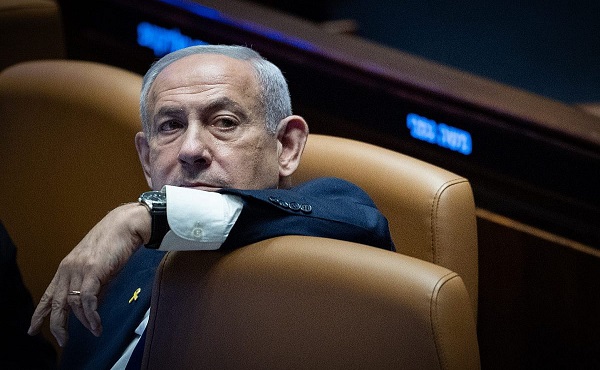
Analysts, former U.S. officials, and diplomats believe that the biggest consequence of a potential U.S.-Iran agreement may not be for Israel’s strategy toward Iran, but for the political brand that Israeli Prime Minister Benjamin Netanyahu spent decades building. That brand was based on his unique ability to influence Washington’s policy toward Tehran and align it with Israel’s interests.
Netanyahu built his political identity around a bold claim: that he alone could keep the United States and Israel strategically aligned on Iran. Backed by strong Republican support, he presented himself as the only Israeli leader capable of influencing successive American presidents. He consistently argued that only sustained military pressure could contain Tehran.
At the height of his influence, diplomats described Netanyahu as a leader with exceptional leverage in Washington — someone who could pick up the phone and ensure that American strategic calculations remained closely aligned with Israel’s. No other Israeli prime minister addressed the U.S. Congress as frequently or established such a lasting presence within the American political system.
However, analysts now argue that the emerging understanding between Washington and Tehran demonstrates how dramatically that narrative has changed. Rather than shaping U.S. policy on Iran, Netanyahu is increasingly being forced to accept it, as U.S. President Donald Trump pursues a settlement that appears willing to treat Israeli objections as a manageable obstacle rather than a decisive factor.
Netanyahu had hoped that the conflict with Iran would strengthen his legacy as the leader who stood firm against Tehran. Instead, it may ultimately be remembered as the conflict that weakened the very source of his political power. International isolation, pressure from close allies, and a weakened position ahead of future elections have turned what was once his greatest political asset into a growing liability.
At the beginning of the war, Netanyahu promised a decisive victory. He spoke of ending Iran’s ruling system, defeating Hezbollah in Lebanon, and ensuring the safe return of residents to northern Israel. Yet critics argue that none of these objectives have been fully achieved.
“The U.S.-Iran agreement is a decisive blow for Netanyahu,” said his former adviser, Aviv Bushinsky. “He has not only lost the confrontation with Iran, but he has also lost Trump as a close ally. He now finds himself increasingly isolated internationally and facing a significant dispute with Trump.”
Netanyahu’s office declined to comment on the criticism. During a recent press conference, the Israeli prime minister described his relationship with Trump as a partnership between friends who “mostly agree and occasionally disagree.” He also argued that there had been a coordinated effort to downplay Israel’s major achievements against Iran and its regional proxies.
A White House official, meanwhile, emphasized that Trump and Netanyahu continue to share a close relationship and praised Israel’s military forces as “incredible partners” in a campaign that significantly degraded Iran’s military capabilities.
Still, the broader goals Netanyahu sought remain out of reach. His political future was built around two major objectives: weakening — if not toppling — Iran’s religious leadership, and expanding the Abraham Accords by securing normalization with Saudi Arabia.
According to critics, neither objective has been achieved. Iran’s leadership has emerged from the conflict intact and, in some assessments, politically strengthened, while normalization with Saudi Arabia remains beyond Netanyahu’s reach.