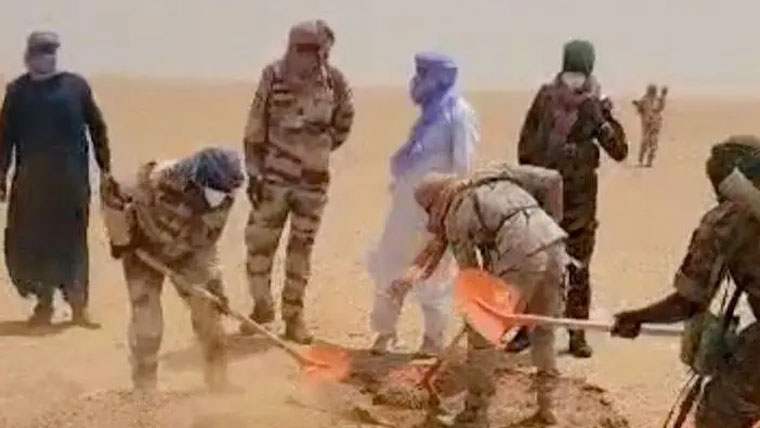
At least 50 people have died of thirst after being stranded in the Sahara Desert in Niger when their vehicle broke down, according to local authorities.
The unfortunate group was returning from Mali, where they had traveled to take part in Eid al-Adha celebrations. However, on their way back, they ran out of water and became stranded about 80 kilometers west of Asmaka, a key border crossing between Niger and Algeria.
The governor of Agadez said the passengers were trapped in an extremely dangerous environment where extreme temperatures and a lack of basic facilities make survival extremely difficult.
Only two people survived the ordeal. They managed to cross the desert and reach Asmaka, where they alerted the authorities.
The head of a local NGO, Chehou Azizou, said this was exactly the kind of tragedy they have been trying to prevent for years. He explained that awareness campaigns are regularly conducted to warn drivers, passengers, and all those involved in migration-related travel about the dangers of crossing the desert. He added that such incidents are often seen on routes heading toward Libya or Algeria.
According to the governor’s statement, the vehicle had departed from the Malian town of Talhandike but deviated from its intended route. The driver and passengers reportedly spent several days attempting to repair the vehicle, but their efforts ultimately failed.
The statement further said that due to lack of water and inability to fix the vehicle, most of the passengers did not survive. Dozens of bodies were found beneath and around the broken-down truck.
All of the victims were Nigerien citizens. They were later buried in mass graves by rescue teams sent by local authorities.
Rescue teams also reported finding another stranded vehicle on their return journey, carrying more than 60 people. That group had been stuck for three days due to a dead battery.
The governor said that the second vehicle had departed from the Malian town of Harouba, more than 300 kilometers from the Niger border. Rescue teams, including members of the Nigerien military, provided water to exhausted passengers and helped repair the vehicle, allowing them to safely continue their journey.
The Nigerien desert remains a major transit route for migrants attempting to reach Europe from across West Africa, despite the severe risks involved.
The governor of Agadez said the tragedy highlights the vulnerability and desperation of young people engaged in migration and cross-border economic activities, many of whom are forced to pass through unstable and dangerous regions in search of a better life.