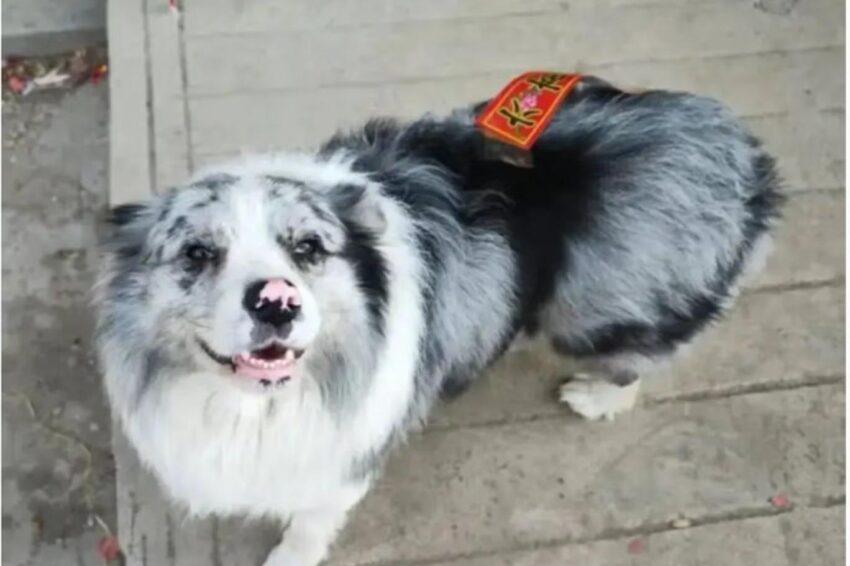
A Border Collie dog with more than 1.5 million followers on social media was reportedly stolen, sold to a restaurant, and later eaten, according to its heartbroken owner.
Chinese travel blogger Gu Ouran and his eight-year-old dog, Chotu, became internet celebrities after sharing videos of their adventures on Douyin, the Chinese version of TikTok.
According to the South China Morning Post, Chotu disappeared on May 11 while Gu was traveling abroad and his father was taking care of the dog.

Security camera footage allegedly showed two individuals taking the dog from the family home on an electric scooter. Upon learning of the disappearance, Gu cut short his trip and returned home to search for his beloved pet.
However, the blogger was later informed that Chotu had already been sold to a restaurant for 180 yuan (about $27), where the dog was reportedly slaughtered and consumed.
The alleged thief claimed that he believed the dog was a stray. Gu rejected this explanation, stating that Chotu was wearing both a leash and a GPS tracker at the time.
Reports indicate that the suspect showed no remorse and allegedly told Gu: “The dog is already dead, so stop making a fuss. I didn’t break the law.”
Gu purchased Chotu in 2018 for 2,000 yuan (around $300) when the dog was just three months old. He has since reported the case to police and is pursuing legal action.
According to HK01 magazine, police in Ningling County, Henan Province, have launched an investigation into the incident.
The case has sparked widespread outrage across Chinese social media and reignited debate over the country’s animal welfare laws.
One social media user wrote: “I cried while watching Chotu’s old videos. Such a bright and lively soul met such a tragic end. Those who stole, killed, and ate him should be held accountable.”
According to Humane Society International (HSI), an estimated 10 million dogs are killed annually for the dog meat trade in China, while fewer than 20 percent of the population is believed to consume dog meat.
A nationwide survey conducted in 2016 suggested that a majority of Chinese citizens support a complete ban on the dog meat trade. Nearly 70 percent of respondents said they had never eaten dog meat, despite efforts by traders to promote it.
Although some Chinese cities have banned the consumption of dog and cat meat, China does not have a comprehensive national law protecting pets. In most cases, pets are legally regarded as property.