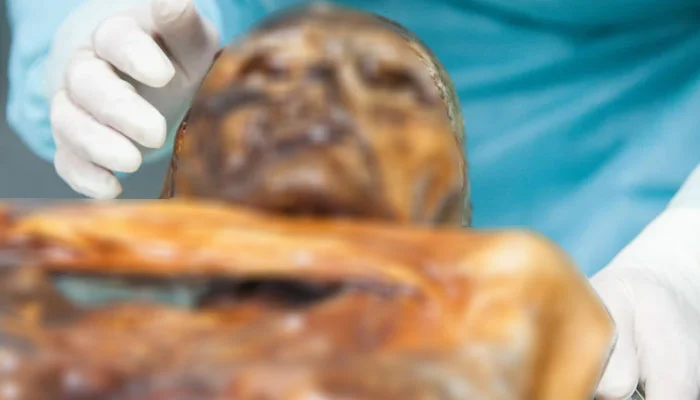
A study conducted in Italy has revealed that ancient microbes and cold-adapted yeast species found inside the famous 5,300-year-old “Iceman” mummy are still active today.
The mummy, known as “Ötzi the Iceman,” was discovered in 1991 frozen in the Alps on the border between Italy and Austria. The man lived around 5,300 years ago during the Copper Age and is believed to have died after being struck by an arrow.
According to international media reports, researchers found microorganisms in samples taken from the mummy’s skin, internal tissues, and bodily fluids. These microbes correspond with what is believed to have been his last meal, which included fatty animal meat, ancient grains, and toxic plants.
Scientists also identified rare bacteria that have nearly disappeared in modern urban populations but still exist in some remote tribal regions of the world.
One of the most surprising findings is that certain yeast species present in the mummy have continued to grow and evolve over the past nine years.
Researchers say these microscopic organisms are even capable of feeding on chemical preservatives used to maintain the mummy’s condition.
Experts believe this discovery will not only help improve understanding of human health and evolution in the past but will also provide new insights into the preservation of ancient artifacts and mummies.