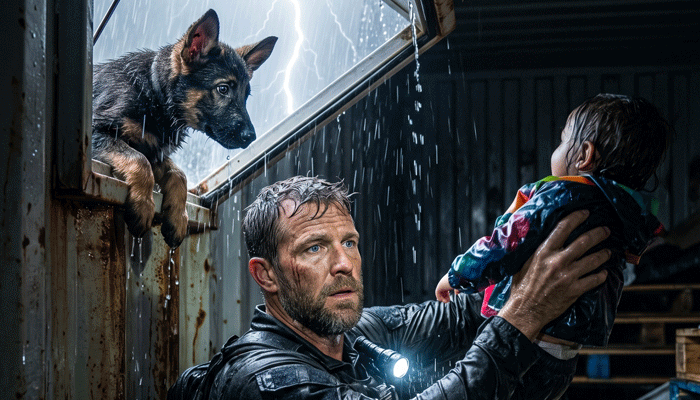
My name is Grant Keller, and the night Hurricane Delilah threw a bleeding German Shepherd puppy through my trailer window, I thought the storm had finally come to finish what the war started.
I was forty-one, living alone in a rusted trailer outside Port Vincent, Louisiana, in the kind of place storms always find first and help always finds last. Before that, I had worn different clothes, carried different weapons, and answered to names that came with rank and purpose. None of that mattered much now. The trailer leaked when the rain came hard, my shoulder still locked up when the weather changed, and most days I treated solitude like a form of discipline. It was easier to keep the world out if I didn’t need anything from it.
At 1:17 a.m., the hurricane solved that for me.
Glass blew inward, rain followed, and something small skidded across my floor in a mess of water and blood. It was a German Shepherd puppy, maybe four months old, soaked through, one ear cut and bleeding, shaking so hard his paws clicked against the linoleum. He didn’t bark at me. He locked eyes with me, grabbed the leg of my jeans with careful teeth, and pulled.
That got my attention faster than fear did.
Discover more
cam
cameras
camera
Then he bolted back toward the open door.
Outside, the trailer park was already taking water. Flood surge moved between the units in oily, rising sheets, carrying bottles, boards, and the smell of gasoline. I should have stayed put. Every disaster briefing I had ever heard would have told me the same thing. But the puppy kept looking back, frantic, refusing to leave unless I followed. So I did.
He led me toward the abandoned industrial pier east of the park, a place nobody decent used in daylight and nobody sane approached in a hurricane. Lightning flashed just as we reached the outer lane, and I saw the container tilted near the edge, half-submerged, rocking against a steel post like the water was testing how much force it would take to finish the job.
Then I heard the cry.
Not the puppy.
A child.
Inside the container, something banged hard against metal. Then came another cry, smaller this time, and a low, savage bark from deeper in the dark. I climbed the roof hatch because the side lock wouldn’t break, forced it open with more anger than leverage, and dropped into black water up to my thighs.
Three children were trapped inside on stacked pallets.
A chained German Shepherd mother stood between them and the rising flood.
The oldest girl looked at me like she had already stopped expecting rescue and whispered, “Are you real… or is this how we drown?”
I started lifting them out one by one while the puppy circled above us on the roof like a tiny foreman counting souls. Then headlights appeared through the rain on the pier road below—slow, deliberate, aimed straight at the container.
And that was when I understood the children weren’t just trapped by the storm.
Somebody had put them there.
The first thing I knew about the children was that they were too quiet.
Kids in danger usually cry, cling, ask questions, panic, freeze, or all of it at once. These three had gone past panic into the kind of silence you only learn after too much fear in too little time. The oldest girl—Harper, maybe nine—helped me more than any child her age should have had to. She steadied the middle boy, shoved the youngest toward the hatch when I told her to, and never once asked me whether I was strong enough to get them out. She was already used to adults failing privately.
The mother dog made the second thing clear.
She was not guarding the container from us.
She was guarding the children for us.
Every time I lifted one of them toward the roof, she moved with me, stiff-legged in the rising water, muzzle up, eyes fixed on my hands. When I touched the combination collar and chain around her neck, she growled once—not to threaten, but to warn me she would bite through pain if I handled her wrong. I respected that. Working dogs understand intent fast, but trust is another matter. I couldn’t crack the lock in the dark, so I did what I could: I got the kids out first.
The puppy above—muddy, bleeding, relentless—whined and circled each time I pushed a child through the hatch. He checked them like he knew the count mattered. Four times he came to the edge, looked down at the mother, then back at me, as if asking the same question I was already hating.
Was there enough time for everyone?
Then the headlights below cut sharper through the rain.
A pickup truck. Dark-colored. Moving slow.
Not rescue. Not random.
Nobody in their right mind drives toward a half-drowned container in a hurricane unless they already know what’s inside.
I got the last child onto the roof, pushed Harper after him, and climbed out with water nearly at my waist. The puppy was there waiting, soaked to the bone but still moving with that frantic purpose. The truck stopped thirty yards down the pier. Driver’s door opened. A man stepped out wearing a yellow slicker and carrying a flashlight too steady for a civilian.
“Hey!” he yelled over the storm. “That area’s unstable! I’ll take the kids!”
That line told me everything.
Real rescuers identify themselves. They ask how many are hurt. They call for help even if the wind steals half the words. This man gave me authority language, not aid language.
Harper answered before I could.
“He works for him,” she screamed.
The man dropped the pretense.
He started running.
I had no clean shot, no time, and three shaking children on a metal roof in hurricane wind. So I did the only thing that made sense. I slid down the far side of the container with the puppy at my heels, hit the pier hard, and moved toward the truck while the children flattened themselves on top and the mother dog below us started barking like rage had finally found air.
The driver came around the hood with something in his hand. Not a gun. A stun baton.
That almost made it worse.
It meant he expected live bodies, not a cleanup from distance.
He swung first. I blocked badly, felt the old shoulder light up with pain, and hit him in the throat with enough force to fold him over the bumper. The baton dropped into the floodwater and sparked once before going dark. He tried to come back with a knife from his boot. The puppy launched at his calf before I even saw the blade. Not enough to stop him permanently. Enough to ruin his balance and buy me the second I needed to put him face-first on the wet steel.
“Who sent you?” I shouted.
He spat rainwater and blood and said, “Too late.”
Then he smiled.
I hate men who smile at the wrong moment.
By the time I zip-tied his wrists with a cargo strap from the truck bed, I understood what he meant. He wasn’t stalling for himself. He was stalling for the water. The pier groaned. One of the support beams below the container gave a noise like something old finally deciding to fail. If that container rolled, the mother dog drowned chained in the dark and any evidence inside went under with her.
Evidence.
That word hit me before I knew why.
I ran back to the hatch and asked Harper who put them there. Her face tightened in a way no child should know how to do.
“Mr. Deacon,” she said. “He said the storm would wash everything away.”
I asked who Mr. Deacon was.
She pointed not toward the truck.
Toward town.
That made the whole thing uglier. Because if the children knew him by name, then this wasn’t some random abductor using weather for cover. It was somebody local enough to be trusted before he became danger. Somebody with access to a container, a dock, and at least one man willing to come back through a hurricane to finish the job.
Then the puppy started barking again—not at the man I’d tied up, not at the water, but at the truck bed.
I climbed up and ripped back the tarp.
Inside were children’s backpacks, juice boxes, two folded blankets, zip ties, and a waterproof ledger pouch with three first names written on the outside in black marker.
Harper.
Eli.
Mason.
The children in the container.
This wasn’t a panic crime.
It was transport interrupted by the storm.
And the people who left them there were organized enough to label inventory before drowning it.
I got the children off the pier before it failed by doing everything badly and fast.
That is the truth.
No heroic elegance. No clean sequence. Just weight, water, urgency, and the kind of ugly momentum you use when structural steel is groaning under your feet and the storm is trying to erase every plan you make. I tied the driver to the bumper post because I was fresh out of mercy and hands. Then I took Harper first because she could help with the younger two once they were on the truck roof. Eli next. Little Mason last, half-conscious and light enough that it frightened me.
The mother dog was the problem I could not leave.
The chain lock around her collar had a four-digit combination dial, and the water inside the container was almost at pallet height now. The puppy—who by then had absolutely earned a name but hadn’t gotten one yet—kept racing between me and the container edge, whining like a metronome for panic. I dropped back through the hatch, icy water slamming against my waist, and put both hands on the collar while the mother dog trembled and held herself still by force.
People say animals don’t understand sacrifice. People say many stupid things from dry ground.
I tried random combinations first. Useless. Then I looked at the collar plate more closely and saw the number scratched on the inside bracket: 0409.
Not random.
A date. Maybe a birthday. Maybe a code. Maybe the kind of vanity some cruel men put on the things they think they own forever.
I spun it.
The collar clicked open.
The dog didn’t bolt.
She waited until I grabbed the hatch edge, then shoved upward beside me, almost lifting me out of the flooding box with her. On the roof, the puppy nearly came apart with relief, bouncing around her face, licking her muzzle, counting her alive.
That was when the pier gave.
Not all at once. One sharp metal tear. Then the far corner dipped. I got everyone into the truck cab and bed just as the container slid, rolled, and vanished into black floodwater with the scream of twisted steel.
If we had been thirty seconds slower, that would have been the end of the story.
Instead, it became evidence.
The ledger pouch in the truck bed did more damage than any confession would have. Inside were handoff dates, initials, motel room numbers, burner phone references, and enough route notes to prove the children had not been kidnapped for one man’s private horror. They were part of a moving system. A storm-delay list. Three children parked in a container like freight until the weather improved—or until someone decided weather was more useful than logistics.
The driver finally gave up names when he realized the flood wasn’t washing the ledger away and the puppy had chewed through half his slicker sleeve while he was tied to the bumper.
Deacon wasn’t just “Mr. Deacon.”
He was Walter Deacon, owner of the marina supply warehouse east of town, youth baseball sponsor, church donor, smiling local fix-it man—the sort of respectable predator communities build because they mistake public generosity for moral proof. According to the driver, the pier wasn’t a dump point. It was a holding point. The storm surge had forced a change in schedule, and the children were supposed to be moved inland after midnight when the county roads opened. Instead, the water rose faster than the plan.
That told me the ugliest thing of all.
They hadn’t left the kids there to drown at first.
They had left them there to wait.
The drowning became acceptable when the schedule broke.
Coast Guard and parish responders finally reached us an hour later after I got a distress call through on the marina truck radio. The children lived. Harper never cried in front of me, not once, which bothered me in ways I still can’t name cleanly. Eli slept with his hand locked in the mother dog’s fur once medics got him wrapped in thermal blankets. Mason woke in the hospital and asked if the puppy came too.
He did.
I named him Signal.
Because that’s what he had been from the start.
The mother dog became Harbor, because some creatures earn a new name by becoming the whole reason anyone makes it through the night.
Walter Deacon was arrested forty hours later trying to cross county lines with what he probably thought were the last clean phones left in the operation. The ledger tied him to rental units, shell charity pickups, and at least two other missing-child investigations that had never been linked publicly. The local sheriff, to his credit or his panic, went straight to state investigators before the story could settle into rumor and excuses.
But one thing still won’t sit right.
At the bottom of three ledger pages, above Deacon’s notations and beside transfer dates, the same initials appeared over and over:
R.W.
No full name. No title. Just route approvals and coded payments.
That means Deacon may not have been the mastermind.
He may have been the local face.
So yes, I followed a bleeding puppy into storm surge.
Yes, we got the children out.
Yes, the dog they meant to leave chained in the dark lived long enough to break their whole story apart.
But if the children were logged, routed, and nearly drowned as part of a system bigger than one marina owner, then who do you think R.W. really was—the broker, the buyer, or the person still hiding safely above the flood line?
Who do you think R.W. was—and how high do you think this operation really went? Tell me your theory.