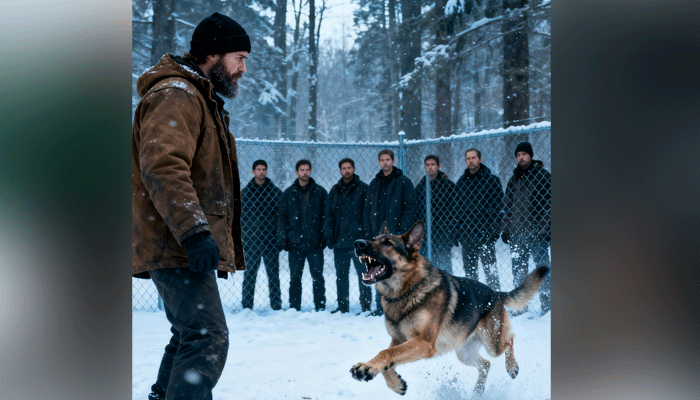
By the time Mason Reed first saw the dog, three men were pinned behind a steel gate, one woman was crying into her sleeve, and the animal at the center of the chaos looked less like a dog than a blast wave given flesh.
The Belgian Malinois slammed himself against the kennel door hard enough to rattle the concrete block walls. Foam flecked his muzzle. His amber eyes were wide, bloodshot, and locked on something nobody else in the room could see.
“Back!” shouted a handler in a padded bite suit, though he was already backing away.
The dog hit the door again.
A clipboard clattered to the floor. Someone cursed. The overhead fluorescent lights buzzed like angry hornets, and the dog’s body coiled tighter, every nerve stretched to breaking.Dog training services
Mason stood just inside the threshold of the rehabilitation building and didn’t move.
Outside, Tennessee rain drummed on the metal roof of the old equine barn that had been converted into the Patriot K-9 Recovery Center. Inside, the air smelled of antiseptic, bleach, wet fur, and fear. Mason knew that smell. Not the bleach. The fear.
It smelled like a convoy after the first blast, when the dust hadn’t settled yet and men were still trying to decide if they were alive.
Dr. Rachel Bennett came up beside him, lowering her voice so the others wouldn’t hear the strain in it.
“You can still say no,” she said.
Mason kept his eyes on the dog. “That him?”Animal Products & Services
Rachel nodded. “Call sign: Ghost. Seven years old. Belgian Malinois. Multiple combat deployments attached to Army Special Operations. Retired stateside six months ago after an incident overseas. Since then he’s attacked handlers, broken teeth trying to chew through steel, stopped eating twice, and hasn’t slept more than twenty minutes at a time without sedation.”
Ghost hurled himself forward again. The kennel door shrieked in protest.
“Has he bitten anyone bad?” Mason asked.
Rachel gave a humorless laugh. “Depends what you call bad.”
Mason turned to look at her. Rachel had been pretty once in a soft, untouchable way. Now she looked competent, exhausted, and too stubborn to quit. He respected that more.
“How bad?”
“One handler lost part of his forearm. Another got thirty-seven stitches in the thigh. The third needed reconstructive surgery on his hand.” She paused. “And before you ask, no, I don’t think he’s vicious.”
“You think he’s scared.”
“I think he’s trapped in something nobody around him understands.”
The dog suddenly froze.
Just like that.
His entire body went still, muscles trembling beneath his dark coat. His ears pricked forward. The room, which had been all noise and alarm a second earlier, sank into a tense hush.
Ghost was staring at Mason.
Not at the nearest handler. Not at Rachel. At Mason.
A low sound rose in the dog’s throat. It wasn’t a growl exactly. It sounded deeper than that. More wounded.Dog training services
Mason felt the old scar along his ribs pull tight beneath his shirt.
He had not been inside a military kennel since 2014, not since a mortar attack outside Kandahar left half his engineer platoon bleeding in the sand and one military working dog dying in his lap while its handler screamed for a medic who never came.
He still dreamed about that dog.
He still woke up hearing the handler’s voice.
Rachel touched his arm lightly. “Mason?”
He realized he hadn’t answered.Animal Products & Services
Three weeks ago Rachel had driven all the way out to his cabin in the hills outside Crossville, parked her truck beside his rusted Ford, and told him she needed help with a dog the Army had already given up on.
Mason had laughed in her face.
He was not a dog trainer. He was not a therapist. He was not even particularly good with people anymore. He lived alone, fixed tractors and fences for cash, and spent most evenings drinking coffee on a porch that looked west over a valley he barely noticed.
But Rachel had kept talking.
Not because she thought he had magic hands. Not because he had served.
Because years ago, before Afghanistan shattered his hearing in one ear and scrambled the wiring in his head, Mason had been the one soldiers called when an animal was too scared to be touched. Horses, dogs, even a feral mule once. He had a way of standing still that made skittish things feel less hunted.Dog behavior consultations
Or maybe, he’d thought bitterly, he just understood what panic looked like from the inside.Dog training services
Now he watched Ghost stare at him through the bars.
The dog took one slow step forward.
Every person in the room tensed.
Ghost’s lips twitched, but he didn’t bare his teeth. Instead he lowered his head slightly, nostrils flaring.
Mason looked at Rachel. “What’d you say his name was?”
“Ghost.”
“That what his handler called him?”
Rachel hesitated.
“Not sure,” she said. “Records are incomplete.”
Mason turned back toward the kennel.Animal Products & Services
He’d learned long ago that frightened things hated hesitation. So he didn’t crouch, didn’t reach, didn’t make soothing noises like a fool. He stood square, hands loose at his sides, and spoke in a calm voice roughened by too much silence.
“Hey, buddy.”
Ghost shuddered.
The reaction was immediate and violent. His ears flattened, his body twisted, and suddenly he exploded, not at the door this time, but backward, slamming into the far wall of the kennel as if Mason’s voice had struck him.
Handlers cursed and stumbled.
Ghost spun in frantic circles, claws scratching sparks from concrete, then rammed himself into the corner and stayed there, shaking hard enough that his tags jingled.
Mason went cold.
That was not aggression.
That was memory.
Rachel stared. “I’ve never seen him do that.”
Mason’s jaw tightened. “Yeah,” he said. “I have.”
She looked at him. “What does it mean?”
He kept staring at the dog, whose eyes were now fixed on the floor as though bracing for something that wasn’t coming.Dog training services
“It means,” Mason said quietly, “somebody hurt him after talking just like that.”
The rain beat harder against the roof.
Across the room, a handler in a bite sleeve exhaled shakily. “So what now?”
Mason didn’t answer right away.
Ghost finally lifted his head and looked at him again. There was fury in those eyes, yes. But behind it Mason saw something worse.
Expectation.
The kind that comes from learning pain always arrives in the same shape.
“What now,” Mason said, more to himself than anyone else, “is we stop asking why he’s dangerous.”
He met Rachel’s eyes.
“We start asking who taught him to be afraid.”
Mason moved into the bunk room above the clinic that same night.
Rachel offered him the small apartment attached to the main house, but he refused it. Too quiet, too clean, too much room to think. The bunk room was narrow and smelled of dust, cedar planks, and old detergent. Through the wall he could hear kennel doors, footsteps, and now and then the abrupt clink of metal bowls. It was close enough that if Ghost crashed again, Mason would hear it.Animal Products & Services
He wanted that.
Or maybe he didn’t. Maybe he just didn’t want the luxury of pretending he could help and then sleeping a hundred yards away.
The Patriot K-9 Recovery Center sat on eighty acres of rolling Tennessee land outside Jamestown, bordered by pasture, oak woods, and a creek that cut along the back fence line. Before Rachel took it over with a grant and a miracle, it had been a horse boarding property gone to seed. Now it housed retired military dogs, police dogs too damaged for normal adoption, and the occasional rescue case nobody else knew what to do with.
Rachel lived in the farmhouse with a one-eyed hound named Loretta and two foster kids she’d taken in after her sister died. A handful of staff rotated through the kennels, though half of them were part-time and the other half were one resignation away from quitting.Dog behavior consultations
Ghost was in the isolation wing.
“He came with a recommendation for euthanasia,” Rachel told Mason over reheated chili in the clinic kitchen around nine that night.
Mason raised an eyebrow. “Recommendation?”
“That’s the polite term.”
“So they washed their hands of him.”
Rachel rubbed at a crease between her eyebrows. “Officially, he was ‘deemed unsuitable for civilian transition due to severe behavioral instability and unmanageable combat-linked reactivity.’”Dog training services
“Unofficially?”
“He scared the hell out of everybody.”
She pushed a thin file folder across the table.
Mason opened it.
The folder held less paper than he expected. A one-page intake summary. Vaccination record. Radiographs. Sedation schedule. One Army transfer form with so many black redaction bars it looked like a piano keyboard.
“No service history?” Mason asked.
“Classified or buried. Depends who you ask.”Animal Products & Services
“No handler notes?”
Rachel shook her head. “None.”
Mason turned the pages again just to be sure. “That’s wrong.”
“I know.”
“When a dog comes off a combat team, there are always notes. Commands, habits, medical quirks, favorite reward, known triggers. Even bad records have that.”
Rachel leaned back in her chair. “I tried. I called the transition office at Lackland, then a logistics liaison at Fort Campbell, then somebody in D.C. who kept telling me to submit another form. I finally got a colonel’s assistant who said the dog’s final deployment report was under review.”
“Under review for what?”
“She wouldn’t say.”
Mason shut the folder. “What incident overseas?”
Rachel went still for a beat.
“His handler died,” she said. “At least that’s what they told me.”
Mason waited.
“Supposedly during an operation in eastern Afghanistan,” she continued. “Night raid. Small arms fire. One survivor in the team, but he rotated out before I could contact him. The dog was flown home with superficial injuries and what one vet described as ‘acute neurological distress without clear physical cause.’”Dog training services
Mason stared at the file.
“You believe that?”
“No.”
He nodded. “Neither do I.”
Rachel’s face softened just a little. “That’s why I called you.”
He looked up.
“Not because you fix dogs,” she said. “Because you know when the paperwork lies.”
Mason gave a tired half-smile. “That’s a depressing skill.”
“It’s still a skill.”
He stood, took the file, and headed for the door. Rachel called after him.
“Where are you going?”
“To sit outside his kennel until he falls asleep.”Animal Products & Services
“He may not.”
“Then I won’t either.”
She studied him for a long second. “Mason.”
He turned.
“If this gets in your head,” she said carefully, “you walk away. You hear me? I asked for your help. I did not ask you to drown in it.”
Mason looked down at the folder in his hand.
That ship, he thought, had sailed years ago.
But he only said, “Goodnight, Rachel.”
Ghost didn’t sleep until 3:17 a.m.
Mason knew because he checked his watch every time the dog shifted.
He sat cross-legged outside the kennel, back against the opposite wall, a thermos of coffee at his side and the dim yellow night light throwing long cage-shaped shadows down the corridor. Ghost started the night pacing. Then came the spinning. Then hours of standing motionless, staring at the drain in the floor as though waiting for voices to rise from it.
Mason said almost nothing.
Just breathed.
Sometimes Ghost crept toward the bars and stared at him, hackles lifted. Once he lunged without warning, teeth flashing against steel. Mason didn’t flinch. The dog froze, confused, then backed away.Dog training services
Near midnight the storm passed. Wind sighed through the eaves. Somewhere outside, a barn owl called.
At 1:42, Ghost finally lay down.
At 2:03, his paws started twitching.
At 2:05 he woke with a shriek that made Mason’s chest lock up.
The dog slammed into the kennel wall, frantic and disoriented, then launched himself at the door.
Mason was on his feet instantly.
“Ghost!”
Wrong choice.Animal Products & Services
The dog spun harder, wild-eyed, and snapped at the air. Mason cursed himself, then lowered his voice.
“Easy. Easy.”
Ghost’s breathing came in desperate bursts. Mason could see the whites of his eyes. Nightmare.
No. Not nightmare.
Flashback.
Mason lowered himself slowly to one knee where the dog could see him.
“You’re here,” he said. “You’re not there.”
Ghost whined once, sharp and broken.
Mason felt an echo in his own chest so strong it almost dropped him. There had been nights after he came home when he’d woken on his own floor with a kitchen knife in his hand and no memory of getting out of bed.
He knew what it meant to return all at once to a room that was safe and feel your body reject the evidence.
He held the dog’s gaze through the bars.
“Nobody’s opening that door,” he said. “Nobody’s coming in.”
Something changed.
Not trust. Not yet. But the dog stopped throwing himself around.
He stood rigid for another minute, then slowly, painfully, lowered his rear to the floor.
Mason let out a breath he hadn’t realized he’d been holding.
Ghost stared at him a long time after that. Then, sometime after three, he stretched out on the concrete and slept.
Mason stayed awake and watched.
On the second day, Ghost refused food from everyone except Rachel, and even then only after she slid the bowl in and left. Mason noticed he wouldn’t eat until the corridor was empty. Hypervigilance. Not uncommon.
What was uncommon was what happened when a maintenance worker fired up a diesel generator by the equipment shed.
The sound rolled faintly through the kennel wing.Animal Products & Services
Ghost went insane.
Not aggressive. Terrified.
He slammed himself under the raised cot, wedging his body halfway beneath it until the metal frame bent. His breathing turned ragged. He urinated where he lay and still didn’t move.
Mason had to close the wing for an hour.
Later, sitting on an overturned bucket outside in the muddy yard while the generator coughed itself silent, Mason asked Rachel, “Any record of an explosion tied to his transfer?”
“Nothing in the file.”
“He reacts to diesel vibration before the engine even catches. Could be convoy trauma. Could be helicopter load noise. Could be a generator on base during mortar fire.”
Rachel folded her arms against the drizzle. “Can you tell which?”
Mason shook his head. “Not yet.”
“What about people?”
“He hates direct approach, male voices with command tone, metal rattling near the door, and anybody who smells like adrenaline.”
Rachel huffed a laugh. “That last one sounds difficult to manage around him.”
“It is if your whole job is trying not to get bitten.”
She watched the isolation building for a moment. “Do you think he can come back from this?”
Mason didn’t answer immediately.
Across the pasture, one of Rachel’s foster kids, thirteen-year-old Eli, was trying to teach Loretta the hound to fetch. Loretta was ignoring him with the dignity of a washed-up queen.
Mason said, “I don’t think he’s gone.”
“That isn’t the same thing.”
“No.”
Rachel turned to him. “The board wants an answer in two weeks.”
He looked at her. “Board?”
“I have donors, Mason. Insurance. A facility license. If he mauls someone else—”
“He won’t.”
“You can’t know that.”
Mason’s voice hardened. “I know he’s not attacking for dominance. He’s not unstable in the way they think. He’s pattern-locked. That means there’s a door in.”
Rachel exhaled through her nose. “And if you can’t find it?”
Mason looked back at the building.
The truth was, he didn’t know.
He’d seen men come home from war with minds that closed like fists and never opened again. He’d seen one sergeant freeze in a Walmart parking lot because a shopping cart rattled like loose chain on a Humvee. He’d seen another drink himself blind before age forty because it was easier than hearing the sound of children crying in a language he couldn’t translate.
Some things did not come back.
But the dog—Dog training services
The dog still watched. Still waited. Still responded.
That meant something.
“It isn’t just trauma,” Mason said.
Rachel was quiet.
He went on. “There’s something specific missing from his record. Something somebody removed. Maybe because it was classified. Maybe because it was inconvenient. But that dog is reacting to more than combat. He’s reacting to betrayal.”
Rachel studied him. “You say that like you’ve met betrayal before.”
Mason looked away toward the tree line.
“Everybody who served long enough met it eventually.”
That night he asked to see every item that had come with Ghost.
Rachel handed him a plastic evidence tote with intake labels on the side.
Inside were a torn tactical harness, two chewed rubber reward balls, a stainless bowl, a frayed leash, medical transfer tags, and a military transport crate manifest. No personal items. No handler notes. No blanket carrying familiar scent. Nothing soft. Nothing loved.Pet Food & Pet Care Supplies
Mason sifted through it all on the clinic floor.
The harness had been cleaned, but not well enough. Mud still clung in one seam. Under one strap he found a dark stain that had soaked deep into the fabric and browned with time.
Blood.
He held the harness up to the light.
There, stitched on the side panel in black thread barely visible against the nylon, were three letters.
GST.
Ghost’s working tag.
Below that, nearly hidden under a patch that had been ripped off, was a second line of embroidery.
OW—
The rest had been cut away.
Mason’s pulse kicked once.
Owen.
He didn’t know why the certainty hit him so hard, but it did.
He carried the harness downstairs to Rachel, who was doing paperwork at the kitchen table after the kids had gone to bed.
“What do you have?” she asked.
He laid the harness under the lamp and pointed.
Rachel leaned in. “I didn’t see that.”
“Because somebody removed the name tape.”
“Why would they do that?”
Mason looked at the blood stain.
“Because names make people ask questions.”
Rachel sat back slowly. “You think the handler’s name was Owen.”
“I think it started with O-W.”
“That’s not much.”
“It’s enough to pull obituaries.”
She blinked. “You’re serious.”
Mason met her eyes. “You said his handler died. You never said you saw proof.”
Rachel reached for her laptop.
They sat shoulder to shoulder at the old farmhouse table while rainwater dripped from the porch eaves outside. Rachel searched public military memorials, local newspapers, veteran boards, and archived hometown articles. It took less than twenty minutes.
Staff Sergeant Owen Grady.
Age thirty-one.
Army Special Operations K-9 handler.
Native of Lubbock, Texas.
Survived by parents, younger sister, and fiancée.
Killed during a classified operation in Khost Province, Afghanistan.
Rachel clicked the article open.
A clean-jawed man in uniform smiled from the screen, one arm around a dark-faced Belgian Malinois wearing goggles.
Ghost.
Only in the photo, Ghost looked alert and proud, ears high, eyes bright, pressed tight against Owen’s leg like he belonged nowhere else on earth.
Mason felt something in his throat go tight.
Rachel read softly. “Grady was remembered as a devoted soldier, a gifted handler, and a man who ‘never left a teammate behind.’”
She looked up. “There’s no detail.”
“There won’t be.”
She clicked a second article. Local paper. Same photo. More human details this time. Owen loved Texas barbecue, coached Little League in the off-season, proposed to his fiancée at Palo Duro Canyon. He’d wanted to open a training ranch when he got out.
Rachel’s fingers stilled on the keyboard.
“What?” Mason asked.
She pointed.
At the bottom of the article, beneath condolences and service information, was a short line from Owen’s sister.
If anyone knows what happened to his dog, please contact the family. Owen loved him like blood.Dog training services
Mason stared.
“How long ago was this?”
“Eight months.”
Rachel opened a contact page. The email bounced. She found a memorial Facebook group. Messages unanswered. A church bulletin. Then finally a number listed for the family’s roofing company in Lubbock.
She looked at Mason.
“It’s late.”
“In Texas?”
“Still late.”
Mason thought of the dog upstairs sleeping in broken bursts behind steel.
“Call.”
Rachel did.
A woman answered on the fifth ring, voice guarded and tired.
“This is Grady Roofing.”
Rachel glanced at Mason, then introduced herself and explained she ran a rehabilitation center for retired working dogs. There was a long pause.
When the woman finally spoke again, her voice had changed.
“This about Owen’s dog?”
Rachel said yes.
The woman inhaled sharply. “Hold on.”
A minute later a man came on the line. Older voice. Gravel and restraint.
“This is Hank Grady.”
Rachel explained again, more gently this time.
Hank listened in silence.
Then he said, “They told us the dog was nonrecoverable and transferred to an Army facility. Told us contact wasn’t allowed.”Dog training services
Mason leaned closer. Rachel put the phone on speaker.
“Mr. Grady,” Mason said, “my name’s Mason Reed. I’m helping evaluate him. Can I ask you something?”
“Go ahead.”
“Did your son ever call him Ghost?”
“No,” Hank said at once. “Dog’s name was Rook.”
Rachel and Mason looked at each other.
“Rook?” Mason repeated.
“Like the chess piece,” Hank said. “Owen said the dog moved straight and hit hard.”
Mason glanced toward the clinic.
A dog stripped even of his name.
“Did Owen keep records?” Mason asked. “Training notes, journals, anything?”
“Always.” Another pause. “They returned his trunk, but half the stuff was missing. We were told classified material had been removed.”
Rachel said quietly, “Did you ever get a chance to see the dog after Owen died?”
Hank’s answer came fast. Too fast.
“No.”
Just that one word, but behind it Mason heard a lifetime of anger.
After a beat Hank continued, more controlled now. “My wife wrote letters. Owen’s sister called people. Nobody gave us anything. Then a man from the Army came down, said the dog was unstable and dangerous and it’d be best for the family to let the matter rest.”Dog training services
“Do you remember his name?” Mason asked.
Silence.
Then: “Major Whitaker. Or maybe Lieutenant Colonel by then. Caleb Whitaker.”
Mason felt Rachel go still beside him.
“What is it?” Hank asked sharply.
Mason answered before Rachel could. “Nothing yet. Just taking notes.”
Hank exhaled. “You find out the truth, Mr. Reed, you call me. Doesn’t matter the hour.”
“We will,” Mason said.
After the call ended, Rachel closed the laptop slowly.
“I know that name,” she said.
“Whitaker?”
She nodded. “He’s on the board of the foundation that partly funds this place.”
Mason stared at her.
“He toured the center two months ago,” she said. “Asked a lot of questions about liability and donor optics. I thought he was just some retired brass with money.”
“Did he ask about Ghost?”
Her face tightened. “He called him ‘the Afghan transfer.’ Didn’t use the dog’s name.”
Mason looked toward the ceiling, where above them, through wood and plaster and distance, a war dog slept under a borrowed lie.Dog behavior consultations
“Not Ghost,” he said softly.
“Rook.”
The next morning Mason tried the name.
He waited until the corridor was empty. No other handlers. No cleaning carts. No jangling leashes.
The dog stood at the back of the kennel watching him with suspicion sharpened by habit.
Mason rested one forearm on his knee and said quietly, “Rook.”
The change was immediate.Dog training services
The dog’s ears snapped forward. His body went rigid. For one electric second Mason thought he’d made a mistake and triggered another spiral.
Then Rook took three slow steps toward the door.
Mason swallowed.
“Rook,” he repeated.
A sound came from the dog then—small, almost hidden. Not a bark, not a growl.
A whine.
A question.Pet Food & Pet Care Supplies
Mason felt it hit him straight through the chest.
“There you are,” he murmured.
Rook pressed his nose to the bars.
Mason didn’t move closer. Didn’t reach. But he stayed there while the dog inhaled the scent of his hand through steel.
The muscles along Rook’s shoulders trembled. His eyes searched Mason’s face as if trying to solve an impossible equation.
Mason kept his voice low.Animal Products & Services
“Your name matters, doesn’t it?”
Rook’s breath fogged against the bars.
“You had somebody,” Mason said. “They took him away, and then they took the rest.”
Rook shut his eyes.
Only for a moment. But Mason saw it.
Somewhere down the corridor a metal latch snapped.
Rook recoiled so violently he hit the far wall.
Mason stood at once, fury rising like fire.
He found the young volunteer who’d made the noise and sent him outside before he said something unforgivable.
When he came back, Rachel was waiting near the clinic door.
“Well?” she asked.
Mason looked at her, jaw tight.
“His name is Rook,” he said. “And he still remembers who he was.”
Word spread among the staff faster than Mason liked. By lunch everybody knew the “crazy dog” had responded to a different name. That should have helped. Instead it made some of them more nervous, as if memory itself made him less predictable.
Mason didn’t care.
He changed his whole approach after that.
No more calling Rook from a distance. No more casual chatter from handlers who wanted to test him. The isolation wing got a new routine: predictable footsteps, predictable feeding, predictable light changes, no diesel equipment near the back shed, no male staff entering unless Mason was present.
For three days, progress came in splinters.
Rook stopped lunging at Mason.
He started eating while Mason sat in view.
He slept on the cot instead of under it.
Twice he came to the kennel door and stood there waiting, not relaxed, but engaged.Animal Products & Services
Then on the fourth day Mason tried opening the inner safety gate.
Rook had on a basket muzzle for precaution. Rachel stood ten feet back with a catch pole in hand and a look that said she hated every inch of this plan.
Mason unlocked the first gate and stepped into the small transfer run between barriers. Rook stood in the kennel beyond, muscles taut.
“Rook,” Mason said.
The dog stared.
Mason sat down on the concrete.
Rachel muttered, “You always this dramatic?”Dog training services
“No,” he said. “Only when I want to keep my face.”
He waited.
A minute passed.
Then another.
Rook paced once, turned, paced back.
Mason kept his eyes lowered, not challenging, not avoiding.
Finally Rook came forward.
He stopped within a foot of the threshold.
Mason could hear Rachel’s breathing behind him.
Rook lowered his head and sniffed the crack beneath the half-open barrier. His tail was neutral. Ears forward, then sideways. Uncertain.
Mason slowly extended two fingers.
The dog flinched. Froze.
Then, with heartbreaking care, touched Mason’s knuckles with his nose.
Rachel made a tiny sound in the back of her throat.
Mason didn’t look at her. “Easy,” he whispered.
Rook sniffed again. Then, incredibly, leaned.
Just a fraction of weight. Just enough for Mason to feel warmth through the fingertips.
And then—
Bootsteps.
Heavy. Male. Fast.
Coming down the hall.
Rook transformed before Mason could turn.
The dog jerked back, hit the kennel wall, then launched forward with a snarl that echoed like gunfire. He slammed into the barrier, teeth grinding against the muzzle, body twisting in pure panic.Dog training services
“Out!” Mason roared without even looking.
The footsteps stopped. Someone swore and retreated.
Mason stayed seated despite the adrenaline spiking through him. Rachel held her ground behind him, white-knuckled on the catch pole.
Rook battered the wall again.
Mason spoke over the noise, low and relentless. “You’re here. You’re here. You’re here.”
It took six full minutes for the dog to come down enough to breathe without choking.
When it was over, Rachel sank onto a stool and swiped a hand over her face.Animal Products & Services
“That was Deputy Collins,” she said. “County officer. Came by to drop off paperwork on the police shepherd in Bay Three.”
Mason looked through the bars at Rook, who now stood rigid in the far corner, eyes burning with shame and exhaustion.
“Uniform boots,” Mason said.
Rachel nodded slowly. “Male authority presence.”
“Not just that. Specific gait pattern. Hard heel strike. He heard somebody like that before something bad happened.”
Rachel looked at him. “Can you prove any of this?”
“No.”
“Then how do we find out?”
Mason rose, every joint reminding him of years he no longer trusted. “We go where his records won’t.”
“Which means?”
He met her gaze.
“Texas.”
Rachel stared at him for a beat. “You’re going to drive to Lubbock because a dog remembered his own name?”
“No,” Mason said. “I’m going to drive to Lubbock because somebody erased a dead man from his partner’s life, and dogs don’t break like this for paperwork errors.”Dog training services
Rachel crossed her arms. “And while you’re off chasing a ghost—”
“Rook,” Mason said sharply.
She paused, then nodded once. “While you’re off chasing Rook’s past, I still have a facility to run.”
Mason looked back at the kennel. Rook had lain down again but kept his eyes fixed on Mason, as if afraid he might vanish.
He hated leaving.
He hated the feeling instantly.
Rachel saw it on his face.Animal Products & Services
“I’ll keep the routine,” she said. “No changes. No male staff in isolation. Same feeding pattern. Same lights.”
Mason didn’t move.
She softened. “Go find what they took.”
So he did.
The drive from Tennessee to Texas took him through Arkansas pine, endless Oklahoma wind, and long hours alone with the kind of thoughts most men spend their lives trying to outrun.
Mason drove an old green Ford pickup with a bad speaker and a steering wheel worn slick by callused hands. He stopped only for gas, black coffee, and one motel room in Amarillo where he didn’t sleep more than two hours because the ice machine outside sounded too much like a hydraulic pump.
By the time he rolled into Lubbock the next afternoon, the sky was a hard, white Texas blue and the wind smelled of dust.
The Grady family roofing yard sat on the edge of town behind a chain-link fence with a faded sign. Bundles of shingles, stacked ladders, and three company trucks baked in the sun. Hank Grady was waiting outside the office before Mason had even killed the engine.
He was a broad man gone spare with age, wearing work jeans, sunburned forearms, and the face of somebody who had buried rage so long it had turned into structure.
“You Reed?” he asked.
Mason got out. “Yes, sir.”
Hank gripped his hand once, hard. “Come on.”
Inside, the office smelled like paper, coffee, and roofing tar. A woman Mason assumed was Owen’s mother stood behind the desk, one hand pressed over her mouth as if to hold herself steady. She was smaller than Hank, silver-haired, and carrying grief the way some people carry religious faith—daily, privately, and without drama.
“This is Donna,” Hank said.
Mason removed his hat. “Ma’am.”
She nodded and motioned him toward the back room. On the wall hung framed photographs of Owen at every age: Little League uniform, high school graduation, Army dress blues, and finally one of him kneeling in desert camo with Rook at his side.
Mason stopped.
In that photo Rook wore the same harness now sitting in a tote bag in Mason’s truck. Only here the missing patch was still intact.
OWEN GRADY.
Donna noticed what he was looking at. “That was taken in Jordan during a training cycle. He sent it to us because he knew I worried.”
Mason swallowed. “He looked happy.”
Hank let out a dry laugh with no humor in it. “That dog was his family.”Dog training services
They led him into a storage room that had been cleared around one military footlocker and two cardboard boxes.
“This is what they gave us back,” Hank said.
Mason knelt by the footlocker.
Most of it was ordinary enough: folded uniforms, commendation folders, a paperback western, photographs, a cheap digital watch, gym shoes, a cracked pair of Oakleys. But there were gaps visible even to a stranger. Empty spaces. Missing weight.
“He kept notebooks,” Donna said. “Always little black ones. He’d write training details, things Rook liked, funny stuff he did. We didn’t get a single one back.”
“Anything else missing?” Mason asked.
Hank crouched beside him. “Laptop. External drive. Dog records. Some medals. One silver St. Michael medallion he wore on a chain.”
Mason looked up. “They took medals?”
“Not all. Just some. Said materials were retained pending review.”
Mason sifted slowly through the bottom of the trunk.
Under a folded poncho liner, his fingers hit cardboard where there should have been steel.
He frowned, lifted everything out, and examined the base of the footlocker.
False bottom.
His pulse jumped.
“Hank,” he said quietly. “Did you know this was here?”
Hank frowned, then knelt closer. “No.”
The panel was tight but not sealed. Mason used a pocketknife to pry it loose.
Inside lay a slim weatherproof notebook wrapped in a zip bag, a small flash drive taped to it, and a flattened envelope addressed in black marker:
IF ANYTHING HAPPENS TO ME, GIVE THIS TO ELLIE OR THE DOG.
Donna made a sound like she’d been hit.Dog training services
Hank closed his eyes briefly, then sat back on his heels.
Mason stared at the envelope.
“Ellie?” he asked.
“Owen’s fiancée,” Donna whispered. “Eleanor Price.”
Hank’s jaw flexed. “Army never found that.”
“No,” Mason said. “They didn’t.”
He opened the notebook carefully.
The first half looked like exactly what Donna had described—training logs, feeding schedules, notes on Rook’s behavior, observations from deployments. Owen wrote in tight, neat print with occasional bursts of humor.
Rook steals gloves but only left-hand gloves. No idea why. Possible Communist.
Rook hates bananas. Patriotism intact.
Mason found himself smiling despite everything.
Then the entries changed.
The handwriting grew sharper. Faster. Dates appeared more irregularly. Names were abbreviated. References to “Whit,” “transfer manifests,” “burn phones,” and “off-books movement through local contractors.” One entry mentioned hearing arguments between Major Caleb Whitaker and a civilian operative named Danner over “unlogged weapons packages.”
Mason’s smile vanished.
He turned pages.
Three weeks before Owen’s reported death, one entry read:
Rook alerted on buried crate at Site Echo. Not explosives. Cash and opiates. Whitaker ordered it ignored and told me to forget what dog signaled. Not happening.
Another:
I think they know I copied the manifests. If anything happens, it won’t be Taliban.
Donna sank into a folding chair, hands shaking.
Hank stood very still, as if any movement might crack him open.
Mason kept reading.
The last full entry was dated four days before Owen died.
Met with K. told him I’m reporting up-channel. He smiled too easy. Said chain of command’s already aware. Danner watched whole time. Rook wouldn’t sit. Stayed between us. Never seen him do that. If I go missing, start with Whitaker. He’s dirty.
Below that, in different pen and half-smeared, were the final lines.
Operation tonight moved to generator compound north of Khost. I don’t trust any of it. If we make it back, I’m done.
Mason closed the notebook.
Nobody spoke for several seconds.
Then Hank said, very quietly, “Read it again.”
Mason did.
When he finished, Hank turned away and braced both hands on a shelf full of paint cans. His shoulders rose once. Just once. Donna sat rigid, tears slipping down her face soundlessly.
Mason looked at the flash drive.
“You have a computer?”
Hank nodded without turning around.
The drive contained photographs of manifests, scans of serial numbers, and short video clips taken from what looked like a helmet cam or kennel-adjacent storage room. One clip, only twenty-three seconds long, showed Major Caleb Whitaker in desert camo arguing with a tall civilian in a baseball cap beside generator units and shipping crates at night.
Audio was poor, but one sentence came through clearly enough.
Whitaker said, “The handler is becoming a problem.”
The civilian replied, “Then solve the problem.”
The video ended.
Donna covered her mouth again.
Mason felt something cold settle in him.
Not surprise.
Recognition.
He had seen versions of this before overseas—good men ground up because they stumbled into the wrong shadow, because somebody with rank and reach decided truth was expendable.
“What happened to Ellie?” Mason asked.
Donna wiped at her face. “She left town after the funeral. Couldn’t take it here. Last I heard she was in Albuquerque working at a trauma hospital.”
Hank turned back, eyes red but dry. “You taking this to the cops?”
Mason thought about the county deputy boots that had triggered Rook. Thought about Whitaker sitting on the board of a dog recovery center in Tennessee. Thought about how neatly Owen’s notes had almost vanished.Dog training services
“Not local cops,” he said.
Hank nodded once, as if he’d expected that answer.
Donna looked up at Mason. “How is he?”
Mason understood at once who she meant.
He chose honesty.
“Still hurting,” he said. “But he remembered his real name.”
Donna broke then. Not loudly. Not theatrically. Just folded inward with both hands over her face while Hank knelt beside her.
Mason looked away and gave them the privacy of his silence.
That evening he drove to a motel and didn’t bother turning on the television. He sat on the bed with Owen’s notebook in his hands and read every page from front to back.
By midnight he knew three things.
First: Owen Grady had discovered a smuggling pipeline routed through “denied” operations and shielded by classification.
Second: Major Caleb Whitaker had likely been involved.
Third: Rook had witnessed enough of whatever happened that somebody made sure both handler and dog came home broken in different ways.
At 12:37 a.m. Mason called Rachel.
She answered on the third ring, voice already awake. “What is it?”
He told her everything.
She was silent through all of it except once, when he mentioned Whitaker’s name in Owen’s journal and she swore softly.
When he finished, Rachel said, “Rook had a flash event tonight.”
Mason sat up straighter. “What triggered it?”
“I don’t know. He was resting. Eli dropped a box of dog food in the hall and the sound set him off. But this time”—she hesitated—“this time he started clawing the back wall instead of the door.”Dog training services
Mason frowned. “Back wall?”
“Like he was trying to get behind it. Digging, scraping, biting the concrete seam.”
His heart kicked hard.
“Rachel,” he said, “is there anything mounted on that wall? Utility box, vent, anything metal?”
“Not inside. Outside it backs onto the equipment shed.”
“The one with the old generator?”
“Yes.”
Mason stood. “Check it.”
“What am I checking for?”
“I don’t know yet. But Owen’s last entry mentioned a generator compound.”
Rachel was already moving; he could hear doors and quick footsteps. “Stay on the line.”
He paced the motel room as she crossed the yard. Then her breathing changed.
“Oh my God,” she whispered.
“What?”
“There’s a metal panel on the exterior wall behind stacked feed bins. Old and painted over. Looks like a maintenance access crawlspace.”
Mason gripped the phone harder. “Can you open it?”
“I need a pry bar.”
“Get one.”
He heard clanging, muttering, then a sharp crack as something gave way.
“Rachel?”
“Hold on.”
Metal scraped. Something thudded.
Then silence.
Too much silence.
“Rachel?”
Her voice came back thin and stunned. “There’s a crate in here.”
Mason stopped breathing.
“What kind of crate?”
“Military. Small equipment case.” A pause. “And—wait. There’s a cloth wrapped around it.”
“Take it to the clinic. Don’t open it outside. Lock the doors.”
“Mason—”
“Do it.”
He was in the truck five minutes later.
He drove through the night like he was trying to outrun his own pulse.
At 8:11 a.m. he pulled into the Patriot K-9 center yard with road dust on the hood and no memory of the last hundred miles. Rachel met him at the clinic door, pale and wired on caffeine. The crate sat on the stainless exam table between them.
It was olive drab, dented, and stenciled with faded logistics markings. Someone had wrapped it long ago in a piece of desert scarf cloth and shoved it into the wall cavity behind a screwed panel.
Mason approached the table slowly.
Rachel said, “Rook went ballistic when I moved it into the room. Then he calmed down and lay against the kennel door until sunrise.”Animal Products & Services
Mason looked at the crate.
“You opened it?”
“No. I waited.”
He nodded once. “Good.”
Together they cut the corroded latch.
Inside lay a stack of documents sealed in plastic, a damaged satellite phone, a cracked body-cam housing, and Owen’s St. Michael medallion.
Rachel pressed a hand to her mouth.
Mason lifted the body cam first. It was burned along one edge but intact enough to hold a memory chip. Beneath it was one more envelope, this one stained and nearly unreadable.
For Rook. If I can’t get him out, somebody better.
Mason closed his eyes briefly.
Rachel whispered, “Why would this be hidden here?”
“He must have mailed it or routed it through transfer gear with the dog.” Mason looked at the crate, mind moving fast. “Or somebody on his team did after.”Dog training services
“Why hide it at the center?”
“Because whoever received the dog may not have known what it was. Just shoved equipment into storage during intake.”
Rachel shook her head. “No. This place didn’t exist when he first came stateside.”
Mason looked up.
She was right.
Rook had transferred through two military facilities before ending up here.
Which meant somebody moved that crate later.
Somebody who wanted it nearby—or lost track of it during a relocation.
Whitaker.
The thought landed hard.
Rachel saw it in his face. “You think he came here looking for this.”
“He toured the property. Asked about liability. Asked about the Afghan transfer.” Mason looked toward the isolation wing. “And Rook knew.”
Rachel stepped back from the table as if the contents might explode.
“What now?”
Mason looked at the medallion.
“Now we stop treating this like an old tragedy,” he said. “Because whoever buried this thought it was worth hiding.”
They took the body cam memory card to a trusted contact Rachel knew in Nashville—a former Army cyber analyst named Priya Shah who now did forensic data recovery for civil attorneys and once helped Rachel prove abuse in a police K-9 unit. Priya worked out of a brick office above a coffee shop and had the brisk, unimpressed manner of someone who’d spent too long cleaning up other people’s lies.
“If it’s corrupted beyond repair, I’ll tell you,” she said, sliding the chip into a reader. “If it’s merely damaged, give me an hour.”
It took two.
Mason sat by the window with bad coffee while Rachel answered calls from the center and Priya muttered at her monitors.
Finally Priya leaned back. “Got something.”
They gathered behind her desk.
The recovered footage was choppy, date-stamped, and mostly dark. Night vision flickered green over a dirt compound lined with generators and temporary barriers. The camera perspective suggested it had been mounted low—perhaps on Owen’s chest during a crouch.
Voices.
A man whispering, urgent.
Owen.
“Easy, Rook. Easy.”
Mason felt every muscle in his back tighten.
The video showed two soldiers moving between crates. One was Owen. The other, partially obscured, wore officer insignia.
Whitaker.
The audio crackled. Owen’s voice again, louder now.
“This wasn’t the brief, sir. These aren’t ours.”
Whitaker turned. Even through grainy green distortion, his face was recognizable.
“Stand down, Sergeant.”
Rook growled off-camera.
Whitaker’s hand moved toward his sidearm.
Another voice cut in from the darkness—the civilian from the earlier clip.
Danner.
“We don’t have time for this.”
Owen backed up one step, tugging Rook closer.
“I copied the manifests,” Owen said.
Mason’s blood went cold.
In the footage Whitaker’s expression changed—not to anger, but to decision.
Then chaos.
A sharp command. Someone shouted. Rook lunged. Gunfire erupted. The image dropped sideways into dirt. There was screaming, men running, the awful metallic rattle of generators, and then a final frame—Owen on the ground, reaching toward the camera while Rook fought against someone pulling him back with a catch line.
The video cut.
Rachel made a strangled sound.
Priya swore under her breath. “That’s homicide.”
Mason could not speak for several seconds.
Because layered under the gunfire, almost lost in the static, he had heard something else.
Whitaker’s voice.
Not “Ghost.”
Not “dog.”
He had shouted, “Take Rook!”
He knew the dog’s real name.Dog training services
Which meant the later paperwork was deliberate.
Mason’s phone buzzed in his pocket.
Unknown number.
He answered without taking his eyes off the frozen frame of Owen’s outstretched hand.
“Hello?”
A male voice said, calm and official, “Mr. Reed. This is Caleb Whitaker.”
Mason went perfectly still.
Rachel looked at him sharply.
Whitaker continued, “I understand you’ve been asking questions that touch on sensitive operational history.”
Mason stepped away from Priya’s desk and into the hall.
“What do you want?”
“I want to save you from making a mistake.”
Mason leaned against the wall, staring at the opposite brick. “Funny. I was thinking the same about you.”
A small pause.
“You have no idea what context you’re missing,” Whitaker said.
“You mean the part where a sergeant gets killed and his dog comes home traumatized after seeing too much?”
Whitaker’s tone cooled. “Careful.”
“There’s a video.”
Another pause. Longer now.
When Whitaker spoke again, the politeness was gone.
“Where are you?”
Mason smiled without humor. “Not at the center.”
“Mr. Reed, if you value Dr. Bennett’s license and that facility’s future, you will stop involving civilians in classified matters.”
Mason’s grip tightened on the phone.
“Classified,” he said. “That the word we’re using for murder?”
Whitaker’s voice turned to ice. “You don’t know what you’re holding.”
“No,” Mason said. “But Owen Grady did.”
Whitaker hung up.
Mason stood in the hallway listening to dead silence on the line.
Then he went back into Priya’s office and said, “We’re out of time.”
Things moved fast after that.
Priya duplicated the recovered files to three encrypted drives. Rachel contacted an old friend in the Inspector General’s office who owed her for not publicizing a procurement scandal years earlier. Mason called Hank Grady and told him they had proof. Hank said only two words before emotion broke his voice.
“Bring it.”
By nightfall, a federal investigator named Nora Singh agreed to meet off-record at the center. She arrived in an unmarked SUV with a leather briefcase, no visible sense of humor, and credentials that ended arguments before they started. She watched the footage once, read the journal excerpts twice, and asked exactly the questions Mason would have asked himself.
“Why hide evidence at the facility?”
“Who had access to the dog after his transfer?”Dog training services
“Why was Whitaker on the donor board?”
“Who besides you knows this exists?”
Rachel answered the last one. “Too many and not enough.”
Nora nodded grimly. “That means he may move before we do.”
“You can arrest him now?” Hank asked. He had flown in with Donna that afternoon, unwilling to wait another day once Mason called.
Nora shook her head. “I can open an emergency chain, secure evidence, and request warrants. But if Whitaker has institutional cover, he’ll get wind of it. I want him recorded trying to interfere.”
Mason leaned against the table. “He already called me.”
Nora’s eyes sharpened. “Good.”
“Good?”
“For a case? Very. For your personal safety? No.”
Donna looked stricken.
Hank looked murderous.
Rachel crossed her arms. “Let me guess. You want to use the center as bait.”
Nora didn’t flinch. “I want to anticipate his next move. If he believes the dog remembers something—or that evidence is still on-site—he may come personally or send someone.”
Mason thought of Rook clawing at the back wall, refusing to let it stay buried.
“He’ll come,” Mason said.
Nora turned to him. “Why are you so sure?”
Mason looked through the clinic window toward the isolation wing where Rook lay in the dark, a watchful shape on a cot.
“Because that dog is the only living witness he never managed to silence.”
They set the plan before midnight.
Nora placed discreet agents on the surrounding roads. Priya mirrored the data to federal servers. Hank and Donna were moved to a motel under a different name. Rachel insisted on staying at the farmhouse because she refused to abandon the kids or the dogs. Mason stayed because nobody could have made him leave.Dog training services
The center settled into an uneasy dark.
Wind moved through the maples. Floodlights cast pale cones across wet gravel. Somewhere in the main barn, an older shepherd whined in his sleep.
Mason sat outside Rook’s kennel at 1:10 a.m. just like the first night, only this time the dog came to the door on his own and lay down facing him.
No muzzle. No barrier between them except steel.
Mason spoke softly. “They’re coming, aren’t they?”
Rook’s ears flicked.Animal Products & Services
“You knew all along.”
The dog rested his chin on his paws.
Mason let the silence hold.
Then, after a while, he said, “I wasn’t there for my guys either.”
Rook’s eyes lifted.
It was the first time Mason had spoken aloud, even to a dog, about the convoy in Kandahar.
“We hit pressure plates on a supply road outside Zhari. First truck took the blast. Second rolled. I was in the third.” His throat tightened, but he kept going. “There was a dog attached to route clearance. Good dog. Fast. Brave. Name was Juno.”
Rook didn’t move.
“I pulled her handler out first. Took too long getting back to her. She bled out before the medevac touched down.”
He stared at the concrete between his boots.
“For years I told myself I didn’t pick wrong. That I made the only choice there was. Funny thing about guilt, though—it doesn’t care about logic.”
Rook rose, came closer to the bars, and sat.
Mason let out a rough breath.
“Maybe that’s why I knew what I was looking at in you,” he said.
The dog leaned forward and pressed his muzzle quietly against the steel between them.Dog training services
It was the closest thing to trust Mason had felt in years.
At 2:04 a.m., headlights rolled slowly down the gravel drive.
Not one vehicle.
Two.
Mason was already on his feet when Nora’s voice came through the hidden earpiece Priya had shoved at him earlier.
“Visual confirmed. Stay put.”
The lead SUV stopped near the clinic.
The second vehicle—a dark pickup with no plates—parked farther back by the equipment shed.
Men got out.
Four of them.
One wore a tan field jacket over civilian clothes. Broad shoulders. Officer’s posture.
Whitaker.
Mason felt Rook go rigid behind him before the man even stepped into the light.
The dog’s hackles lifted, but he didn’t bark. He stared with a terrible, focused stillness that made Mason’s skin prickle.
Whitaker walked toward the clinic door like he belonged there.
Rachel met him on the porch in jeans, boots, and a coat thrown over pajama pants. Mason almost smiled despite the danger. She looked furious enough to set the siding on fire.
“This is private property,” she said.
Whitaker’s voice carried across the yard. “Dr. Bennett. Apologies for the hour.”
“What do you want?”
“To discuss a misunderstanding.”
Mason stepped out of the kennel wing and into view.Animal Products & Services
Whitaker’s gaze landed on him, unreadable.
“There he is,” Whitaker said.
Nora’s voice murmured in Mason’s ear. “Keep him talking.”
Mason walked toward the porch, stopping halfway between Whitaker and the isolation building.
“You’re a long way from polite phone calls,” Mason said.
Whitaker’s eyes flicked briefly toward the equipment shed, then back. Calculating exits.
“I came because this can still be handled quietly.”
“Handled,” Mason repeated. “Like Owen?”
Rachel sucked in a breath.
Whitaker’s expression didn’t change, but one of the men behind him shifted stance.
“Be careful what accusations you make,” Whitaker said.
Mason took one more step. “You wiped a dead man’s name out of his dog’s records.”Dog training services
Whitaker gave a tiny shrug. “Operational necessity.”
“You left his family to grieve a lie.”
“National security requires unpleasant decisions.”
Mason laughed once. It sounded ugly even to him. “That your line? Is that what you told yourself while you sold guns and opiates under cover of the flag?”
Whitaker’s face finally hardened.
Behind Mason, inside the building, Rook let out a low, vibrating growl that seemed to rise from the ground itself.
Whitaker heard it.
And for the first time all night, he looked genuinely uneasy.
“That animal is unstable,” he said. “Whatever bond you imagine you’re building, it won’t last. Dogs remember fear before they remember love.”
Mason’s hands curled at his sides. “Maybe. But they remember the truth better than men like you.”
Whitaker took a slow breath, then changed tactics.
“I can make the board close this place by noon,” he said to Rachel. “I can freeze your grants, flag your licensing, and bury you in litigation so deep you’ll be selling these kennels for scrap.”Animal Products & Services
Rachel stepped off the porch. “Then bury me.”
Whitaker stared at her.
Rachel’s voice sharpened. “You thought because it was a dog, nobody would care. Because it was one sergeant from Texas, nobody would keep digging. You were wrong.”
A red laser dot appeared briefly on Whitaker’s shoulder from somewhere in the dark tree line, then vanished.
Nora’s voice came calm in Mason’s ear. “Not yet.”
Whitaker seemed to sense something shifting around him. He looked past Mason toward the isolation wing.
“I need access to the animal,” he said.
“No,” Mason answered.
Whitaker smiled thinly. “That wasn’t a request.”
One of his men moved.
Bad decision.
Before Mason could react, Rook exploded through the half-latched interior kennel door.
To this day Mason could not explain exactly how the dog got through. Later they found the bolt bent and the secondary latch not fully seated. In the moment there was only motion.Dog training services
Rook hit the open yard like a missile.
Not toward Mason. Not random.
Straight at Whitaker.
The man barely had time to turn before the dog launched. Rook struck him high in the chest, knocking him backward off his feet. Whitaker screamed as jaws closed on the padded collar of his jacket and drove him into the gravel.
The other men shouted. One reached for his waistband.
Federal agents flooded the yard from darkness.
“Hands! Federal agents! Don’t move!”
Everything shattered into noise.
Mason sprinted forward but checked himself hard when he saw Rook’s target.
The dog was not mauling.
He was pinning.
Teeth at Whitaker’s throat. Body over his chest. Growling with a sound so deep it seemed older than language.
Whitaker lay frozen beneath him, face white, hands spread.
Rook’s eyes were wild, but not lost. Locked. Intentional.
Memory had found its ending.
Nora came in from Whitaker’s blind side, weapon drawn. Agents swarmed the other men and put two of them on the ground before they fully understood the trap. The pickup driver bolted toward the tree line and was tackled before he hit the fence.
Mason approached slowly.
“Rook.”
The dog didn’t move.
Whitaker made the mistake of gasping and lifting one shoulder. Rook’s growl deepened.
Mason lowered his voice.
“Rook.”
The dog’s ears flicked.Dog training services
Mason knelt three feet away, heart thundering. “You got him.”
Rook’s eyes cut to Mason for half a second, then back to Whitaker.
“You got him,” Mason repeated. “He can’t hurt you now.”
Blood trickled where Whitaker’s collar had cut into his neck. His eyes were huge, fixed on the dog above him.
Mason saw it then—the thing Rook had remembered all along. Not just boots. Not just tone of voice.
This face.
This man.
No wonder peace had stayed out of reach. No wonder the dog’s nervous system had remained locked in a loop without a target.
The danger had never felt over because the architect of it had walked free.
Mason slowly extended his hand.
“Out,” he said.
It was a gamble. He had never used a formal release with Rook. Didn’t know whether Owen had.
For one second nothing happened.
Then Rook backed off.
Not far. Just enough to allow agents to drag Whitaker away in handcuffs while the dog stood over the disturbed gravel, chest heaving, eyes still burning.
Whitaker craned his neck as they hauled him upright.
“You stupid bastard,” he spat at Mason. “You think this ends with me?”
Mason rose to his feet.
“No,” he said. “I think it starts.”
Nora read Whitaker his rights while rain began again in a fine cold mist. The other men were loaded into vehicles. Priya, who had apparently ignored every instruction to stay off-site, emerged from somewhere near the feed shed with a laptop under one arm and said, “Please tell me somebody got his face when he threatened the facility.”
“I did,” said an agent from the darkness.
“Great,” Priya said. “Lovely night for accountability.”
Rook still hadn’t moved.
Mason turned to him fully then, rain dotting his jacket.
The yard had gone strangely quiet now that the shouting was over. Only the ticking of cooling engines, the hiss of drizzle, and Rook’s rough breathing remained.
Mason crouched.
The dog stared at him.Dog training services
Then, very slowly, Rook walked forward.
No tension. No blast of panic. Just tired, deliberate steps.
He stopped in front of Mason, looked up once, and leaned his full weight into Mason’s chest.
Mason caught him with both arms.
Rook shook hard for several seconds—not with aggression, not with cold, but with the violent release of something held too long.
Mason pressed a hand against the back of the dog’s neck and closed his eyes.
“It’s over,” he said.
He didn’t know if that was true.
Not legally. Not emotionally. Not in the ways trauma liked to echo through empty rooms.
But in that yard, under that rain, with Whitaker in cuffs and Rook standing instead of fighting, it was true enough.
The weeks that followed were messy, public, and full of consequences.
Federal charges spread outward from Whitaker like cracks through ice. The civilian operative Danner was arrested in Arizona. Two logistics officers flipped. Classified seals came off old files. News stories broke first local, then national. People who had ignored Owen Grady when he died started calling him brave now that bravery came with documents and headlines.
Mason hated that part.
Hank hated it more.
“You don’t get to rediscover a man when it’s safe,” he told a reporter on his shop driveway before walking away from the microphones.
But truth, however belated, kept moving.
Owen’s family received his recovered personal effects, including the medallion and notebook copies. Ellie Price came from Albuquerque for a private memorial at the center, where she stood outside Rook’s run for ten long minutes before the dog approached. When he did, she cried without sound and pressed her forehead gently to the chain link.
“He still looks for him,” she whispered.
“Sometimes,” Mason said.
Ellie nodded like she understood more than she wanted to. “So do I.”
Rook was not magically healed.
That would have been a lie, and Mason had had enough of lies.
He still startled at generator rumble. Still woke from sleep snapping at shadows if a storm rattled sheet metal just right. He hated uniforms for months after Whitaker’s arrest, though eventually he learned the difference between a local deputy walking with easy shoulders and a man arriving with violence in his stride.
He never again responded to “Ghost.”
He was Rook, completely and without compromise.
With that name restored, training shifted. Not obedience, exactly. Restoration. Mason rebuilt routines around choice instead of force. Touch came slow—first the back of Mason’s hand, then brief contact at the shoulder, then eventually brushing, harness work, and walks at dawn along the back pasture where fog sat low over the grass.
The first time Rook ran off leash beside the creek, Rachel cried harder than she had the night Whitaker was arrested.Pet Food & Pet Care Supplies
“You need a hobby,” Mason told her.
She wiped her face and glared at him. “I have one. Saving things you grumpy men give up on.”
By late October, Rook could rest in the clinic with other dogs nearby. By Thanksgiving, he tolerated Hank and Donna during their visits. By Christmas, he slept through fireworks from a distant town without breaking a kennel latch.
As for Mason—
Healing came at him sideways.
It arrived in the form of routine. Feed buckets at sunrise. Muddy paw prints on the truck step. Rachel forcing him to eat at the farmhouse table with the kids instead of skulking off to his bunk room. Eli asking him questions about engines, then about the Army, then about fear in a tone so plain it gave Mason no room to hide.Dog training services
It arrived when he realized he had gone three whole days without needing to sit with his back to a wall.
It arrived the night he woke from a dream of Kandahar and found Rook already beside the bed, chin on the mattress, not trying to fix him, just staying.
Spring came green and slow over Tennessee.
By then the board had been restructured, donations had doubled, and the Patriot K-9 Recovery Center had a waiting list from agencies across three states. Not because of scandal, though the scandal helped. Because people saw what happened when somebody decided “unrecoverable” wasn’t always the same as “lost.”
On a bright April afternoon, the center held a dedication ceremony by the pasture fence.
Rachel hated ceremonies, but Hank insisted.Animal Products & Services
A simple bronze plaque was mounted on a stone beneath a young oak tree.
In Honor of Staff Sergeant Owen Grady and Rook
Partners in Service. Witnesses to Truth.
Donna laid white flowers at the base. Ellie touched the edge of the plaque and smiled through tears. The local paper came, along with veterans, handlers, neighbors, and half the town. Even the foster kids dressed up for once.
Rook sat at Mason’s side wearing a new harness.
Stitched on the panel in clean black letters were the words nobody would ever remove again.
ROOK
OWEN GRADY’S DOG
When the crowd thinned and evening light turned the fields gold, Hank stood beside Mason with his hands in his pockets.
“You keeping him?” Hank asked.
Mason looked down.
Rook leaned against his leg as if the question were ridiculous.
“Only if that’s all right with you,” Mason said.
Hank was quiet for a moment.
Then he smiled the kind of smile that hurts first. “Son, I think the dog already decided.”Dog training services
Mason nodded.
They stood watching the wind move through the pasture.
After a while Hank said, “You know, Owen used to say that dog could smell a lie before a man finished telling it.”
Mason glanced at Rook. “Turns out he was right.”
Hank’s expression softened. “You gave my boy his name back.”
Mason looked toward the plaque, the oak tree, Rachel herding kids toward the house, Donna talking with Ellie, and Rook sitting calmly in the fading light like a soldier finally off watch.
“No,” Mason said quietly. “Rook did that himself. I just listened.”
That summer, Mason moved out of the bunk room and into the old caretaker’s cottage by the back field. Rachel pretended not to notice he had essentially become permanent, though she started leaving extra coffee on his porch and knocking less before walking in.
Rook claimed the rug by the door, the passenger seat of Mason’s truck, and a patch of shade under the oak tree where Owen’s plaque stood. Sometimes, when the center got loud or a new intake arrived shaking with fear, Mason would bring Rook over—not as an example of perfection, but as proof of possibility.
He’d sit on an overturned bucket, scratch the scarred fur behind Rook’s ear, and tell whatever scared creature had landed in Rachel’s care, “Nobody’s asking you to be who you were before. Just who you can be now.”
He wasn’t sure whether he was talking to the dogs or to himself.
Maybe both.
Late one evening, nearly a year after Mason first walked into the isolation wing, a thunderstorm rolled over the hills and knocked out power across the property. The backup generator failed to engage. Lights died. Wind drove rain against the windows hard enough to shake the frames.
In the dark, one of the newer shepherds panicked and began slamming his kennel door.Animal Products & Services
Mason grabbed a flashlight and headed for the barn.
Rook was already at the door.
The old version of the dog would have spiraled at the storm, the darkness, the metallic silence before machines started. This version waited, tense but steady.
Mason opened the cottage door and looked down at him.
“You coming?”
Rook trotted out into the rain.
Together they crossed the yard.Dog training services
By the time Mason reached the kennel wing, the frightened shepherd had worked himself into a frenzy. Mason moved toward the run, but before he could kneel, Rook stepped forward.
Not close enough to threaten. Just near enough to be seen.
The younger dog froze, confused.
Rook stood in the flashlight beam, wet coat dark as midnight, scars silvering along his muzzle, calm as a monument.
The shepherd’s breathing slowed.
Mason watched, something quiet and deep settling in his chest.
The truth that changed everything had not been only the corruption, or the murder, or the evidence hidden in steel and walls.
It had been simpler than that.
Pain remembered was not madness.
Fear with a reason was not brokenness.
And a soul—human or animal—could survive more than most people believed, if even one person refused to look away long enough to ask what really happened.
The storm passed before dawn.
When first light spread over the pasture, Mason sat on the cottage steps with a mug of coffee cooling in his hands. Rook lay beside him, head on Mason’s boot, watching mist lift off the creek.
For a long while neither of them moved.
Then Mason looked out over the waking fields and said the words he once thought he’d never believe again.
“We’re home, buddy.”
Rook thumped his tail once against the wood.
And for the first time in a very long time, Mason believed it too.
THE END