3 TEENS KILLED IN TESLA CYBERTRUCK: Sole Survivor Says Door System Trapped Friends Inside Burning Vehicle
Just before Thanksgiving in 2024, four young friends were together in a Tesla Cybertruck, home from college and likely expecting a holiday filled with laughter, reunions, and ordinary moments they would later remember with warmth.
Instead, that night ended in fire, catastrophic loss, and a lawsuit that now raises haunting questions about whether a vehicle’s design turned a terrible crash into an even deadlier tragedy.
For the families left behind, and for the one young man who survived, the memory of that night is no longer just about a crash, but about seconds that may have determined who lived and who never got the chance to escape.
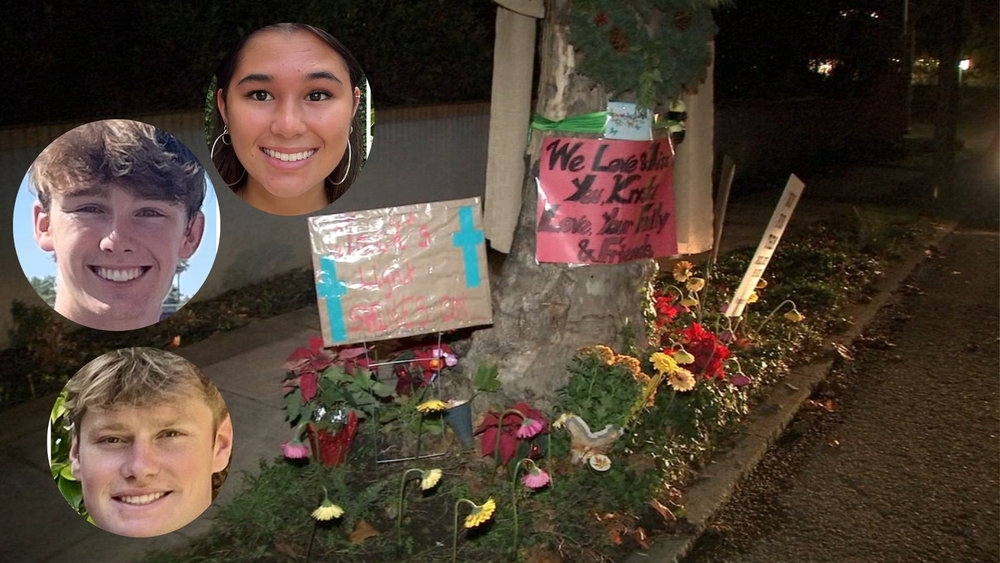
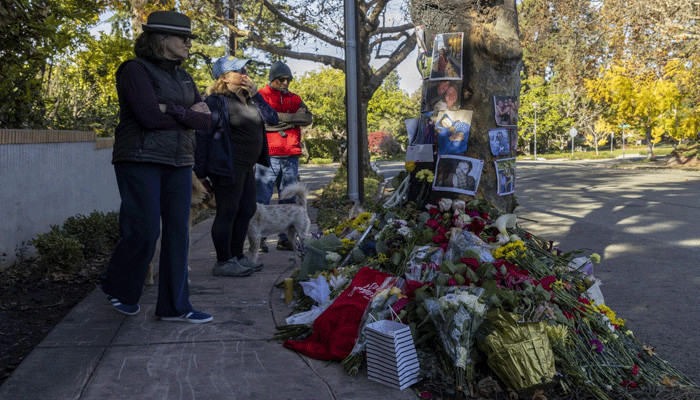
According to the complaint filed in Alameda County, California, the Cybertruck crashed in Piedmont just after 3 a.m. on November 27, 2024.
The vehicle struck a tree, and what happened next, according to the lawsuit, was immediate and horrifying.
The truck caught fire almost instantly, and witnesses said flames rose around ten feet into the air.
Inside that burning vehicle were four young people whose lives were about to be changed forever.
Nineteen-year-old Soren Dixon was behind the wheel.
Jordan Miller was in the passenger seat, while Jack Nelson, 20, and Krysta Tsukahara, 19, were seated in the back.
Only one of them made it out alive.
Dixon, Nelson, and Tsukahara died in the fire.
Miller survived, but survival came at a devastating cost.
His body, his future, and his mental health would all be permanently marked by what happened in those terrifying moments.
Now Miller is suing Tesla, claiming that the design of the Cybertruck’s electronic door system prevented escape.
His attorneys argue that the absence of exterior mechanical door handles was not just a modern design choice, but a dangerous flaw.
They say that when the vehicle crashed and fire erupted, the electronic system that controlled access failed at the exact moment when human lives depended on it most.
The lawsuit describes a scene that feels almost impossible to read without imagining the panic.
A friend who had been following the Cybertruck in a separate vehicle reportedly reached the wreck within seconds.
He saw the flames, rushed toward the truck, and tried to open the door.
But according to the complaint, he could not get it open.
There were no traditional exterior handles to grab in an emergency.
The buttons, the suit claims, were not working.
In a life-or-death moment, technology that was supposed to represent innovation allegedly became a barrier between trapped teenagers and the outside world.
The friend did not give up.
According to the complaint, he grabbed a nearby tree branch and began striking the front window.
He kept hitting until the glass finally broke.
Then, through chaos, heat, and flames, he pulled Jordan Miller to safety.
But he could not reach the others.
That detail sits at the center of the lawsuit and at the center of the heartbreak.
Someone was there.
Help arrived almost immediately.
And yet three young people still died inside the burning vehicle.
Miller’s attorneys say that is not just a tragic outcome, but evidence of a preventable design problem.
They argue that if there had been a mechanical way to open the vehicle from the outside, the three others might have had a chance.
Their case is built on the claim that relying on electronic door mechanisms, without accessible mechanical exterior handles, created an unreasonable danger in a high-speed crash followed by fire.
One attorney, Annie Wu, said a friend was there within seconds but still could not open the doors.
Her statement captured the core of the allegation with painful clarity.
Jordan Miller, she said, was trapped in a burning vehicle when he did not have to be.
That accusation now forms the moral and legal heart of the complaint.
The lawsuit does not name only Tesla.
It also names Dixon’s estate and Charles Patterson, the owner of the Cybertruck and a relative of Dixon.
The legal filing includes claims of negligence, design defect, failure to warn, and failure to recall against Tesla.
Against Patterson and Dixon’s estate, the suit also alleges negligence and negligent entrustment.
At the same time, the case is complicated by another deeply troubling fact.
Reports cited by news outlets said Dixon, the 19-year-old driver, had a blood alcohol level of 0.195 percent at the time of the crash.
That is far above the legal limit.
The reports also stated that cocaine was found in his system.
Those facts do not erase the design questions being raised in the lawsuit.
But they do make the tragedy even more layered, because this was not a crash caused by a single factor.
It was a collision between alleged impairment, a violent impact, a vehicle fire, and an emergency escape system that Miller now says failed when it mattered most.
In many tragedies, grief searches desperately for one clear explanation.
This case does not offer that kind of simplicity.
A drunk driver allegedly made a deadly decision.
A vehicle then burst into flames.
A survivor says a door system trapped people inside.
And three young lives were lost in a way that feels almost too cruel to accept.
For Jordan Miller, survival was not a clean escape.
According to the complaint, he suffered extraordinary injuries.
He was placed into a five-day coma.
He suffered burns to his airways and lungs, third-degree burns to his left leg and hand, four fractured vertebrae that required fusion with implants, and the removal of about half his colon.
Those injuries describe more than medical damage.
They describe a body that went through extreme trauma and a young life that now must be rebuilt around pain, recovery, and memories that will never fully leave.
The lawsuit also says Miller suffered emotional and psychological trauma.
That may be the most understated line in the entire case.
To survive a burning crash while three of your friends die beside you is not something a person simply moves on from.
The fire ends in minutes.
The memory does not.
There is the obvious physical suffering.
Then there is the invisible weight of survival itself.
Why him.
Could more have been done.
Would his friends still be alive if the doors had opened.
Those questions can become their own kind of prison.
Miller’s attorneys argue Tesla has known for more than ten years about the risks of occupants becoming trapped.
They say the company continued designing vehicles in ways that placed too much faith in electronics functioning perfectly under catastrophic conditions.
Their argument is blunt: when you design a vehicle with no mechanical way to open the doors from the outside, you are making a life-or-death bet that electronics will always work, even in a severe crash followed by fire.
Tesla has denied wrongdoing.
According to court filings referenced by reports, the company says the Cybertruck complies with federal safety standards and that it satisfied its duty to warn customers about the risks and dangers associated with the product.
That response sets the stage for what will likely become a major legal battle about safety, engineering, responsibility, and what consumers should reasonably expect in an emergency.
But outside the courtroom, the human loss is much easier to understand.
Three young people are dead.
Soren Dixon was only 19.
Krysta Tsukahara was 19.
Jack Nelson was 20.
They were home from college for Thanksgiving, a time usually tied to reunion, family, and gratitude.
Instead, their names are now tied forever to a fiery crash and a lawsuit trying to determine whether the vehicle they were in gave them any real chance to survive.
There is something especially painful about the timing.
The night before a holiday is supposed to feel full of possibility.
Young people return home.
Friends reconnect.
Parents expect to see their children at the table the next day.
But for three families, Thanksgiving became something else entirely.
It became a marker of absence.
A date that will now always come with grief before anything else.
The image described in the complaint is difficult to forget.
A Cybertruck wrapped in flames.
A desperate friend on the outside unable to open the door.
A branch swung against glass in a frantic effort to save whoever could still be saved.
Jordan pulled out.
Three others still trapped.
That sequence of events is exactly why this case is likely to resonate far beyond one crash.
It asks a question that many ordinary drivers may never have considered until now.
When technology fails in an emergency, what backup is left.
If an electronic door system becomes unresponsive after impact, how quickly can rescuers get in.
And if they cannot, should that design ever have been approved in the first place.
These are not abstract questions anymore.
They are tied to names, funerals, surgeries, and trauma.
They are tied to teenagers and young adults whose families now must live with a permanent void.
They are tied to a survivor who may spend years in rehabilitation while also carrying the emotional burden of being the only one who came out alive.
The legal process will try to assign responsibility.
One part of that responsibility may focus on Dixon’s actions that night.
Driving drunk at that level, and with cocaine reportedly in his system, was itself a catastrophic choice.
That truth must remain part of the story.
But the lawsuit insists that even after that crash occurred, there was still another layer of danger created by the vehicle itself.
That is the distinction Miller’s attorneys want the court to confront.
The crash may have begun the disaster.
The design, they argue, helped seal it.
Cases like this often become battles between engineering language and human reality.
One side cites compliance, testing, warnings, and regulations.
The other side points to a burning vehicle, a nonworking door system, and three dead young people who could not get out.
Somewhere between those arguments sits the truth a jury may eventually be asked to decide.
For now, what remains most visible is loss.
Three friends never made it home.
One survivor did, but with life-altering injuries.
And a friend who rushed to help now has to live knowing he reached the burning truck within seconds and still could not save everyone.
That kind of helplessness can haunt a person forever.
This story is not only about a lawsuit.
It is about what happens when modern design, alleged human recklessness, and catastrophic timing collide in the worst possible way.
It is about how innovation can be celebrated until the moment it fails under pressure.
It is about how one mechanical feature, or the absence of one, can become the difference between escape and death.
And it is about young lives cut short in a moment that still feels impossible to accept.
The lawsuit will move through the courts.
Experts will likely debate vehicle safety, emergency access, fire behavior, and defect claims.
Tesla will defend itself.
The plaintiffs will push their case.
And every filing will circle the same unbearable reality: three young people died in a fire while one friend was saved only after a witness shattered a window by force.
For the families of Dixon, Nelson, and Tsukahara, no verdict will restore what was lost.
For Miller, no legal victory can erase the pain in his body or the memory of that burning truck.
But the case may still matter deeply, because it asks whether this tragedy was only a crash or also a warning.
If Miller’s claims are true, then the issue reaches beyond one vehicle and one night.
It becomes a question of how far companies can go in replacing simple mechanical fail-safes with electronic systems in machines meant to protect human life.
And if those claims are not proven, the suffering remains no less real.
Either way, the story ends where all the legal arguments begin.
With four young friends in one vehicle.
A tree struck in the dark.
Flames rising almost instantly.
One survivor pulled through broken glass.
And three others who never got the chance to escape.