The afternoon light was soft and gentle over Churchill Heights when six-year-old Faye Swetlik stepped off the yellow school bus, her polka-dot boots tapping the pavement, her pink unicorn backpack bouncing on her back. It was a moment that seemed as ordinary as any other, with Faye humming to herself as she walked towards her home. She was full of life, as children often are, with her bright smile and the kind of energy that made everything seem possible.
Faye had just returned from school. Her mother had seen her get off the bus and watched her daughter head toward the house, comforted by the familiar sight of Faye’s small figure in the distance. The sound of her voice singing, the thump of her boots against the steps—everything seemed normal. It was a Monday, a day that should have slipped quietly into memory, with nothing remarkable about it. But in a single, gut-wrenching moment, that normalcy was shattered, and Faye’s world, along with the world of everyone who loved her, was about to change forever.
Around 3:45 p.m., Faye was outside, playing in the front yard. Her mother, who had seen her just minutes before, felt comforted by the simple sounds of the afternoon—rustling leaves, her daughter’s voice, and the rhythmic steps of Faye playing. But soon, those sounds faded. The cheerful humming, the echo of boots, all of it grew silent. Faye was no longer there.
Her mother stepped outside, calling her name, expecting to find her daughter happily playing, possibly just out of sight. The yard was empty. The street, usually filled with the sound of children playing, was quiet—too quiet. The air felt heavy, like it was holding its breath, and her heart began to race. There was something wrong.
She called Faye’s name again, this time louder, more desperate, hoping for the small voice to answer back from behind a bush or a tree. But there was nothing. No answer. No sign of her daughter.
Panic started to rise in her chest as she checked the backyard, the neighbor’s yard, and the patch of woods by the fence. Every place Faye might have gone to, every spot she could hide in, was searched. But there was no trace of her. Her little girl had vanished.
Minutes turned into an eternity. And still, there was no sign of Faye. Her mother’s calls grew frantic, and phone calls were quickly made. Neighbors were alerted, and police were called. The search began. Within the hour, the peaceful neighborhood, where Faye’s laughter had filled the air, was now a scene of chaos. Police officers, search teams, volunteers, and neighbors who refused to stay inside gathered together in a desperate effort to find the missing girl.
As evening fell, the sky dimming to a muted purple, the neighborhood filled with the sounds of helicopters overhead, their searchlights sweeping across rooftops and lawns. Dogs sniffed along the ground, following any scent they could find. Investigators moved quickly, searching garages, sheds, crawl spaces—anything that might contain the missing girl. Hundreds of hours of security footage were reviewed, from doorbell cameras to traffic lights, but nothing turned up. No trace of Faye, no sign of her whereabouts. The streets that had once been so familiar now seemed eerie and cold.
Faye’s school, Springdale Elementary, where she had spent her days learning and laughing with friends, was in shock. Teachers and students felt the absence of her bright smile. The school issued a statement, urging parents to hold their children close, promising support, and offering counseling. Every teacher wanted the same thing—just for Faye to walk through the doors again, smiling, ready to share the details of her “adventure” from that day. But as the hours stretched on, and the sun began to set, that hope grew faint.
Days passed, and the family’s fear turned into a daily, unbearable reality. Her mother, father, and the rest of her family clung to the belief that Faye would be found, that this was all a terrible mistake. They repeated the same words, clinging to them like a lifeline: “Faye wouldn’t just walk away. She knows her surroundings. She’s not the type to get lost. We just want to find her and bring her home.”
By Thursday morning, the investigators returned to the neighborhood. At this point, they weren’t expecting to find anything new, but they refused to give up. They had to keep searching, even if it seemed like there was nothing left to uncover. It was during this routine search, though, that a devastating discovery was made.
Director Byron Snellgrove, struggling to find the words, addressed the gathered reporters. His voice trembled as he confirmed the heartbreaking news. Faye had been found. But she was no longer alive. The air in the room seemed to suck out all of the oxygen, and a collective gasp of disbelief rippled through the crowd. A little girl, a child so full of life, had been taken from this world in the most unimaginable way.
Not only had Faye’s life been tragically cut short, but another body had been discovered in the same area. It was a male body, found nearby, and the authorities were treating both deaths as connected. The investigation had only just begun. Snellgrove told the press that the community was no longer in danger, but for the people of Churchill Heights, the danger had already done its damage. The innocence of their small, quiet neighborhood had been shattered.
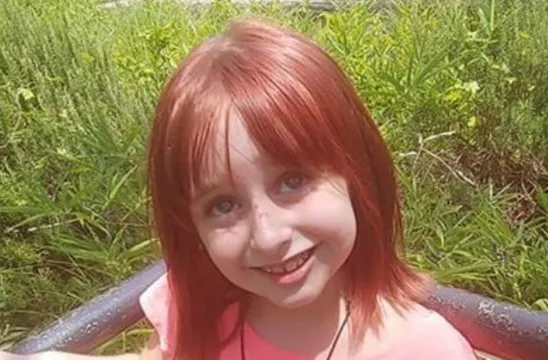
As the news spread, the weight of grief settled over Springdale Elementary. Teachers cried quietly in their classrooms, while parents pulled their children close, unable to shake the image of Faye’s empty desk. The community, once filled with the sound of children’s laughter, now found themselves standing in silence, their hearts heavy with sorrow. Neighbors gathered together with candles, silently mourning the loss of a child they had never known but who had touched their hearts in ways words couldn’t express.
The unanswered questions—Why her? Why any child?—hung in the air like a dark cloud. But no answer could ease the pain of those who had searched, hoped, and prayed for her safe return. Faye’s family, already torn apart by grief, held on to the memory of their daughter. She was so small, so full of life—always making up stories, singing off-key, and believing that her boots could make puddles jump. How could the world take someone so pure, so innocent?
Her family’s final statement echoed across the community, “We just want to find Faye and bring her home.” They had found her, but not in the way they had prayed for. The grief of her loss would never leave them, but they knew they had to keep going for Faye, for the memory of a child who had filled their lives with love, laughter, and light.
Faye’s story will be remembered, not just for the tragic way it ended, but for the community that refused to give up hope. For the family that never stopped searching. For the teachers and neighbors who held her in their hearts even when she was gone. Faye’s life, though far too short, had made an indelible mark on everyone who knew her. She will never be forgotten. Her spirit, the one that believed in puddles jumping and unicorns, will live on in the hearts of those who loved her.
In the quiet hallways of Springdale Elementary, where the memories of children still fill the walls, there will always be a place for Faye. It will always be her space—a space that no one else can fill, because some children shine so brightly, even the world’s darkest cruelty can’t extinguish their light.
Faye Swetlik was one of those children. And her story, though marked by loss, will forever be one of love.