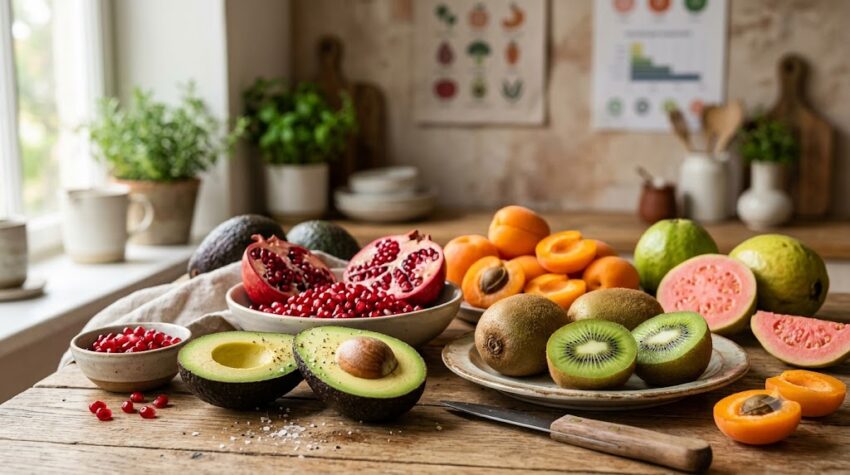
Fruits are not generally considered a major source of protein, but some varieties can still contribute a meaningful amount to your daily intake. Among the fruits that provide protein are guava, avocado, pomegranate, apricots, kiwi, and a few others.
Here’s a closer look at some of the best protein-rich fruits, based on information published by Good Health.
Guava
Protein: 4.2 grams per cup
Guava is a tropical fruit commonly grown in Mexico, Central America, the Caribbean, and South America. It contains slightly more protein than an egg white.
It is also exceptionally rich in vitamin C, providing nearly four times more than an orange—well above the recommended daily requirement. Since most of its nutrients are found in the skin, guava is best eaten whole without peeling.
Avocado
Protein: 3 grams per cup
Avocado is one of the most protein-rich fruits available. A cup of avocado contains about half as much protein as the same amount of almonds.
It also provides around 22 grams of heart-healthy monounsaturated fats, which support cardiovascular and brain health. In addition, one cup supplies more than one-third of the recommended daily intake of dietary fiber.
Pomegranate
Protein: 2.9 grams per cup
Although preparing a pomegranate takes a little effort, its nutritional benefits make it worthwhile. The edible seeds contain a modest amount of protein.
Pomegranates are often called a superfood because they are packed with antioxidants, which help reduce inflammation and protect cells from damage. To enjoy the fruit, simply separate the seeds from the peel and white membrane.
Apricots
Protein: 2.3 grams per cup
Apricots resemble peaches but have a mildly sweet and tangy flavor that many people describe as a blend of peach and plum.
They are rich in beta-carotene, an antioxidant responsible for their bright orange color. Beta-carotene supports eye health and may help protect against age-related macular degeneration.
The skin is edible, so there is no need to peel apricots before eating them.
Kiwi
Protein: 2.1 grams per cup
Kiwi may be small, but it is packed with nutrients. It is an excellent source of vitamin C and also contains vitamin E and folate, which support the immune system, digestion, and metabolism.
One cup of kiwi also provides 5.4 grams of fiber. For extra fiber, you can eat kiwi with its skin on, or peel and slice it if you prefer.