Part 2: The Keeper of Secrets
The first snow arrived days later, then another, then another. By January, the Blue Ridge stood buried beneath ice and white drifts. Creeks froze, trees cracked during the night, and smoke from valley cabins rose thin and weak into the frozen air. Families struggled; food grew scarce, and firewood vanished faster than expected. Every day became a battle against the cold.
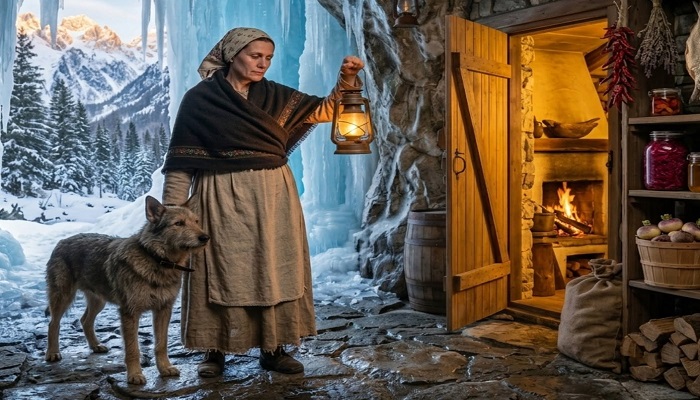
But inside the cave, life continued. The ancient refuge held steady. The fire burned safely, food stores remained strong, and the underground spring provided clean water. Lilly worked each day beside the firelight, repairing hides, mending clothing, studying the old maps, learning the mountain, learning herself. Somewhere during those long winter weeks, something changed inside her. She no longer felt like someone running away; she felt like someone building a future.
If you’ve stayed with the story this far, remember this: sometimes survival begins the moment a person stops waiting for rescue and starts trusting what they have learned. Then, one bitter afternoon in February, everything changed again. A man appeared near one of the hidden entrances. He was exhausted, his coat hanging loose, snow covering his boots. He looked moments away from collapsing. His name was Elias Turner, a school teacher from the valley.
Lilly watched him carefully from the trees. He carried no rifle, no threats—only desperation. She made a choice. She brought him inside. The moment Elias stepped into the warm cavern, he stopped moving. His eyes wandered across the clay pots, the hides, the fire, the glittering mineral walls, the ancient maps, the hidden world beneath the mountain. For three days, he stayed. For three days, they talked.
On the third evening, everything finally made sense. Elias recognized the symbols on the buckskin maps. He could read parts of them. Hours passed beside the fire, and together they uncovered the truth. The cave network was far more than a shelter; the maps marked valuable mineral deposits, hidden springs, medicinal plants—resources scattered throughout the mountains. The people who created this place had preserved generations of knowledge, knowledge waiting for someone to find it.
Spring arrived slowly, the snow retreating, the valley awakening, and word spread about the young woman living beneath Waterfall Mountain. Months later, Corbin returned—not with threats, not with rifles, but with greed. He had heard rumors of valuable minerals hidden inside the mountain. This time, he expected profit. Instead, he found Lilly standing beside Elias inside the cavern—calm, confident, unshaken. The frightened girl he had thrown away no longer existed.
Legal papers rested on a nearby table—mining rights, land claims, documents filed properly through the county office. Everything was lawful; everything belonged to her. For a long moment, Corbin simply stared at the cave, at the maps, at the future he could no longer control. Then he turned around and walked away. The mountain had delivered its answer.
Years passed. Lilly and Elias carefully protected the cave system. They shared its knowledge with scholars and teachers. Ancient seeds were preserved, forgotten records translated, and the story of the people who created the refuge was finally remembered. As for Lilly, she built a small life near the waterfall—simple, quiet, independent. Visitors sometimes asked how she survived that terrible winter. She would only smile and glance toward the mountain.
Because the greatest thing she found behind that wall of water was never the minerals, never the hidden chambers, never the wealth. It was the chance to become the owner of her own life. High inside the cave, long after the fire had gone cold and the years had drifted away, faint charcoal marks still remained on the stone wall—the first careful tally made by a hungry girl who entered the mountain with nothing and walked out with everything.