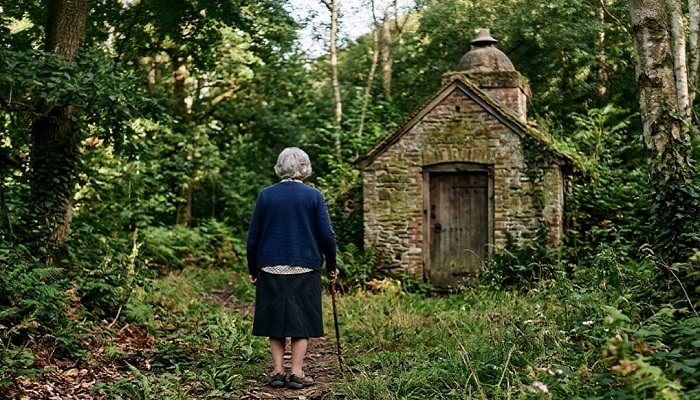
They Forced Her Into a Nursing Home and Emptied Her Account — No One Knew About Her Old Kiln House
They asked her to sign the papers on a rainy Thursday.
Evelyn Harper sat in a small office at Green Meadows Nursing Center, her hands folded neatly in her lap. At seventy-eight, she still walked without assistance, still cooked her own meals, still tended a vegetable garden larger than most people’s backyards.
Yet according to her son and daughter-in-law, she could no longer live alone.
“It’s for your safety, Mom,” her son, Richard, said.
“We worry about you,” added his wife, Linda.
The administrator slid several forms across the desk.
Evelyn adjusted her glasses and read every page.
Power of attorney.
Financial management authorization.
Property access permission.
The words made her uneasy.
“I don’t think I need all this,” she said quietly.
Richard sighed dramatically.
“Mom, you got lost driving last month.”
“I missed one turn.”
“You left the stove on.”
“I forgot once.”
Linda folded her arms.
“You can’t keep living by yourself forever.”
The room became very quiet.
Evelyn looked out the window at the rain.
She remembered raising Richard alone after her husband died.
She remembered working double shifts at the textile mill.
She remembered skipping meals so he could attend college.
Now her own son looked at her as though she were a burden.
Finally, she signed.
Not because she agreed.
Because she was tired.
Within three months, her life had shrunk to a single room.
The nursing home wasn’t terrible.
The food was edible.
The nurses were mostly kind.
But it wasn’t home.
Home had been a small white farmhouse on ten acres outside Cedar Creek, Missouri.
Home had been birds singing at sunrise.
Home had been tomatoes ripening on the vine.
Home had been freedom.
Now every day followed a schedule.
Breakfast at seven.
Medication at eight.
Activities at ten.
Lunch at noon.
Dinner at five.
Lights out by nine.
Evelyn felt as though she had been placed on a shelf.
One afternoon she overheard a conversation outside her room.
Two staff members were talking.
“Her family sold the farm already?”
“Apparently.”
“That’s fast.”
“They got nearly three hundred thousand.”
Evelyn froze.
Sold?
Her farm?
Her heart began pounding.
That evening she called Richard.
“You sold my property?”
There was a long pause.
“Mom, maintaining it wasn’t practical.”
“You sold it?”
“You weren’t using it.”
“I planned to go back someday.”
“Let’s be realistic.”
The line went silent.
Evelyn stared at the phone.
Then she asked the question she feared most.
“What happened to the money?”
Richard hesitated.
“We invested it.”
“How much is left?”
Another silence.
“Not all investments work out.”
The truth arrived before the words did.
Her account was gone.
Over the following weeks she learned more.
Much more.
Richard and Linda had purchased a larger house.
A luxury SUV.
A boat.
Expensive vacations.
Most of it financed through money that had once belonged to Evelyn.
Money she had spent fifty years earning.
When she confronted them, Richard became angry.
“You signed the paperwork!”
“You said it was for my care!”
“It was legal.”
Legal.
The word stung more than any insult.
Legal didn’t mean right.
Legal didn’t mean honest.
Legal didn’t mean family.
After that conversation, Richard stopped visiting.
Linda never came again.
Months passed.
Then a year.
The loneliness hurt.
But betrayal hurt more.
One spring morning, Evelyn sat alone in the nursing home’s garden.
A young volunteer named Sarah joined her.
Sarah was twenty-six and studying social work.
Unlike many visitors, she listened.
Really listened.
“You miss your old home,” Sarah said.
“Yes.”
“Was it beautiful?”
Evelyn smiled faintly.
“Very.”
“What do you miss most?”
The answer surprised even her.
“Not the farmhouse.”
“No?”
“The kiln house.”
Sarah frowned.
“The what?”
Evelyn chuckled softly.
“Most people don’t know what it is.”
And then, for the first time in years, she told the story.
When Evelyn was nine years old, her grandfather had owned a brickmaking operation deep in the woods.
Near a limestone ridge stood a small stone structure built around an old kiln.
Workers once fired clay bricks there.
The business disappeared decades before Evelyn was born.
Most people forgot the building existed.
But her grandfather loved the place.
Over many summers, he repaired it.
Added a roof.
Built shelves.
Installed a water cistern.
Created hidden storage spaces inside the thick walls.
“It became his retreat,” Evelyn explained.
“When he died, he left it to me.”
Sarah blinked.
“You still own it?”
Evelyn nodded.
“No one remembers it exists.”
Not Richard.
Not Linda.
Not the lawyers.
Not the real estate agents.
Not even the people who purchased her farm.
The kiln house sat on a separate parcel of land.
Barely an acre.
Hidden deep in the forest.
Forgotten.
Waiting.
That night Evelyn couldn’t sleep.
For years she had accepted her situation.
Accepted the loss.
Accepted the betrayal.
But now a thought refused to leave her mind.
The kiln house still belonged to her.
Not everything had been taken.
Something remained.
A piece of her life.
A piece of her independence.
A piece of herself.
The next morning she asked Sarah for help.
Three weeks later they stood before a county records clerk.
The documents confirmed everything.
Ownership remained entirely in Evelyn’s name.
Taxes had been paid automatically from a small trust established decades earlier.
The property was still legally hers.
Sarah looked excited.
“You have somewhere to go.”
Evelyn smiled.
For the first time in years, hope appeared.
Leaving the nursing home wasn’t easy.
Doctors evaluated her.
Lawyers reviewed records.
Social workers conducted assessments.
To everyone’s surprise, Evelyn passed every examination.
Her memory was excellent.
Her judgment was sound.
Her physical health was better than many people twenty years younger.
The original placement had been based largely on family testimony.
Family testimony that suddenly seemed questionable.
Two months later, Evelyn walked out carrying two suitcases.
Nobody from her family came.
Only Sarah.
Neither woman cared.
The journey to the kiln house took nearly an hour.
They parked beside an overgrown trail.
Then walked.
The forest seemed endless.
Birdsong echoed through the trees.
Sunlight filtered through emerald leaves.
Finally, the path curved.
The old structure appeared.
Exactly as Evelyn remembered.
Stone walls.
Brick chimney.
Wooden door.
Moss-covered roof.
Hidden among towering oaks.
Tears filled her eyes.
“Home,” she whispered.
The interior smelled of dust and history.
But it remained sturdy.
Remarkably sturdy.
The walls were nearly two feet thick.
The old cistern still functioned.
A wood stove stood near the center.
Storage compartments lined one wall.
Sarah explored every corner.
“This place is incredible.”
Evelyn laughed.
“My grandfather built things to last.”
For weeks they cleaned.
Repaired.
Organized.
Local volunteers helped.
A retired carpenter fixed damaged beams.
A plumber restored water lines.
Neighbors donated furniture.
Little by little, life returned.
Then came the discovery.
One rainy afternoon Evelyn opened a concealed compartment beneath a stone shelf.
She hadn’t touched it in decades.
Inside sat three metal boxes.
Dust covered every surface.
Her hands trembled.
She opened the first box.
Old family photographs.
The second contained letters.
The third contained something unexpected.
Very unexpected.
Gold coins.
Dozens of them.
Sarah gasped.
“Oh my goodness.”
Evelyn stared in disbelief.
Her grandfather had hidden them long ago.
Alongside the coins lay a handwritten note.
For Evelyn.
If you ever find this, it means life has taken an unexpected turn.
Remember that what matters most isn’t wealth.
It’s having a place where nobody can tell you who you are.
Love,
Grandpa
Evelyn cried openly.
Not because of the gold.
Because of the words.
Because someone had believed in her.
Long ago.
Before everything changed.
News traveled quickly through Cedar Creek.
People became fascinated by the elderly woman living in a forgotten kiln house.
Local newspapers ran stories.
Neighbors visited.
Volunteers helped maintain the property.
Soon school groups arrived to learn about local history.
The old brick kiln became a community landmark.
Evelyn welcomed everyone.
Children especially.
She loved telling stories.
Loved teaching history.
Loved feeling useful again.
The loneliness faded.
Purpose replaced it.
Then one afternoon a black SUV appeared.
Evelyn recognized it immediately.
Richard.
Linda.
They stepped out looking uncomfortable.
Neither had visited in nearly two years.
Now they suddenly remembered where she lived.
Evelyn wasn’t surprised.
The newspaper articles had mentioned the discovered coins.
Richard forced a smile.
“Mom.”
“Richard.”
“We’ve been worried.”
“No, you haven’t.”
Linda looked away.
The silence stretched.
Finally Richard spoke.
“We made mistakes.”
“Yes.”
“We’d like another chance.”
Evelyn studied him carefully.
For a moment she saw the little boy she once carried home after scraped knees and baseball games.
Then she remembered the nursing home.
The signatures.
The empty bank account.
The lies.
“We can talk,” she said.
Relief flooded his face.
“But understand something.”
“What?”
“You are my son.”
“Of course.”
“I forgive you.”
His eyes brightened.
Then Evelyn continued.
“That doesn’t mean I trust you.”
The smile vanished.
Truth often arrives without kindness.
But it remains truth.
Over the following years, Evelyn transformed the property.
With community support and grants, the kiln house became a small historical center.
Visitors came from across the state.
Students learned local history.
Retirees volunteered.
Researchers documented early brickmaking techniques.
The forgotten building became valuable.
Not financially.
Culturally.
Socially.
Emotionally.
It gave people something increasingly rare.
Connection.
At eighty-five, Evelyn still walked the forest path every morning.
Her wooden walking stick tapped softly against the earth.
Birds greeted her.
Wildflowers bloomed beside the trail.
Sunlight filtered through the canopy overhead.
Each day felt like a gift.
One afternoon Sarah, now married and expecting her first child, joined her on the path.
“You know,” Sarah said, “most people think this story is about the coins.”
Evelyn smiled.
“They’re wrong.”
“What is it about?”
The elderly woman looked toward the old kiln house nestled among the trees.
The stone walls glowed softly beneath green vines.
“It isn’t about hidden treasure.”
“No?”
“It’s about remembering your value when other people forget it.”
Sarah nodded.
Evelyn continued walking.
“When they put me in that nursing home, I started believing what everyone else believed.”
“That you were helpless?”
“Yes.”
“But you weren’t.”
“No.”
Evelyn smiled gently.
“I just needed to find my way back.”
Back to the forest.
Back to the kiln house.
Back to herself.
The path stretched ahead beneath the towering trees.
And for the first time in many years, she knew exactly where she belonged.