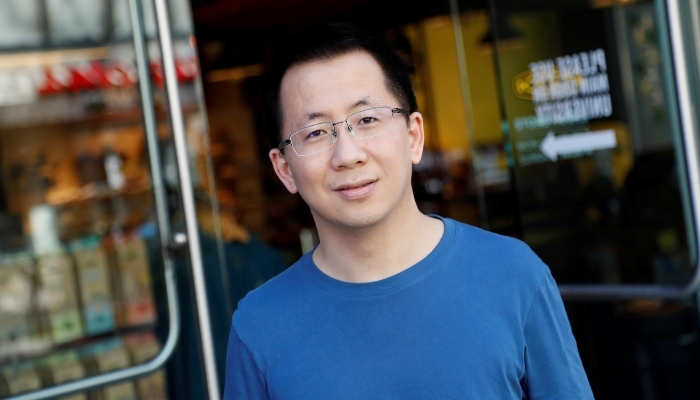
A former engineer who rose from a modest background to become the second-richest person in Asia, overtaking Mukesh Ambani
Zhang Yiming, the founder of ByteDance—the parent company of TikTok—has overtaken India’s Mukesh Ambani to become the second-richest person in Asia.
According to a Bloomberg report, the surge in ByteDance’s share value, along with rapid progress in artificial intelligence (AI) technologies developed by the company, significantly boosted Zhang Yiming’s wealth.
His net worth increased by a massive $24.1 billion in a single day, bringing his total wealth to $92.8 billion. With this, he now ranks as the second-richest person in Asia and the 21st richest person in the world.
Overall, Zhang Yiming’s wealth has increased by $27.7 billion so far this year.
On the other hand, Mukesh Ambani has lost $20.8 billion during the same period. His net worth now stands at $86.9 billion, making him the third-richest person in Asia and the 25th richest in the world.
India’s Gautam Adani remains the richest person in Asia, with a net worth of $117 billion, ranking 17th globally.
ByteDance’s AI assistant and chatbot “Doubao” is rapidly gaining popularity, with its user base now exceeding 300 million.
Despite being one of the richest individuals in Asia and China, Zhang Yiming is known for living a very private and quiet life, with very little public information available about him.
Born in 1983 in Fujian province, China, Zhang Yiming’s parents were government employees.
His name is based on a Chinese proverb meaning “to surprise everyone on the first attempt.”
He graduated in 2005 from Nankai University with a degree in software engineering, where he also met his wife, and they married shortly after.
In his own words, Zhang once said:
“After graduating in 2005, I joined a company called Kuxun. I was one of its early employees, starting as a regular engineer, but by my second year I was managing 40 to 50 people.”
He further explained that although he was initially responsible for technology, he later became actively involved in product planning when the company faced challenges. While many people told him not to take on multiple roles, he believed that responsibility and ambition naturally push a person to broaden their experience.
This hands-on experience in business operations later helped him build successful companies.
He also recalled that in 2007, he visited a client with the sales director, which helped him understand what makes a good sales approach. These early experiences later proved valuable when he started his own company and began hiring employees.
Before founding ByteDance, he also worked at Microsoft but left to pursue his own startup vision.
In 2012, he founded ByteDance, which later became globally famous through TikTok.
Interestingly, he initially did not even use TikTok himself. He once said:
“For a long time, I only occasionally watched TikTok videos and never posted any, because I felt the app was mainly for young people.”
He later added that the company eventually made it mandatory for all employees to create TikTok videos and achieve a certain number of likes—an initiative that became a turning point in his own understanding of the platform.