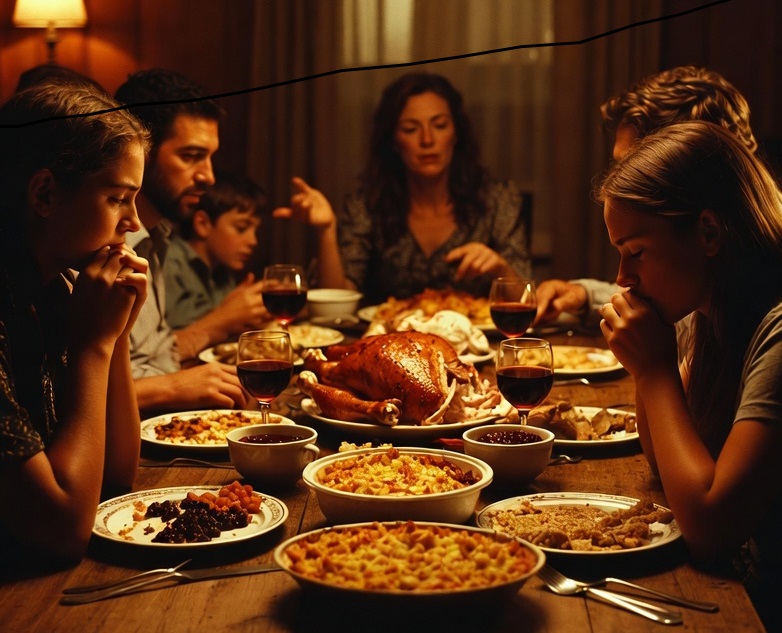
We stepped out into the cold so suddenly it felt like the house had been holding its breath and finally exhaled behind us.
The night air was sharp, clean in a way the dining room had stopped being. Maya pulled her coat tighter without saying anything. We walked to the car in silence, our footsteps loud on the gravel driveway, and for a moment I wondered if either of us would speak at all until we got home.
When I unlocked the doors, the car gave its familiar beep—ordinary, mechanical, almost disrespectful after what had just happened. Maya climbed into the passenger seat and stared straight ahead while I started the engine.
Only when we were halfway down the road did she finally speak.
“Was that… okay?” she asked.
I tightened my grip on the wheel. “What she said wasn’t okay.”
“I mean you leaving,” Maya said. “Like that.”
That question hit harder than Jennifer’s entire speech.
I glanced at her. In the glow of passing streetlights, she looked smaller than she had at the table, like the world had been pressing on her shoulders for too long.
“It was necessary,” I said. “There’s a difference.”
She nodded slowly, as if she was filing that away somewhere deep.
We drove the rest of the way home without music.
That night, she didn’t go to her room immediately. She sat at the kitchen counter while I made tea neither of us really wanted. The house felt unfamiliar, like it had absorbed the tension from earlier and didn’t know how to release it.
At some point, she said, “Do you think Grandma will be mad?”
I didn’t ask which one she meant.
“She might be uncomfortable,” I said carefully. “But that doesn’t mean we were wrong.”
Maya wrapped both hands around her mug. “Nobody stopped her.”
I didn’t answer right away.
Because that was the part that lingered—the part that didn’t belong to Jennifer alone. It belonged to everyone at that table who had seen a child shrink and chosen politeness over protection.
“No,” I said finally. “They didn’t.”
She stared into the tea like it might rewrite the evening if she looked long enough.
“I don’t want to be that kind of person,” she said.
My throat tightened.
“You’re not,” I said. “That’s why it hurt.”
For a long time after that, the house was quiet again. But it wasn’t the same silence as dinner. This one had edges. This one was honest.
The next morning, I woke to three missed calls from my mother and one text from Derek.
We need to talk.
Nothing from Jennifer.
That, in itself, said more than anything else.
Maya was already awake when I got up. She had her library schedule on the table, flattened carefully under a ceramic bowl so it wouldn’t curl at the edges again. She was reading the supervisor’s note for the fifth time, not smiling, just… steadying herself on it.
“You didn’t have to show them that,” I said.
She looked up. “I wanted to.”
There was something new in her voice. Not confidence exactly. Something quieter. Ownership.
I sat down across from her.
“You know,” I said, “people like your aunt don’t change because they’re proven wrong. They change if they decide to.”
Maya folded the paper once, neatly. “Or they don’t,” she said.
I nodded. “Or they don’t.”
That was the first time she didn’t look disappointed by that possibility.
Two days passed before Jennifer called me.
I almost didn’t answer.
When I did, her voice wasn’t sharp. It wasn’t performative. It was stripped down in a way I had never heard before.
“You humiliated me,” she said.
I leaned against the counter. “You humiliated a child first.”
A pause.
“I didn’t mean it like that,” she said, but there was no conviction behind it anymore.
“That’s the problem,” I replied. “You didn’t think it needed meaning. You thought it was just something you were allowed to say.”
Silence again.
Then, quieter: “Derek thinks I should apologize.”
“That’s a start,” I said.
“I don’t know how,” she admitted.
And for the first time, I believed her.
Because the truth was simple: she didn’t know how to apologize to someone she didn’t think she had the right to damage.
“You don’t fix it with words,” I told her. “You fix it by changing what you believe about people.”
She didn’t respond.
Before she hung up, she said something unexpected.
“Is she really good at her job?”
I closed my eyes briefly.
“Yes,” I said. “She is.”
And that was the end of the call.
Weeks passed.
Jennifer didn’t come over again.
Mom called more often. Carefully at first. Then less carefully. Dad didn’t mention the dinner unless I did, which I didn’t often.
But something else shifted.
Maya started talking more about the library—not just the tasks, but the people. A boy who couldn’t decide what book he liked until she helped him try five. An elderly woman who brought her homemade cookies every Friday. A retired teacher who said Maya reminded her that “small work can still be serious work.”
She stopped calling it “just the library.”
One evening, she told me she had been invited to apply for the youth leadership program her supervisor had mentioned.
“I don’t know if I’ll get in,” she said.
“That’s not the point,” I replied.
She smiled slightly. “You always say that when you think I will.”
I laughed under my breath. “Maybe I’m just optimistic.”
But I wasn’t thinking about acceptance that night.
I was thinking about something else entirely—the way she no longer asked if she was “enough” before she tried things.
The real change came quietly, months later.
A letter arrived addressed to Maya.
No announcement. No drama.
Just a plain envelope from the county program.
She opened it at the kitchen table.
She didn’t scream. She didn’t jump.
She just read it once… then again… then placed it down carefully as if sudden movement might break it.
“I got in,” she said.
I looked at her. “I know.”
She narrowed her eyes. “How?”
I shrugged. “Some things don’t surprise me.”
That made her laugh.
Not the polite kind. The real kind.
Later that night, she asked me something I didn’t expect.
“Do you think Aunt Jennifer will ever say sorry?”
I thought about it honestly.
“I think she might try,” I said. “But I think she’ll have to learn what she’s sorry for first.”
Maya nodded.
Then, after a pause: “I hope she does.”
Not because she needed it.
But because she could afford to hope without needing it.
That was the part that mattered most.
The following Thanksgiving, we didn’t go to Jennifer’s house.
We stayed home.
Maya cooked the green bean casserole again, but this time she didn’t ask if it looked fancy enough. She just made it.
At one point, she paused and said, “It tastes better when nobody’s judging it.”
I smiled. “Everything does.”
We ate quietly, but it wasn’t the old kind of silence.
It was the kind that doesn’t wait for someone to break it.
And somewhere between the second helping and the last bite, I realized something simple:
That night at the old dinner table hadn’t just been an ending.
It had been the moment one child stopped shrinking—and the rest of the world, whether it liked it or not, had to adjust to her size.