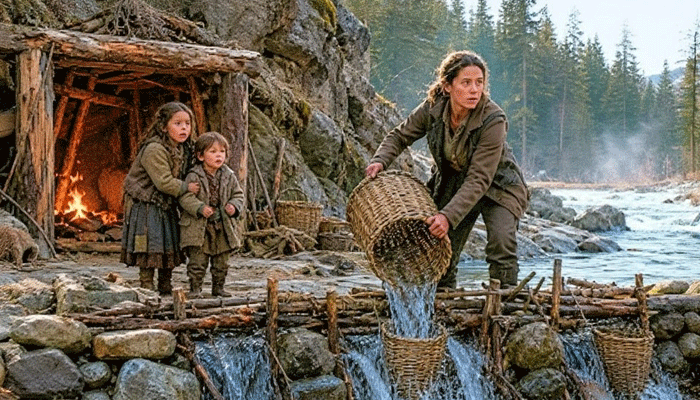
Kicked Out at 18, She Inherited Two Kids — She Built a Fish Dam and Cave to Stay Alive
In the winter of 1874, the mountains of Montana looked beautiful only to people who had never tried to survive inside them.
To everyone else, they looked like hunger.
They looked like frozen fingers, empty stomachs, and graves hidden beneath pine roots.
At eighteen years old, Clara Whitmore understood that better than most.
She understood it on the morning her father threw her out.
Her father didn’t raise his voice.
He didn’t need to.
Silas Whitmore stood in the doorway of their cabin with his rifle resting casually against his shoulder, his expression as hard as the frozen mud beneath his boots.
Clara stood in the center of the room, still holding the bucket of water she’d just carried in from the creek.
“I don’t understand.”
“Yes, you do.”
Her stepmother, Miriam, sat by the stove pretending not to listen.
Silas stared at Clara like she was livestock he’d decided not to feed anymore.
“You’re eighteen.”
Clara’s fingers tightened around the bucket handle.
“That’s all?”
Silas shrugged.
“You eat.”
He pointed toward the door.
“You don’t earn.”
Clara looked toward Miriam.
The woman wouldn’t even meet her eyes.
Her father’s voice dropped lower.
“You got ten minutes.”
Clara packed everything she owned into a flour sack.
Two dresses.
A hunting knife.
A blanket.
Her mother’s old Bible.
And a tin photograph of a woman she barely remembered.
When she stepped outside, snow crunched beneath her boots.
She expected anger.
She expected tears.
Instead, she felt something colder.
Freedom.
And terror.
By noon, Clara was three miles from home.
By sunset, she had no idea where she was going.
And by dark—
she heard crying.
Not animal cries.
Children.
Clara froze.
The sound came from the woods near a half-collapsed wagon.
She pushed through the pine branches and found them huddled beneath torn canvas.
A boy.
Maybe six.
And a little girl no older than four.
Their faces were blue from cold.
The boy lifted a rusted revolver with shaking hands.
“Don’t come closer.”
Clara stopped.
“Easy.”
The boy’s lips trembled.
“They’re dead.”
Clara looked past him.
Inside the wagon—
two bodies.
A man and woman.
Frozen.
She swallowed hard.
“Your parents?”
The boy nodded.
The little girl buried her face in his coat.
“What are your names?”
The boy hesitated.
“Eli.”
He touched the girl’s hair.
“And this is Rose.”
Clara looked at the mountains.
At the falling snow.
At two children who would never survive the night.
And for reasons she couldn’t explain—
she heard herself say:
“You’re with me now.”
That first night nearly killed all three of them.
Clara found a narrow crack in a rock wall, barely large enough to crawl inside.
She built a tiny fire from wet pine branches.
Smoke filled the chamber.
The children coughed.
Rose cried herself to sleep.
Eli stayed awake.
Watching Clara.
Watching everything.
Like he’d learned the world stole from people who blinked.
Near midnight he whispered:
“Why are you helping us?”
Clara stared into the flames.
“Because nobody helped me.”
Three days later, they found the river.
A wild mountain river roaring through stone.
Clear.
Cold.
Alive.
Clara stood on the bank while Eli kicked at the rocks.
“You smiling?”
Clara realized she was.
“Yes.”
“Why?”
She pointed downstream.
“Because rivers feed people.”
The cave came first.
It wasn’t much.
Just a hollow in the hillside large enough for three bodies and a fire.
But Clara worked from sunrise until moonrise.
Dragging stones.
Cutting timber.
Packing mud into cracks.
Eli helped without being asked.
Rose gathered pinecones and moss.
Within a week, the cave had walls.
A chimney.
Shelves carved into stone.
Beds made of cedar branches.
For the first time—
it felt like home.
Food was harder.
Rabbits were scarce.
Berries were gone.
And Clara had only three bullets.
So she watched the river.
Studied it.
Learned it.
She noticed something.
At one narrow bend, fish gathered where the current slowed.
Hundreds of them.
Silver flashes beneath the water.
And that’s when Clara got her idea.
Eli frowned as Clara dragged logs toward the river.
“What’re you doing?”
She dropped one with a splash.
“Building dinner.”
Rose giggled.
“That’s silly.”
Clara smiled.
“Maybe.”
For six days they worked.
They drove sharpened stakes into the riverbed.
Wove branches between them.
Stacked stones against the current.
Built channels from wood.
A trap.
A weir.
A dam that guided fish into narrow baskets.
The river fought them every step.
Twice Clara was knocked into freezing water.
Once she nearly drowned.
But she kept building.
Because hunger doesn’t negotiate.
On the seventh morning—
Rose screamed.
“CLARA!”
Clara ran to the river.
The basket was moving.
Thrashing.
Silver bodies slapped against wood.
Fish.
Dozens of them.
Eli stared.
“How…”
Clara laughed—
really laughed—
for the first time in years.
And then she cried.
Because for the first time—
they weren’t dying.
Word spread.
Mountains always carried stories.
Hunters saw smoke.
Trappers saw children.
Prospectors saw the fish dam.
And by spring—
people came.
Not to help.
To take.
The first was a man named Frank Dalton.
Big.
Dirty.
Mean.
He rode in with two friends and dismounted beside the river.
Frank looked at the dam.
Then at Clara.
“Nice setup.”
Clara kept chopping wood.
“What do you want?”
Frank grinned.
“Half.”
“Half of what?”
He pointed.
“Everything.”
Eli reached for Clara’s rifle.
She shook her head.
Frank stepped closer.
“Girl your age can’t defend this place.”
Clara looked him dead in the eye.
“No.”
She nodded toward the cliffs above.
“But the mountain can.”
Frank frowned.
“What?”
Clara smiled.
Then pulled a rope.
Logs came crashing down the hillside.
Frank’s horse screamed.
The men scattered.
Boulders thundered into the river.
Water exploded skyward.
Frank barely escaped with his life.
As he rode away—
he shouted:
“You’re insane!”
Clara cupped her hands around her mouth.
“That’s why I’m still alive!”
By summer—
their cave became a fortress.
Clara expanded the chambers.
Built smoke vents.
Storage rooms.
Drying racks.
A hidden entrance behind a waterfall.
Eli learned traps.
Rose learned herbs.
And Clara—
Clara became something the mountains respected.
Not a girl.
Not a victim.
Not someone’s daughter.
A builder.
A survivor.
One evening Eli sat beside the fire sharpening a knife.
He was taller now.
Stronger.
Still serious.
“Can I ask you something?”
Clara looked up.
“Sure.”
He hesitated.
“Why didn’t you leave us?”
Clara stared into the flames for a long time.
Then she smiled softly.
“Because I didn’t inherit two kids.”
Eli frowned.
“What?”
She touched his shoulder.
“I inherited a family.”
Years passed.
The dam grew wider.
The cave deeper.
Gardens appeared on the riverbanks.
Then cabins.
Then smoke from other chimneys.
Then children’s laughter echoing through the valley.
Travelers stopped calling it wilderness.
They started calling it—
Whitmore Crossing.
Named after the girl who’d arrived with nothing.
And built everything.
One autumn afternoon, a rider appeared at the edge of the settlement.
Older.
Bent.
Gray.
Silas Whitmore.
Clara’s father.
He sat silently on his horse, staring at the village.
At the fish channels.
At the cabins.
At the people.
At the children running through the grass.
And finally—
at Clara.
She stood by the river in a green jacket, hands wet from lifting baskets of fish.
Silas dismounted slowly.
“I heard stories.”
Clara kept working.
“Stories travel.”
Silas swallowed hard.
“I came to…”
He stopped.
Because some words arrive too late.
Clara finally looked at him.
The man who’d thrown her into winter.
The man who thought she’d die.
Silas whispered:
“I was wrong.”
Clara studied him.
Then looked toward Eli and Rose laughing by the water.
When she spoke—
her voice was calm.
Strong.
And final.
“I know.”
She lifted the basket.
Turned.
And walked back toward home.
Not the home she lost.
The home she built.
That night, as firelight danced across stone walls deep inside the cave, Rose—now nearly grown—looked at Clara and smiled.
“Do you ever regret being kicked out?”
Clara listened to the river outside.
To the laughter.
To the life.
To the family.
And she smiled.
“Not for a second.”
Outside—
the dam held.
The river sang.
And the mountain kept her secrets.