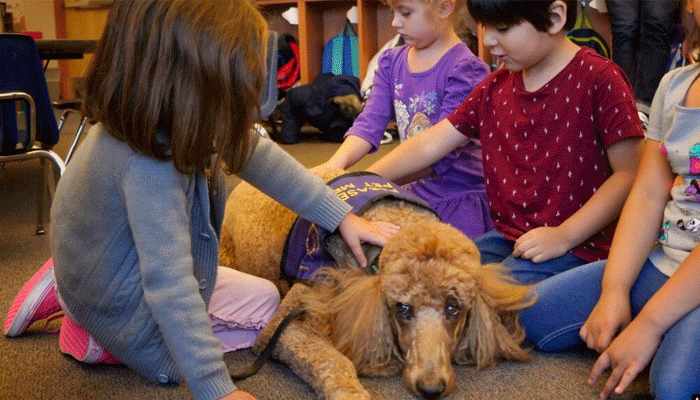
A new study has revealed that children who grow up playing with pet dogs or cats have a significantly lower risk of developing the mental illness schizophrenia later in life.
Research led by Robert Yolken at the Children’s Center of Johns Hopkins University in Baltimore, Maryland, found that severe mental and neurological disorders are linked to changes in the human immune system that arise due to environmental stress in early childhood. Yolken says that pet dogs and cats are among the first living beings that children closely observe, and they play an important role in their mental development.
At the Sheppard Pratt Health System in Baltimore, Yolken and his team studied people who had developed schizophrenia or bipolar disorder and had been in contact with pet dogs or cats during the first 12 years of their lives. The study notes that previous scientific research suggests contact with cats and dogs affects human brain cells through allergy-like reactions, and in many cases has positive effects on the chemical structure of brain cells.
For their research, Yolken and his team selected 1,371 individuals from Baltimore aged between 18 and 65. Among them, 396 had suffered from schizophrenia, 381 had bipolar disorder, and 594 were considered mentally healthy based on test results. In the second phase, participants were asked whether they had a pet dog or cat from birth until the age of 12.
The findings showed that individuals who had contact with a pet dog or cat before the age of 13 had a 24 percent lower risk of developing schizophrenia or bipolar disorder. Yolken said that those most protected from these two mental illnesses were people who had a pet dog at the time of their birth or who came into contact with a pet dog during the first three years of life.
According to Yolken, when young children interact with pet dogs, it strengthens their immune system, which in turn helps protect them genetically from developing schizophrenia.