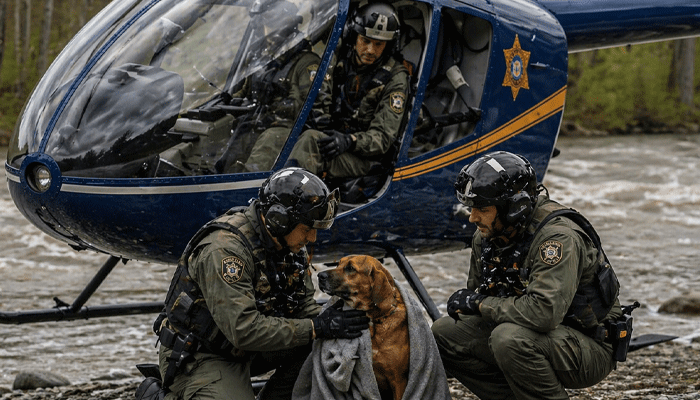
The roar of rotor blades cut through the damp afternoon air as a sheriff’s helicopter drifted low over the churning waters of the Seneca River in upstate New York. What had begun as a routine patrol—another quiet sweep over familiar terrain—was about to turn into a life-or-death operation that would test the crew’s training, instincts, and resolve.
From above, the river looked deceptively calm in places, but recent rains had swollen its banks and accelerated its current into a relentless, swirling force. It was the kind of water that could sweep away debris, overwhelm swimmers, and erase any trace of struggle within seconds. The crew had flown over this stretch countless times before. Nothing about the day suggested it would be different—until one of them spotted movement.
At first, it was just a flicker—a dark shape bobbing unnaturally against the current. The pilot circled back, narrowing their view. As the helicopter dipped lower, the truth came into focus: a dog, barely keeping its head above water, fighting a losing battle against the river’s pull.
“It’s a dog,” one crew member reportedly said over the headset, his voice cutting through the steady hum of the aircraft. There was no hesitation in what came next.
The pilot adjusted course immediately, guiding the helicopter into a controlled descent. Hovering above moving water is no small feat; the wind generated by the rotors can create unpredictable turbulence, especially over a fast-flowing river. One wrong adjustment could push the animal further into danger—or worse, destabilize the aircraft itself.
Inside the cockpit, communication sharpened. Each crew member fell into a familiar rhythm, their training taking over. While the pilot worked to maintain a steady hover, another rescuer clipped into a safety harness and prepared the hoist system. The door slid open, and the rush of wind and noise intensified.
Below them, the dog’s movements had slowed. Its head dipped dangerously close to the surface between gasps. Time was running out.
With practiced precision, the rescuer moved to the edge of the helicopter’s skid, partially stepping out into open air. Suspended by a harness and guided by the crew inside, he descended toward the water. The margin for error was razor-thin: too slow, and the dog might slip under; too fast, and the rotor wash could push it away.
As the rescuer neared the surface, he reached for the animal. The dog, soaked and trembling, made no attempt to resist. Whether from exhaustion or instinct, it allowed itself to be secured into the rescue line. That moment—brief but critical—marked the turning point between survival and tragedy.Dogs
“Got it,” the rescuer signaled.
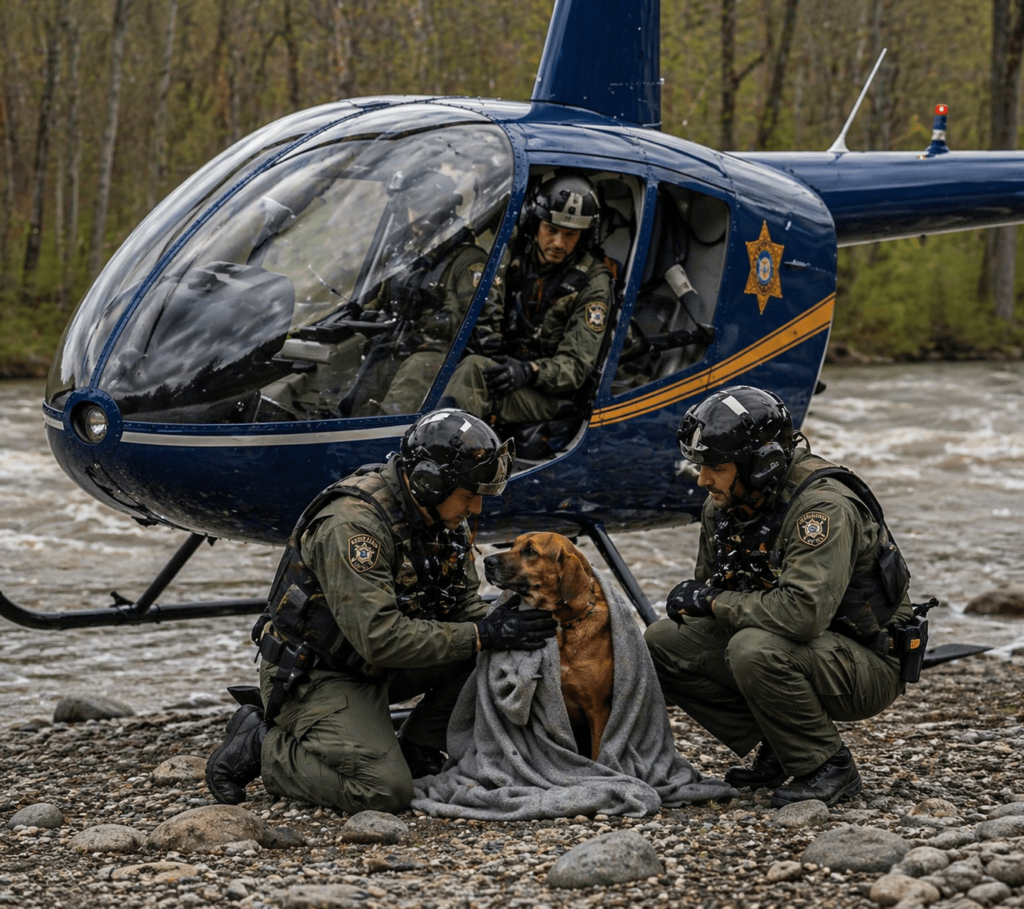
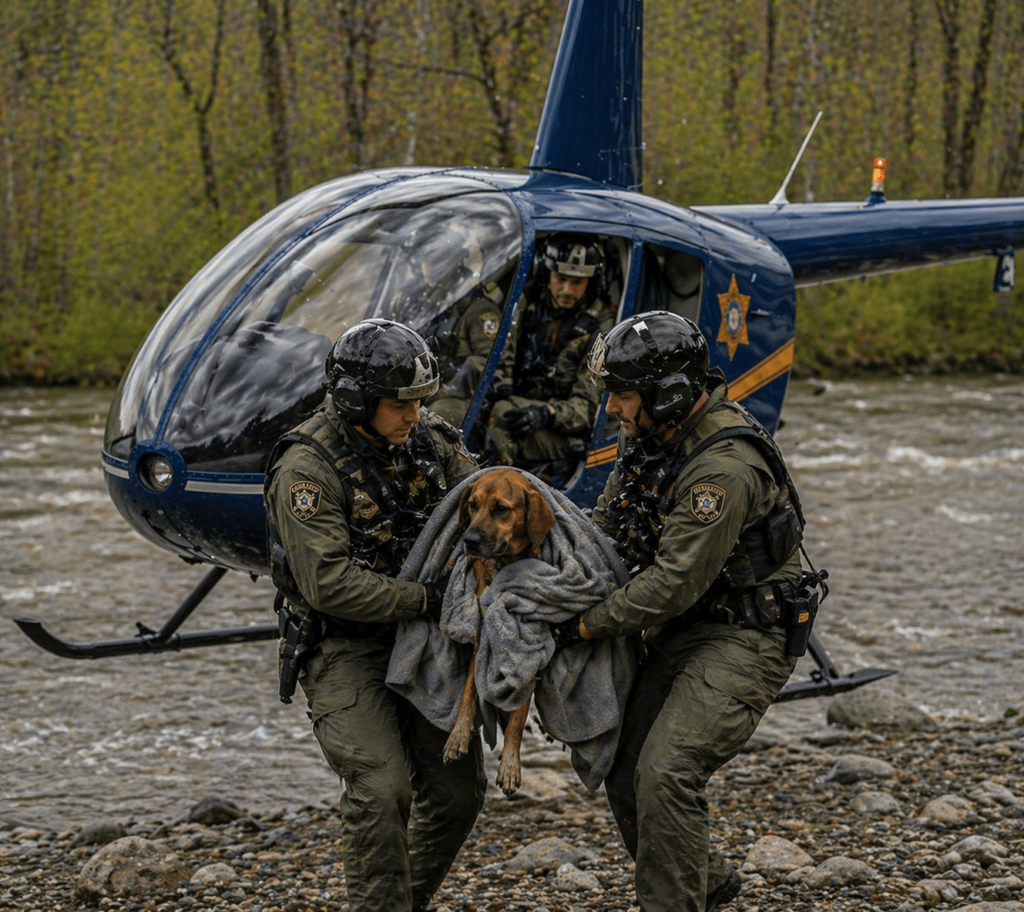
Within seconds, both man and dog were lifted upward, rising out of the river’s grip. The dog dangled in the harness, water streaming from its fur, its body limp but alive. Back inside the helicopter, the crew moved quickly. A blanket was wrapped around the animal, and efforts began to stabilize it.
Its breathing was shallow. Its body shook uncontrollably. But it was alive.
As the helicopter banked toward shore, the tension in the cabin gave way to cautious relief. On the ground, emergency responders were already preparing to receive the rescued animal. Firefighters stood ready with warming equipment and basic medical supplies, alerted by radio just moments earlier.
When the helicopter touched down, the transition was seamless. The dog was carefully transferred into waiting arms, its condition closely monitored as it was rushed to receive further care. For the crew, it was the end of one mission—but for the dog, it was the beginning of a second chance.
Details about how the animal ended up in the river remain unclear. It may have fallen in accidentally, been swept away from a nearby bank, or wandered too close to the water’s edge. What is certain, however, is that without the helicopter crew’s quick response, the outcome would have been very different.
Stories like this often unfold quietly, without the fanfare of larger emergencies. There are no headlines about massive evacuations or widespread disasters—just a small life, nearly lost, and a team that refused to look away.
Yet it is precisely these moments that reveal the deeper character of those who serve.
Animal rescues, while sometimes viewed as secondary to human emergencies, require the same level of skill, urgency, and compassion. In many cases, they are even more complex. Animals cannot communicate their condition, follow instructions, or assist in their own rescue. Every movement must be anticipated, every risk carefully managed.
For the crew involved, the decision to act was immediate and unquestioned. There was no debate about whether the effort was “worth it.” The sight of a living creature in distress was enough.
And perhaps that is what resonates most about this story.
In a world often dominated by large-scale crises and overwhelming headlines, it is easy to overlook the quieter acts of heroism—the ones that don’t make national news but matter deeply to those involved. A dog, alone in a river, may seem like a small story. But for that dog, it was everything.Dogs
The image of the rescue lingers: a helicopter suspended above rushing water, a rescuer stepping into open air, and a fragile life being lifted from danger. It is a snapshot of courage, coordination, and compassion converging in a single, decisive moment.
As the dog continues its recovery—likely warmer, safer, and far from the river that nearly claimed it—the impact of that rescue extends beyond a single life saved. It serves as a reminder of what can happen when vigilance meets action, when training meets empathy, and when people choose to intervene rather than pass by.
For the sheriff’s helicopter crew, the patrol eventually resumed. The river continued to flow, indifferent to what had just occurred above it. But for those who witnessed the rescue—or now hear its story—it stands as a powerful testament to the difference a few determined individuals can make.
Sometimes, all it takes is a second look, a quick decision, and the willingness to act.
On that day above the Seneca River, that was more than enough.