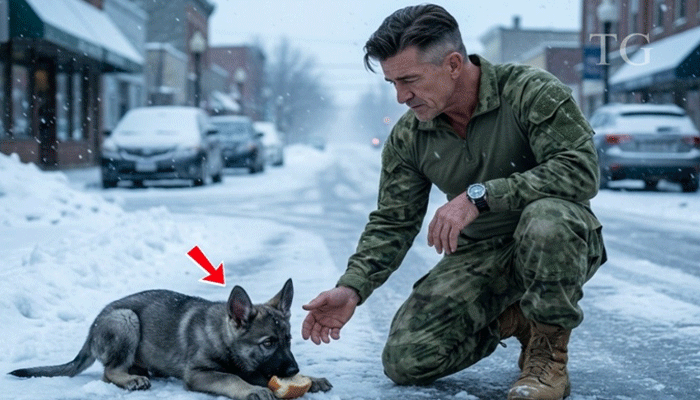
The coldest winter in decades swallowed the town, freezing roads, silence, and hope itself. But a 3-month-old stray dog kept moving, searching every corner for scraps just to survive.
Half-starved and shaking, it followed one faint scent that led to a broken wooden cabin at the edge of the foreSt. Inside lived a retired SEAL who had already lost the only dog he ever loved and swore never to feel that pain again.
Yet, when he saw the fragile puppy collapse at his door, he chose to open it.
And everything changed. He gave warmth, food, and his last savings to save a life that wasn’t even his, never knowing what it would cost him.
Winter did not arrive like a storm. It settled quietly, patiently, like something ancient reclaiming ground it had once owned.
Northern Montana lay beneath a sky so clear it felt almost cruel. The light was sharp, almost surgical, reflecting off endless sheets of snow that stretched toward the dark edge of the pine foreSt. It was the kind of brightness that did not warm, only revealed how cold everything truly was.
At the edge of that frozen silence stood a cabin. Old wood, faded beams, a chimney that still breathed, though not as strongly as it once had.
Inside, Gideon Cross moved like a man who had long ago learned to waste nothing, not time, not motion, not emotion.
He was 55, though the years had not softened him. Tall, around 6 ft 1, with broad shoulders that still carried the posture of command.
His body was solid, maintained not out of vanity, but habit. Discipline did not leave a man like him.
It simply changed shape. His face was sharply cut, the lines of his jaw clean and deliberate.
No beard, never. His dark brown hair, streaked with silver, was kept in a precise undercut, neat even here, in a place where no one would notice.
But it was his eyes that held the winter. Blue-gray, quiet, watching more than speaking.
There had been a time when those eyes looked ahead. Now, they mostly looked inward.
Gideon poured coffee into two cups. The ritual was exact, measured, unchanged. Steam rose in twin spirals.
He stood there for a moment, hands resting lightly against the edge of the counter, as if waiting for something that had already decided not to come.
Then, without hesitation, he picked up one cup and poured it slowly down the sink.
The sound was soft, final. He did this every morning, not because he forgot, but because he remembered too well.
Near the stone fireplace, hanging from a small iron hook, was a worn leather collar.
The edges were cracked from years of use, the metal tag dulled by time. It hadn’t been touched in months, or maybe longer.
Gideon never moved it. Some things, if you move them, stop being real. Outside, the wind dragged thin lines across the snow like fingers searching for something buried.
Far from the cabin, at the edge of town, where the roads became suggestion rather than structure, something small moved.
A puppy, 3 months old, maybe less. A German Shepherd, though not the proud, strong kind one imagined.
This one was narrow, its ribs faintly visible beneath a coat of gray-silver fur mixed with darker shadows along its back.
The coloring was unusual, almost ghost-like against the snow. One ear stood upright, the other folded slightly, as if it hadn’t yet decided what it wanted to be.
Its paws were too large for its body. Its hunger was larger still. The puppy moved from one place to another, nose low, sniffing through snow, digging weakly at discarded wrappers, frozen scraps, anything that might once have been food.
It did not linger where people were. It had already learned that warmth often came with hands that pushed, voices that shouted, boots that stepped too close.
So, it stayed just beyond reach, just beyond belonging. It found a crust of bread once, hard as stone.
It gnawed at it with small, determined bites, stopping only when the cold made its jaw tremble.
And still, it kept moving, because stopping meant freezing, and freezing meant The thought never finished.
Instinct rarely needed full sentences. By the time the sun dipped low, staining the snow in pale gold, the puppy had wandered farther than it realized.
The scent of food had grown faint. The town had thinned behind it. Ahead stood the forest and the cabin.
Smoke curled from the chimney in a thin, uncertain line. The puppy paused. It didn’t know what a home was, but it knew what warmth smelled like.
It took a step forward, then another. Each movement slower than the laSt. When it reached the small wooden steps of the cabin, its legs trembled so badly it nearly fell.
It lowered itself carefully, curling into a tight shape against the door, pressing its thin body into the wood as if trying to borrow heat from something that might remember how to give it.
Inside, Gideon stood by the window. He had seen it from the moment it crossed the edge of the clearing.
He watched the way it moved, not like something curious, but like something calculating how long it had left.
His jaw tightened. For a long time, he did nothing. His hand rested on the edge of the window frame, fingers still, but not relaxed.
The puppy shifted outside, a small movement, barely there. Gideon turned away. He walked back to the table, sat down, picked up his coffee, drank, set it down.
The cabin was quiet again, too quiet. A faint sound broke the silence, not a bark, not a whine, just a soft, almost accidental scratch against wood.
Gideon froze. The sound came again, lighter this time, weaker, as if whatever made it wasn’t sure it had the strength for a second attempt.
He didn’t move toward the door, but his eyes shifted slowly, toward the fireplace, toward the old collar.
For a brief, impossible second, something inside him twisted. Not memory, not quite, something closer to recognition, as if the past had not stayed buried, as if it had found its way back and was waiting outside.
The sound stopped, completely. And that silence, that was worse. Gideon stood, not quickly, not decisively, but inevitably.
He crossed the room, each step measured, controlled, as if he were approaching something volatile.
His hand hovered near the door handle. He didn’t touch it, not yet. His breath slowed.
His mind moved through the old logic. You don’t take in what you can’t protect.
You don’t start what you might not finish. You don’t build something just to watch it break.
Outside, the wind picked up, sweeping loose snow across the steps, partially covering the small shape curled against the door.
Gideon closed his eyes, just for a moment. When he opened them again, they were harder, colder.
He turned away, walked back to his chair, sat down, and stayed there. The night deepened.
The temperature dropped further. Inside the cabin, the fire burned steady. Outside, the world narrowed.
Time stretched. And somewhere between one breath and the next, something changed. A soft thud, so quiet it might have been imagined.
But Gideon didn’t imagine things. He stood again, faster this time, crossed the room, and opened the door.
The cold hit him like a wall, sharp, immediate, unforgiving. On the wooden steps, half-covered in blown snow, the puppy lay still.
Too still. For a split second, Gideon didn’t move, because he had seen this before.
Different place, different time, same stillness, same unbearable finality. His jaw clenched hard. No. The word left him before he could stop it.
He stepped forward, boots crunching against ice, and crouched down. His hand reached out, hesitant at first, then firm.
The puppy’s body was cold, but not frozen, not yet. A faint tremor ran through it.
Alive, barely. Gideon exhaled, sharp, controlled, like he was forcing something inside himself to stay in place.
He lifted the puppy. It weighed almost nothing. Too light, too easy. The door slammed shut behind him as he stepped back inside, carrying the small, fragile bundle of fur into the warmth.
The fire crackled louder, as if noticing. Gideon moved with quiet precision. A towel, drying the snow from its coat, gentle, but efficient.
No wasted motion. The puppy didn’t resist, didn’t react much at all. Its eyes flickered open once, briefly, brown, not afraid, just tired.
Gideon placed it near the fireplace, close enough to feel the heat, but not so close as to burn.
He knelt there, watching, waiting, the way he used to wait, in different places, for different reasons.
Minutes passed, then a small breath, deeper this time. The puppy shifted, just slightly, but enough.
Gideon leaned back, resting his hands on his knees. His shoulders lowered a fraction. Not relief, not yet, just less tension.
He stood, walked to the kitchen, and returned with a small bowl. Warm water first, then food, softened, broken into pieces.
He placed it down. The puppy didn’t move. Gideon waited. Then slowly he reached out and nudged it gently.
Come on. The voice was low, rough, unused. The puppy’s nose twitched. A faint movement, then another.
It dragged itself forward, inch by inch, until its mouth reached the edge of the bowl.
It ate, not fast, not desperate, just carefully, like it didn’t trust the food to stay.
Gideon watched every bite, every swallow, as if counting something invisible. After a while, the puppy stopped, curled slightly, and lay still again, but this time its breathing was steadier, warmer, alive.
Gideon exhaled, a long, quiet breath. He looked toward the fireplace, toward the collar. For the first time in a long while, he didn’t look away immediately.
Then he turned back to the small creature now sleeping on his floor. He grabbed an old blanket, folded it once, placed it beside the fire.
Then carefully, he lifted the puppy again and set it down on the fabric. It didn’t wake, didn’t flinch, just settled, as if it had always belonged there.
Gideon stood over it for a moment, then spoke, softly, more to himself than anything else.
Just for tonight. He paused. His eyes lingered. That’s all. But something in his voice, something small, almost unnoticeable, had already begun to change.
Outside, the wind moved on. Inside, the fire held, and for the first time in months, the cabin was no longer breathing alone.
Morning did not arrive all at once. It seeped in slowly, pale light pressing through the frost-clouded window, stretching thin across the wooden floor, like something hesitant to enter.
The cabin still held the warmth from the night before, but it felt different now, occupied, unsettled, as if it had not yet decided whether to accept the presence of something new.
Gideon Cross was already awake. He always was, long before sunrise, long before thought could catch up with habit.
He stood by the small stove, pouring coffee into a single cup this time, then paused.
His hand hovered over the second mug, still there, still clean, still waiting. He didn’t pour, not today, not yet.
Behind him, near the fireplace, the small bundle of gray-silver fur shifted. The puppy, alive.
That fact alone still carried weight. Gideon glanced over his shoulder. The dog, still nameless in his mind, lifted its head slightly, eyes half-open, adjusting to the light like something unsure if it had permission to wake up.
It didn’t bark, didn’t move much, just watched. Gideon turned back. Stay there. The words were quiet, but firm, automatic, the kind of tone built from years of command.
The puppy didn’t respond. Of course it didn’t. It probably didn’t understand words. But something in his voice made it lower its head again.
That was enough. Gideon stepped outside. The cold hit differently in the morning, cleaner, sharper, less chaotic than at night.
Snow creaked under his boots as he walked toward the woodpile, his breath steady, measured.
Routine. That was how things stayed under control. Inside, the puppy waited. For a while, it didn’t move at all.
Then slowly, it pushed itself upright. Its legs trembled, not from fear, but from weakness still lingering beneath its small frame.
It took a step, then another. The cabin was large compared to its size, each piece of furniture towering like something meant for giants.
The smell of wood, ash, and something faintly metallic lingered in the air. The puppy sniffed, moved, found a loose boot near the door.
It nudged it, then bit, not hard, just enough to teSt. The boot tipped over.
That seemed to surprise it. It backed up quickly, ears uneven, one lifted, the other folding slightly, and then cautiously approached again.
This time, it grabbed the lace, pulled. The lace slid free with a soft whisper against leather.
The puppy froze, then wagged its tail, just once. A small victory. Outside, Gideon paused mid-swing as the faint sound of something falling echoed through the cabin.
His jaw tightened. He didn’t rush in. He didn’t panic, but the rhythm of his chopping changed.
More force, less patience. When he returned, carrying an armful of wood, he stopped at the doorway.
The scene inside was different. The boot lay on its side. The lace dragged halfway across the floor.
And the puppy. It stood in the middle of the room, the lace still clenched lightly between its teeth, staring at him like a child caught doing something both forbidden and necessary.
Gideon said nothing. He stepped inside, set the wood down, closed the door. The puppy didn’t run, didn’t hide.
It just watched him, waiting. Gideon walked over, picked up the boot, and slowly pulled the lace free.
The puppy resisted for half a second, just enough to prove it wasn’t entirely helpless, then let go.
Their eyes met. There was no fear in the dog’s gaze now, just attention. Gideon exhaled through his nose.
Don’t do that. The puppy tilted its head. The command meant nothing, but the tone, sharp, controlled, made it sit down automatically.
That made Gideon pause, not because it obeyed, but because it chose not to flee.
He turned away. That was enough interaction, more than enough. By midday, the sky had cleared completely, the kind of blue that felt like glass.
Gideon decided to drive into town, not for supplies, he had enough, but because staying inside the cabin too long did things, things he didn’t name.
The puppy noticed the movement immediately. It followed him slowly, awkwardly, across the room, stopping just short of his boots.
Gideon looked down. No. A simple word, flat. The puppy stayed, but its eyes didn’t leave him.
When Gideon reached for his coat, the puppy shifted forward again, not rushing, not demanding, just refusing to be left without trying.
Gideon hesitated, just a second, then opened the door. The cold rushed in. The puppy flinched, but stepped forward anyway.
That was mistake enough. Gideon closed the door again. Stay. This time, the word carried weight.
The puppy didn’t argue. It lowered itself near the fireplace, watched him go. The town was small, the kind of place where people noticed absence more than presence.
Gideon struck, pulled into the gravel lot near the bakery. The bell above the door chimed softly as he stepped inside.
Warmth, not just from heat, but from something else, the smell of bread, sugar, time.
Behind the counter stood June Avery. She was in her late 60s, small in stature, but quick in movement.
Her silver hair was pulled into a loose bun, strands escaping around her temples. Her face was lined, but not worn.
Each crease seemed earned through laughter more than sorrow. Her eyes, pale blue, lifted as soon as the door opened.
They always did. She noticed everything. “Well,” she said, wiping her hands on a flour-dusted apron, “the mountain finally sends a ghost down to town.”
Gideon didn’t smile, but his shoulders eased, just slightly. “Needed bread.” June nodded, already turning to the shelves.
“Of course you did.” She paused, then glanced back at him. “But you don’t usually come in the morning.”
Gideon said nothing. That was answer enough. June studied him for a moment longer, then tilted her head.
Something different about you. He shifted his weight. Nothing’s different. She hummed. That soft knowing sound older people made when they decided not to argue, but also not to believe you.
Mhm. She handed him a loaf wrapped in brown paper, then added almost casually, You’ve got fur on your sleeve.
Gideon froze. Barely noticeable. But June saw it. Of course she did. He looked down.
A single strand of gray-silver fur clung to the dark fabric of his camel sleeve.
He brushed it off. Wind? June smiled, not unkindly. Sure. As Gideon turned to leave, June spoke again, quiet this time.
Careful, Gideon. He paused, not fully turning. Sometimes, she continued, voice softer, the things that find us out here aren’t accidents.
Silence stretched. The bell above the door shifted slightly in the draft. Gideon didn’t respond, but for a brief moment, something in his expression faltered.
Not fear, not quite. Something closer to recognition. Then it was gone. Outside, the cold had deepened.
He drove back in silence. The road stretched empty, but his mind wasn’t. When he opened the cabin door, the first thing he noticed was the stillness.
Too still. The puppy wasn’t by the fire. Gideon stepped inside quickly, scanning. There. Near the corner, curled tightly.
Too tightly. He moved faster now. Kneeling, his hand reached out. The puppy’s body was warm, but tense.
Its breathing uneven. Gideon frowned. Hey. No response. Then, a small shudder. The puppy’s body convulsed lightly, just once, but it was enough.
Gideon’s hand stilled. Every instinct sharpened at once. This wasn’t cold. This wasn’t hunger. This was something else.
He watched closely. The puppy shifted again, opened its eyes, but they didn’t focus right away.
Gideon felt something unfamiliar press against his cheSt. Not panic, not yet, but close. He stood abruptly, grabbed water, food, set it down.
The puppy moved toward it, slowly, ate a few bites, then stopped, turned away. Moments later, it retched.
Quiet, weak, but unmistakable. Gideon stared. His jaw tightened. Damn it. He ran a hand through his hair, pacing once across the room, then back.
The patterns in his mind, trained, precise, began assembling possibilities. Injury, infection, starvation damage. None of them simple.
None of them cheap. He looked at the puppy again. It had curled back into itself, breathing shallow but steady.
Alive. Still. Gideon exhaled slowly. Long, controlled. He knew what came next, and he didn’t want to know.
Night fell harder than the morning had risen. The temperature dropped faSt. The fire burned strong, but it didn’t reach everywhere.
Gideon sat on the floor this time, not the chair, not the table. The floor beside the puppy.
His hand rested lightly on its back. At first, it was just contact. Then, it stayed.
Minutes passed, then hours. The cabin was quiet except for the fire and the faint rhythm of breathing.
At some point, the puppy shifted closer, just slightly. Not enough to be called trust, but enough to matter.
Gideon didn’t move his hand, didn’t pull away, didn’t speak. The clock ticked, slow, steady, and somewhere between one moment and the next, the distance he had tried so carefully to maintain closed.
Not completely, but enough that it could no longer be ignored. Gideon stared into the fire.
His voice, when it came, was barely more than breath. I’m not doing this again.
The words sounded firm, final, but his hand still rested on the small, fragile rise and fall beneath it.
And it didn’t move. Morning came harder this time, not because the light was colder, but because something inside Gideon Cross had shifted and refused to settle back into place.
The cabin no longer felt like a controlled environment. It felt watched. Not by anything outside, but by the quiet, fragile rise and fall of breath behind him.
Pip had barely moved through the night. Gideon hadn’t slept. He sat on the floor until dawn, one hand resting lightly along the small curve of the puppy’s back, feeling each breath as if it were a count he needed to keep.
Still here. Still here. Still. The rhythm wasn’t steady. That was the problem. At first light, Gideon stood, slowly, stiffly, like a man who had been holding the same position longer than his body allowed.
His joints protested, but he ignored them. Pain was information, and right now, the only information that mattered was lying on the floor.
Pip stirred when Gideon moved. Its eyes opened halfway, clouded, unfocused, and then blinked again as if the effort alone was too much.
Gideon crouched. Hey. The word came out rougher than he intended. The puppy’s ear twitched, not both, just one.
Still uneven. Still fighting. Gideon exhaled. That was enough. He didn’t hesitate this time. He wrapped the small body in a thick cloth, careful, precise, minimizing pressure, supporting its abdomen instinctively.
Training surfacing where emotion threatened to take over. He grabbed his coat, opened the door, and stepped into the cold.
The drive into town was slower than usual. The road was layered with packed snow and thin ice, the kind that didn’t announce itself until it was already too late.
Gideon’s hands stayed firm on the wheel, eyes scanning every shift in texture. Besides him, on the passenger seat, Pip lay curled inside the cloth.
It didn’t whine, didn’t move much. Only the faint motion beneath the fabric proved it was still alive.
Gideon glanced at it once, then forced himself to look back at the road. Focus.
That was how you got people out alive. Focus. The veterinary clinic sat near the edge of town, a low rectangular building with wide windows that reflected too much sky and not enough warmth.
Gideon parked, didn’t turn off the engine right away. His hand rested on the steering wheel, fingers tightening slowly.
Then he reached over, lifted the bundle, and stepped out. Inside, the air smelled clean, not like the cabin, not like the foreSt. This was the smell of control.
Antiseptic. Order. Rules. Behind the counter stood Dr. Mara Ellison. She was in her early 40s.
Her posture straight, but not rigid. Her brown hair was tied low at the nape of her neck, practical, with a few loose strands escaping near her cheek.
Her face was composed, not cold, but deliberate. The kind of face that didn’t promise comfort, only honesty.
Her eyes lifted the moment the door opened. They took in everything. The man, the bundle, the urgency.
She didn’t waste time. Bring him here. Her voice was calm, steady, no softness, but no sharpness, either.
Gideon moved immediately. Set Pip gently onto the metal table. Mara’s hands were quick, confident.
She unwrapped the cloth, revealing the thin body beneath. For a brief second, something in her expression shifted.
Not surprise, recognition. She had seen this before, too many times. The puppy’s fur, gray-silver with darker streaks, clung unevenly to its frame.
Its ribs showed faintly. Its eyes opened briefly, then closed again. Mara began the exam, checking temperature, pressing lightly along the abdomen, watching the response.
Pip flinched. Barely, but enough. Mara nodded once. Okay. She reached for a small flashlight, checked the gums, the eyes.
Then she looked up at Gideon. How long? Gideon’s jaw tightened. Couple days. Before that?
He paused. Don’t know. Mara didn’t press. She didn’t need to. She turned back to the puppy.
There was silence for a moment, only the quiet rhythm of clinical movement. Then, He’s got a severe gastrointestinal infection.
The words landed clean, no hesitation. No guesswork? No. She met his eyes. Parasites? Probably from scavenging.
It’s progressed far enough to damage the lining of the intestines. Gideon said nothing. His face didn’t change, but something behind it did.
Mara continued, “He’s dehydrated, malnourished, and his body’s been compensating for too long.” She placed a hand lightly along Pip’s side.
“He’s fighting, but he’s losing ground.” Gideon’s voice came out low. “What does he need?”
Mara didn’t look away. “Fluids, medication, possibly multiple rounds, monitoring.” A pause, then quieter, “and time.”
Gideon nodded once. “How much?” Mara exhaled softly, not uncomfortable, just honeSt. “More than you’re going to like.”
The number wasn’t dramatic. That would have been easier. It was precise, measured, clinical, and completely out of reach.
Gideon didn’t react immediately. He just stood there, still, the way a man stands when he’s taking a hit he expected, but hoped wouldn’t land this hard.
Mara didn’t soften it, didn’t rephrase. People like Gideon didn’t need comfort. They needed truth.
“You can walk away,” she said. “No judgment, just fact.” “Someone else might take him, or” She didn’t finish.
She didn’t need to. Gideon looked at Pip, the small body, the uneven breath. Still here.
Still. For a brief moment, Pip’s eyes opened, fully this time, and they fixed on Gideon, not searching, not confused, just steady.
There was something in that gaze, something too direct, too aware for a creature that small and that weak.
Gideon felt it hit him harder than anything Mara had said. Not a plea, not fear, recognition.
As if the dog wasn’t asking to be saved, but asking him a question he had spent years avoiding.
And for the first time in a long time, Gideon didn’t have an answer. Mara turned slightly, giving him space.
“That’s the situation.” Gideon nodded, once, then reached down, resting his hand lightly against Pip’s neck.
Warm. Still warm. He pulled his hand back. “Stabilize him.” Mara looked at him. “You understand the coSt.”
“I said stabilize him.” Her eyes held his for a second longer. Then she nodded.
“Okay.” The bank was quieter than the clinic, heavier somehow, the kind of silence that wasn’t about urgency, but about consequence.
Harold Finch sat behind the desk near the back. He was around 60, thin with a narrow face and neatly combed gray hair that never seemed out of place.
Wire-rimmed glasses rested low on his nose, and his suit, dark, pressed, looked like it had been worn carefully for years.
He looked up as Gideon entered. Recognition came immediately. “Mr. Cross.” His voice was polite, but not warm.
He gestured to the chair. Gideon didn’t sit. “I need access.” Harold adjusted his glasses.
“To which account?” “All of them.” A pause. Harold leaned back slightly, studying him. “You’ve maintained a conservative balance for years.”
“That’s not what I asked.” Harold nodded slowly. “Of course.” He turned to his computer, typed.
The sound of keys echoed faintly. “Then?” “You’re aware,” Harold said, still looking at the screen, “that withdrawing at that level will leave you exposed.”
Gideon said nothing. Harold continued, “Roof repairs, heating fuel, emergency reserves?” He turned now, met Gideon’s eyes.
“This is winter, Mr. Cross, not a forgiving season to make emotional decisions.” Gideon’s voice was flat.
“It’s not emotional.” Harold raised an eyebrow slightly. “No?” Silence, then “It’s a choice.” Harold held his gaze, then after a moment, nodded.
“Understood.” He processed the requeSt. The printer hummed softly. Paper slid out. Harold handed it over.
Gideon took it. Didn’t look at the numbers again. Didn’t need to. He already knew what he had just traded away.
The clinic lights were still on when he returned. Mara met him halfway. “He’s stable for now.”
Gideon handed her the envelope. She didn’t open it immediately, just looked at it, then at him.
“You’re sure?” Gideon’s jaw tightened. “Do it.” A long second passed, then Mara took the envelope.
“Okay.” That night, the cabin felt colder, not physically. The fire still burned, but something else had shifted.
The balance. Gideon stood by the window, looking out at the forest, dark now, endless.
Behind him, the space near the fireplace was empty. No small body, no uneven breathing, just space.
He looked down at his hands, still, then slowly he closed them, tight, as if holding onto something that wasn’t there anymore.
His voice came out low, barely more than breath. “Don’t let him die.” A pause, then “Because I waited too long to care.”
Hospitals, whether for men or animals, shared a certain kind of silence. Not peaceful, not empty, but restrained, as if every sound had learned to stay small out of respect for what might be lost if it grew too loud.
Gideon Cross sat in a narrow chair just outside the treatment room. The chair was metal, cold, unforgiving.
He didn’t shift much, didn’t lean back, didn’t relax. His hands rested on his knees, fingers slightly curled, like a man waiting for an order that would decide everything.
Through the small rectangular window in the door, he could see Pip. The puppy looked smaller here, too small for the tubes, too small for the sterile brightness that erased all shadows, but left no warmth behind.
A thin IV line ran into its leg, taped carefully against the fragile bone beneath gray-silver fur.
Its chest rose and fell, but not with strength, more like obligation. Still here. Still.
Gideon exhaled slowly. He had stopped counting the breaths. Counting made things worse. Inside, Dr. Mara Ellison moved with quiet precision.
Her sleeves were rolled just enough to keep them clear of her hands, revealing forearms marked by faint old scratches, evidence of years spent working with creatures that didn’t always understand they were being helped.
She spoke softly to her assistant, a young man in his early 20s named Eli Turner.
Eli was tall, but slightly hunched, as if he had grown faster than his confidence could keep up.
His sandy blond hair fell unevenly over his forehead, and his hands, though careful, still carried the nervous tension of someone who hadn’t yet learned to trust them fully.
“Keep the rate steady,” Mara said, adjusting the IV line. Eli nodded quickly. “Yes, ma’am.”
His voice cracked slightly. Mara didn’t react. She never did. Correction came through tone, not judgment.
“Watch his breathing,” she added. Eli leaned closer, focused, trying. Gideon watched all of it through the glass, every movement, every adjustment, every second that didn’t go wrong.
Time stretched differently here. Minutes felt like something heavier. Hours felt like something fragile. Gideon didn’t leave, not for food, not for reSt. At some point, Eli stepped out, carrying a tray of used instruments.
He paused when he saw Gideon. For a moment, he didn’t know whether to speak.
Then “He’s He’s holding on.” The words were uncertain, but honeSt. Gideon nodded once. That was enough.
Eli shifted his weight, then added, quieter, “Dr. Ellison doesn’t keep cases she doesn’t think have a chance.”
Gideon looked at him, really looked this time. Eli straightened slightly under the attention. Gideon said nothing, but something in his expression softened, just enough to be noticed.
Eli gave a small, awkward nod, then moved on. Afternoon faded into evening. The light outside turned from sharp white to muted gray, then to something darker that pressed against the windows like a held breath.
Inside, the machines continued their quiet work. Pip didn’t move much, sometimes a twitch, sometimes a shift, enough to remind Gideon that this wasn’t over, but not enough to make it feel safe.
Mara stepped out eventually. She removed her gloves slowly, her movements deliberate, grounded. “He’s stable,” she said.
Gideon didn’t react immediately. The word hung there. Stable, not better, not safe, just not worse.
“For now,” she added. There it was. Gideon nodded. “What happens next?” Mara leaned lightly against the counter.
“We monitor, continue fluids, medication for the infection. A pause. Then, and we wait. Gideon’s jaw tightened slightly.
He didn’t like waiting. Waiting meant not being able to act, not being able to fix, not being able to control.
Mara watched him, not judging, just observing. “You’ve done what you can,” she said. Gideon’s voice was low.
“That’s not how it works.” Mara tilted her head slightly. “No?” He shook his head once.
“Not where I come from.” She studied him for a moment, then nodded. “Where you come from, you probably had more control.”
Gideon didn’t answer because she was right and wrong at the same time. Night settled fully.
The clinic dimmed its lights, though never completely. There were always shadows here, but never darkness.
Gideon remained in the chair, still, unmoving. At some point, the silence shifted. Not in the room, inside him.
A sound, faint, memory. The sharp crack of something distant, a flash, too quick, too familiar.
His shoulders tensed, his breath shortened, just slightly. Not enough for anyone else to notice, but enough for him.
Always enough for him. He blinked once, then again, forced the image away. This wasn’t that place.
This wasn’t then. But the body didn’t always listen. Inside the treatment room, something changed.
Not dramatically, not loud, just different. Pip’s body, which had been still for so long, shifted.
Not a twitch, not a reflex, a movement, deliberate. Its head lifted, barely, but enough.
Gideon leaned forward. The puppy’s eyes opened, slowly, and instead of drifting, they fixed on the door, on the space where Gideon sat.
There was distance, glass, light, but something in that gaze crossed all of it. For a brief, impossible moment, it felt like Pip wasn’t just looking, it was reaching.
Not with strength, not with sound, but with something deeper, something that didn’t belong to a body that weak.
Gideon stood without realizing he had. His hand pressed lightly against the glass. And for the first time since he walked in, he felt something that wasn’t fear, not hope, not yet, but something close enough to it that it hurt.
The moment passed. Pip’s head lowered again. Its eyes closed. The machines continued their quiet rhythm, but something had shifted inside the room, inside Gideon.
Later, Mara found him still standing there. “You should sit,” she said. He didn’t move.
She didn’t insiSt. Instead, she leaned beside him, following his gaze. “You’ve lost something before,” she said.
It wasn’t a question. Gideon’s voice came after a long pause. “Yeah.” Mara nodded once.
“Dog.” Another pause. “Among other things.” She didn’t push, didn’t ask for details, but after a moment, she spoke again.
“I had a brother.” Gideon glanced at her. She rarely offered anything personal. “Winter took him,” she continued, her voice steady, but quieter now.
“Not dramatic, not sudden, just slow.” Her hands rested loosely at her sides. He thought he could outlast it.
A faint breath. He was wrong. Silence settled again, but this time, it wasn’t empty.
Gideon looked back through the glass at Pip, small, fragile, fighting. “You think he makes it?”
He asked. Mara didn’t answer immediately. She watched the puppy, measured, then, “I think he’s trying.”
Gideon nodded. That was enough. Hours later, something went wrong. It didn’t announce itself. It never did.
Eli’s voice broke the quiet. “Dr. Ellison!” Mara moved instantly. Inside the room, the monitors shifted.
Subtle changes, but enough. Pip’s breathing became irregular, too fast, then too shallow. Mara’s hands were already working.
“Adjust the fluids.” Eli moved quickly. “Temperature’s dropping.” “I see it.” Gideon stood outside the door, still, frozen, not by fear, by memory, because he knew this moment.
Different place, different life, same age, same helplessness. He took a step forward, stopped. His hand hovered near the door, didn’t open it, couldn’t.
Inside, Mara’s voice remained calm, controlled. “Stay with me, okay?” She wasn’t talking to Eli.
Minutes stretched, longer than they should, shorter than they felt. Then, gradually, the rhythm returned, uneven, weak, but there.
Eli exhaled sharply. Mara didn’t, not yet. She watched longer, waited, then finally stepped back.
“He’s back,” she said quietly. Gideon didn’t move, not right away. Then slowly, he stepped back from the door, sat down for the first time since he arrived.
His hands rested on his knees again, but they weren’t still anymore. They trembled, just slightly.
Enough. It was close to dawn when Mara came out again. “He made it through the worst of that.”
Gideon looked up. “Through it?” “For now.” He nodded. The words meant more this time because now he understood what they coSt. Morning came again, soft, reluctant.
Through the window, Pip lay still, but not the same kind of still. There was something different now, something quieter, but steadier.
Later, when Mara allowed it, Gideon stepped inside, slowly, carefully. He stood beside the table, looked down.
Pip’s eyes opened, not wide, not strong, but aware. Gideon crouched. His hand moved, hesitant for just a second, then rested gently along the puppy’s side, warm, alive.
Pip shifted, just slightly, then with effort that seemed far too large for its small body, it pushed forward, one step, unsteady, then another, toward him.
Not far, not strong, but enough. Gideon didn’t move, didn’t reach. He let it come.
The puppy stopped against his hand, leaning, barely, but leaning. Gideon exhaled, a long breath he hadn’t realized he’d been holding for days.
His voice was quieter now, not rough, not hard, just tired. “You didn’t come back.”
He paused. His fingers pressed lightly into the thin fur. “You stayed.” Winter loosened its grip by inches, not by mercy.
The light grew longer in the mornings, stretching across the frozen ground like a promise that had not yet decided whether it would be kept.
Snow still covered everything, but its surface had softened in places as if the world itself was beginning to remember how to breathe.
Inside the cabin, something else was learning the same thing. Gideon Cross stood at the small wooden counter, measuring food with the same precision he once used for ammunition.
No guesswork, no excess. A metal bowl sat in front of him. He added warm water, stirred, waited, then placed it on the floor.
Slow. The word came automatically. Pip was already there, not rushing, not lunging. That was new.
The small German Shepherd, still thin, still fragile beneath his gray-silver coat, lowered his head and began to eat carefully.
Each movement deliberate, controlled. The sickness had taken something from him, but it had also given him something else.
Awareness. He paused between bites, glancing up, not in fear, but in quiet attention, as if checking whether this moment was still allowed to exiSt. Gideon watched him, counted each swallow, every small victory, every second that didn’t go wrong.
“Enough,” he said after a while. Pip stopped immediately. That, too, was new. Gideon reached down, lifted the bowl before the puppy could change its mind and eat too much.
Control. Always control. The cabin had changed, not dramatically, but enough. There were signs now.
A folded blanket near the fire that wasn’t there before. A small wooden crate repurposed into a resting place.
A piece of rope tied loosely near the door, something for Pip to chew on instead of the boots.
And scratches, small ones, near the base of the door, proof that something inside had started to want something outside.
Gideon noticed all of it, said [snorts] nothing. Pip moved differently now. Still weak, but present.
He followed Gideon through the cabin, not close enough to touch, but never far enough to lose sight.
When Gideon stepped outside, Pip waited at the door. When Gideon paused too long in one place, Pip shifted.
Not impatient, just aware. There were moments, brief, almost invisible, when Pip would sit and simply watch him.
Not like an animal waiting for food, more like something trying to understand. And that that unsettled Gideon more than anything.
The roof was still a problem. He knew it every time the wind shifted. The wood above creaked differently now, subtle, but wrong.
Gideon stood outside with a hammer in hand, looking up at the uneven edge where repairs had stopped weeks ago, before the money was gone, before the choice had been made.
Snow had begun to melt and refreeze along the seams, forming thin ridges of ice that would not hold under pressure.
He knew what would happen if he didn’t fix it soon. Water would find its way in.
It always did. And once it did, it didn’t leave quietly. Behind him, the door creaked open slightly.
Pip stood in the gap, watching. One ear up, one ear still not quite deciding.
The cold brushed against his thin body, but he didn’t step back. Gideon glanced over.
Inside, Pip hesitated, then stepped back. The door closed. That, too, was control. Later that day, Gideon drove into town again.
Not for bread this time, for nails, sealant, anything that might buy him time. The hardware store sat at the far end of the main street, a squat building with peeling paint and a sign that had faded unevenly over the years.
Inside, the air smelled like oil and dust, and something older. Behind the counter stood Rick Danner.
He was in his early 50s, thick-built, with a face that had settled into permanent skepticism.
His hair was dark, but thinning, cut short without care for style. A rough stubble covered his jaw, not deliberate, just neglected.
His eyes were sharp, too sharp, the kind that didn’t miss much, but rarely chose kindness as a response.
Rick had lived in this town his entire life, and somewhere along the way, he had learned that survival didn’t reward softness.
“Didn’t think you’d be fixing anything this season,” Rick said without looking up at firSt. His voice carried a dry edge.
Gideon didn’t respond immediately. He walked the aisle, picked up what he needed, measured each item in silence.
Rick glanced up then, noticed. “You’re short on supplies,” he added. Gideon set a box of nails on the counter.
“I’ll manage.” Rick snorted lightly. “Yeah? That’s what people say right before they don’t.” He leaned back slightly, folding his arms.
His gaze lingered longer now, evaluating. Then, “You’re the one with the dog.” Not a question.
Gideon’s hand stilled, just for a second. Rick noticed. Of course, he did. “Heard about it,” Rick continued, “half-dead thing.
Should have left it.” Gideon’s eyes lifted, slow, steady. Rick didn’t flinch. “Winter’s not a place for charity,” he said, “it’s a place for decisions.”
Silence stretched between them, heavy, uncomfortable. Rick tapped the counter lightly. “You spent what little you had on it, didn’t you?”
Gideon didn’t answer, didn’t need to. Rick nodded once, as if confirming something he already believed.
“Then you’re not fixing that roof.” A pause, then quieter, “and when it goes, you’ll wish you made a different call.”
Gideon picked up the supplies, set cash on the counter. Exact, no extra. Rick didn’t reach for it immediately.
“You don’t get to save everything,” he said. Gideon met his eyes. “No.” His voice was calm, controlled.
“But I get to choose what I try.” Rick held his gaze, longer than necessary, then finally took the money.
“Suit yourself.” That night, something small happened. So small it could have been missed. Gideon sat by the fire, tools laid out beside him, planning repairs he wasn’t sure he could finish.
Pip lay nearby, still watching. At some point, Gideon reached for the old collar hanging by the fireplace.
He hadn’t touched it in months. His fingers brushed the worn leather, paused, then closed around it.
For a moment, the room seemed to hold its breath. Pip stood, slowly walked toward him, not uncertain, not hesitant, deliberate.
He stopped just inches away, looked up, and without a sound, pressed his head gently against Gideon’s hand.
Not demanding, not replacing, just there. And in that quiet contact, something shifted. Not erased, not healed, but moved, like a weight that had finally found somewhere else to reSt. Gideon sat there for a long time, the collar in his hand, the living warmth against it.
Two truths, both real, neither canceling the other. Finally, he exhaled, slow, then stood. He walked to the small wooden box near the shelf, opened it, placed the collar inside, closed the lid.
Not a burial, not an ending, just a place. He turned back. Pip was still there, watching, waiting.
Gideon hesitated, then “Pip.” The word felt unfamiliar, heavy, as if it carried more than just sound.
The puppy’s ears lifted, both this time, fully. His body straightened. For a heartbeat, he didn’t move, as if confirming, as if understanding that something had changed.
Then he ran, not fast, not strong, but with everything he had, straight to Gideon.
He stopped just short, then leaned in, pressing lightly against his leg. Gideon looked down.
His hand moved, rested on Pip’s head, firm, steady. He didn’t pull away. Outside, the wind moved through the trees.
The roof creaked again, the problem still there, unsolved, waiting. Inside, the fire burned low, but steady.
And for the first time since the winter began, the cabin didn’t feel like it was resisting warmth.
It felt like it was learning to keep it. The sky changed before the wind did.
It always did. A pale gray crept in from the horizon, swallowing the sharp blue that had lingered for days.
The light flattened, drained of depth, turning the world into something quieter, but more dangerous.
Gideon Cross noticed it the moment he stepped outside. He stood on the porch, boots planted firmly in the snow, eyes tracing the tree line.
The forest looked the same, but it wasn’t. The air carried weight, pressure, the kind that came before something broke.
Behind him, the cabin door creaked softly. Pip stepped out. He moved more confidently now, though his body still carried the memory of weakness.
His gray-silver coat had filled in slightly, though the thinness beneath remained. One ear stood sharp.
The other had finally begun to rise, though not perfectly. He paused at the threshold, sniffed, then looked out toward the trees.
Not curious, not playful, alert. Gideon noticed that. “Inside,” he said. Pip didn’t move. That was new.
Gideon turned his head slightly. “Now.” Pip shifted his weight, but instead of stepping back, he took one cautious step forward, toward the snow, toward the foreSt. Gideon’s eyes narrowed.
Something wasn’t right. He felt it, not as fear, not yet, but as tension, the kind that settled under the skin.
He stepped forward, placing a hand lightly against Pip’s side. “Not today.” This time, Pip didn’t resist, but he didn’t relax, either.
By noon, the wind had arrived. It came low at first, threading through the trees, dragging loose snow across the ground in thin, shifting lines.
Then it built, faster, colder, less patient. Gideon moved through the cabin with quiet efficiency, checking what he could.
Windows sealed, door reinforced, firewood stacked near the hearth. But there was one thing he couldn’t ignore, the wood pile outside.
He didn’t have enough, not for a storm like this, not with the roof still unfinished.
He stood in the doorway for a long moment, weighing it, measuring risk, then grabbed his coat.
Pip watched from near the fire, still, focused. Gideon looked at him once. “Stay.” The word was firm, clear.
Pip didn’t move, but his eyes followed every step Gideon took. The forest was louder now.
Branches creaked under pressure. Snow shifted unpredictably. Gideon moved carefully, each step placed with intention, his body adjusting instinctively to uneven ground hidden beneath layers of white.
He worked quickly, cutting, stacking, ignoring the wind that pushed harder with every passing minute.
Focus. That was what kept you alive. Not strength, not luck. Focus. It happened in a second.
It always did. One step, then nothing where there should have been ground. Gideon’s foot slipped into a shallow depression hidden beneath packed snow.
His balance shifted, too fast to correct. He twisted instinctively, but the angle was wrong.
A sharp crack. Pain shot up his leg, immediate and precise. He hit the ground hard, the breath knocked from his lungs.
Snow surged around him. Cold pressed in. Gideon didn’t shout, didn’t curse. He rolled onto his side, forcing air back into his cheSt. Assessed.
Leg injured, not broken, but not stable. He tried to stand, failed. The wind intensified.
Visibility dropped. The forest blurred. The path back gone. Time moved differently in the cold, slower and faster at the same time.
Gideon shifted his weight, trying to find leverage. His breath came steady, but shorter now, controlled, but harder.
The cold began to creep in, not all at once. It never did. First in the fingers, then the toes, then deeper.
He knew the signs too well. A sound broke through the wind, faint, then louder.
Pause. Fast, unsteady, but determined. Pip. The puppy burst through the drifting snow, his body low, pushing forward against the force of the wind.
His movements weren’t graceful, but they were relentless. He reached Gideon, stopped, looked. No panic, no confusion, just recognition.
Gideon exhaled. Should have stayed. Pip didn’t respond. He stepped closer, pressed against Gideon’s side.
He swore never to love again, until a freezing stray puppy collapsed at his door and forced him to choose – Part 2
The contact was immediate, warm, alive. Gideon didn’t push him away, didn’t have the strength or the reason.
Pip did something then, something unexpected. He didn’t bark, didn’t whine, didn’t run in circles the way a frightened animal might.
Instead, he turned, looked toward the forest, then back at Gideon, then moved. A few steps forward, stopped, looked back again, waiting.
It wasn’t panic. It wasn’t instinct alone. It was direction. As if the small, fragile creature that had once barely stood now understood something Gideon didn’t.
And for the first time, the man who had spent a lifetime leading had to decide whether to follow.
Gideon watched him. The wind howled louder now. Snow whipped across his face. Visibility fading.
His leg throbbed. Movement was limited, but not impossible. He shifted, forced himself up, weight uneven, pain sharp, but manageable.
He looked at Pip. Slow. The word came out through clenched teeth. Pip moved, not fast, not far, just enough to stay ahead, then stopped, looked back, waited, again and again, not leading perfectly, not guiding with certainty, but staying connected.
Every step, every movement measured together. Back at the cabin, the storm had fully arrived.
Snow slammed against the walls. Wind forced itself through every crack it could find. Inside, the fire struggled, but held.
June Avery stepped out of her truck, pulling her coat tighter around her small frame.
The cold hit harder now, biting through layers without apology. She moved quickly toward the porch, not because she needed anything, but because something had felt wrong all afternoon.
She knocked once, then tried the door. Unlocked, she stepped inside. Gideon? No answer. Her eyes moved quickly across the room.
Fire lit, tools scattered, boots missing. Her expression tightened, then movement. Pip. The door burst open behind her as the puppy pushed his way inside, snow clinging to his fur, breath fast but controlled.
He didn’t stop, didn’t shake off the snow. He ran straight to her, then turned, ran back toward the door, stopped, looked.
June’s eyes sharpened. Oh, no. She grabbed her phone, dialed quickly. Mark, it’s June. He’s out there.
Deputy Mark Caldwell arrived within minutes. He was in his mid-40s, tall, solidly built, his movements efficient without being rushed.
His sheriff’s coat was thick, lined, the badge catching brief flashes of light as he moved.
His face was composed, but his eyes were already calculating. What direction? He asked. June gestured.
Pip knows. Mark looked at the dog, measured, then nodded. All right. Nolan Pike arrived next, breathing hard, coat half-zipped.
Don’t tell me he’s stuck out there, he muttered. June didn’t answer. She didn’t need to.
Then Rick Danner. He didn’t speak, didn’t question, just grabbed a rope, checked it once, and stepped forward.
Whatever he thought before didn’t matter now. Pip moved, again not perfectly, not in a straight line, but with purpose.
He pushed forward, stopped, looked back, waited. The men followed through wind, through snow, through the kind of cold that erased everything except direction.
They found Gideon just before the trees thickened, half kneeling, half collapsed, still conscious, barely.
Mark moved first, checking pulse. Hypothermic, he said. Rick was already moving, rope ready, Nolan clearing space.
Pip stayed close, pressed against Gideon’s side, refusing to leave. The return was slower, heavier, but it happened step by step, breath by breath.
When Gideon woke, it wasn’t in the foreSt. It wasn’t in the cabin. It was in the clinic, the same sterile light, the same quiet.
But this time, he was the one lying still. His eyes opened slowly, adjusted, focused.
And then he felt it. Warmth, not from blankets, not from machines, from something smaller.
At his feet, Pip curled, breathing steady, alive. Gideon stared at him, long, quiet, then exhaled.
A different kind of breath this time, not controlled, not forced, just real. His voice was barely above a whisper.
Yeah. A pause. Then I know. Recovery did not come like a sunrise. It came like thawing ground, slow, uneven, uncertain of itself.
The clinic room held a quiet different from the one Gideon remembered. Not the tense stillness of waiting, not the restrained silence of fear.
This was something softer, measured, breathing. Gideon Cross sat upright against the narrow hospital bed, a blanket pulled across his lap.
His leg was wrapped, stabilized, not broken, but strained enough to remind him of every step he had taken before the fall.
He didn’t move much, didn’t need to. For once, stillness wasn’t something he fought. It was something he accepted.
At the foot of the bed, Pip lay curled, his gray silver coat catching the dim light in uneven streaks.
His body was no longer fragile in the same way, but not strong, either. There was a quiet resilience to him now, a kind of strength that didn’t come from muscle, but from survival.
Every few minutes, Pip lifted his head, checked, then lowered it again, as if making sure the man in the bed had not disappeared.
Gideon watched him more often than he admitted. You’re not subtle, he muttered. Pip’s ear twitched, the one that had finally learned to stand.
By the third day, Gideon was walking again, carefully, measured. Mara insisted on it. Movement keeps you from stiffening, she said, arms folded loosely across her cheSt. She stood near the door, observing him, not as a patient, but as a problem being solved.
You’re not 20 anymore. Gideon didn’t respond. That was agreement enough. He took another step, then another, each one deliberate.
Pip followed, not crowding, not pressing, just there, always within reach. Mara noticed that, too.
He’s watching your balance, she said. Gideon glanced at her. What? He adjusts when you shift weight.
She gestured slightly. Look. Gideon did, for a moment and saw it, subtle, almost invisible, but real.
Pip’s body aligned itself instinctively with his movement as if anticipating instability before it happened.
Gideon exhaled quietly. Good habit. Mara didn’t smile, but something in her expression softened. They returned to the cabin 2 days later.
The road had cleared just enough. The storm had passed, but its memory lingered. Snow banks higher than before, trees bent under weight they hadn’t yet released.
The cabin stood as Gideon had left it, but not unchanged. The roof still sagged slightly along one edge, the seam still exposed, time still waiting.
Gideon stepped out of the truck, paused, looked at it longer than necessary, then moved forward.
Pip followed, stopping briefly at the porch, the same spot where he had once collapsed.
He stood there for a second, still, then stepped inside. The air inside was colder than Gideon expected.
The fire had long since died. The cabin had held its shape, but not its warmth.
He moved quickly, kindling, wood, flame. It took longer than usual. His hands weren’t as steady yet, but eventually the fire caught, small at first, then stronger.
Pip settled near it, watching, always watching. By afternoon, there was a knock at the door.
Gideon opened it. June Avery stood there, bundled in layers, her small frame nearly swallowed by a thick coat.
Snow clung to the edges of her boots and her cheeks were flushed from the cold.
Behind her stood Nolan Pike, arms full of something wrapped in canvas, and further back, Rick Danner, hands in his pockets, expression unreadable.
June stepped forward firSt. “You look like you didn’t die,” she said. Gideon nodded once.
“That was the plan.” She smiled, not wide, but enough. “We brought things.” Nolan stepped in without waiting, set the bundle down near the wall.
“Wood,” he said simply. Gideon’s eyes flicked toward it, more than he had expected. Rick remained near the doorway, didn’t step inside immediately.
His gaze moved across the cabin, taking in the roof, the fire, the dog, then finally Gideon.
“You’re lucky,” Rick said. His tone wasn’t sharp this time, just flat. Gideon met his eyes.
“Yeah.” Rick nodded once as if acknowledging something unspoken, then stepped forward. It happened quietly, so quietly no one spoke about it.
As the three visitors moved around the cabin, setting things down, checking the fire, brushing snow from their coats, Pip stood, walked toward Rick, stopped, close enough to touch.
Rick didn’t move, didn’t reach out, didn’t speak. Pip tilted his head slightly, then without hesitation, he stepped forward and rested his chin lightly against Rick’s leg.
No fear, no hesitation, just truSt. Rick froze, not visibly, but something in his posture shifted a fraction.
A man who had spent years believing that weakness had no place in survival standing still as a creature that had almost died chose to trust him anyway.
Rick swallowed once, slow, then carefully, very carefully, he placed his hand on Pip’s head.
Rough fingers, gentle pressure, and for the first time, there was no resistance in it.
The moment passed as all moments did, but something remained. Rick stepped back, cleared his throat.
“You’re still going to need that roof fixed,” he said. Gideon nodded. “I know.” Rick glanced at the materials Nolan had brought, then back at Gideon.
“I’ll come by tomorrow.” Not an offer, not exactly, more like a decision he had already made.
Gideon studied him, then gave a small nod. “All right.” The days that followed were different, not easier, but steadier.
Gideon moved more, walked further, each step less uncertain than the laSt. Pip stayed close, not out of fear, out of habit.
June returned often, sometimes with food, sometimes just to check. Nolan brought supplies without comment, left them without waiting for thanks.
Rick came every morning, worked on the roof, silent, efficient, no unnecessary conversation, but no distance either, not anymore.
A new routine formed, not planned, not discussed, just built. Gideon began spending part of his day at the clinic, not as a patient, as help, carrying supplies, cleaning, holding animals steady when they couldn’t understand what was happening to them.
Mara didn’t comment, she simply made space for it. Eli seemed relieved, grateful for the extra hands.
And Pip, Pip found his place, too. He moved through the clinic quietly, not interfering, not distracting, but always aware.
There were moments, small, easy to miss, when Pip would stop beside a kennel, sit, wait, before anyone else noticed something was wrong.
Mara noticed, of course she did. “You’ve got a sensor,” she said once. Gideon looked down at Pip.
“Yeah.” A pause. “Something like that.” Winter didn’t end all at once, it never did, but it changed.
The air softened, the light warmed, and the smoke from the cabin chimney, it rose differently now, not thin, not uncertain, but steady, consistent, alive.
One morning, Gideon stood at the counter again, the same place, the same routine. He reached for a mug, filled it, steam rose.
He stood there for a moment, then did nothing else. No second cup, no pause, no hesitation, just one.
Behind him, Pip lay stretched near the fire, breathing evenly, calm. Gideon turned, walked over, sat down.
His hand rested lightly on Pip’s side, not checking, not counting, just there. The sunlight pushed through the window, bright, warm.
It touched the floor, the exact place where a small freezing body had once collapsed.
Gideon looked at it, then at Pip, then back at the light. His voice came out quiet, not heavy, not broken, just real.
“Yeah.” A small breath. “That’ll do.” There are winters in life that do not come from the sky.
They come from loss, from silence, from the quiet places where something once lived and no longer does.
And in those seasons, many people learn to survive, but forget how to feel. This story reminds us of something simple, but powerful.
Sometimes healing does not arrive as a miracle that changes everything overnight. Sometimes it comes as something small, fragile, and unexpected, something we almost turn away from, a wounded puppy, a second chance, a moment where we choose not to walk away.
And maybe that is how God works in our lives, not always through grand signs or thunderous answers, but through quiet opportunities placed gently in front of us, through chances to care, to protect, to love again, even when we are afraid of losing.
Gideon thought he was saving Pip, but in the end, it was Pip who saved him.
And maybe that is the lesson we carry forward. When we open our hearts, even just a little, we make space for something greater than ourselves to enter, for grace, for purpose, for the kind of love that does not erase our pain, but gives it meaning.
If this story touched you, take a moment today to look around your own life.
There may be something or someone waiting quietly just outside your door. Do not ignore it.