A Love Tested by Tragedy: The Story of Tyler Jaggers
The sea, with its vast, unpredictable nature, does not warn you when it is about to change everything. One moment, it’s just water, wind, and endless distance; the next, it’s the place where a life is split into before and after.
For Tyler Jaggers, February 27, 2026, began as any other day of duty, but it ended as the first page of a tragedy that no one who loved him was prepared for.
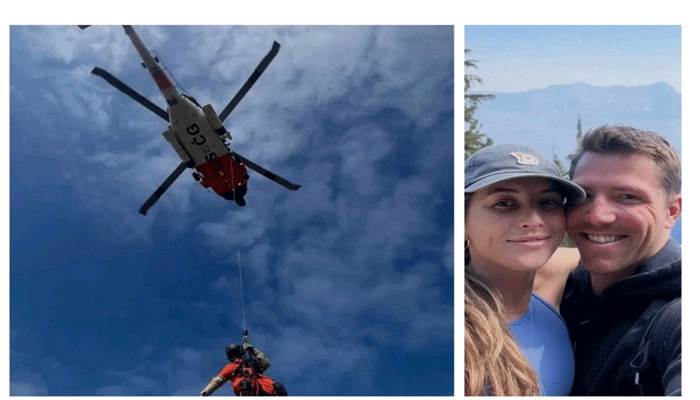
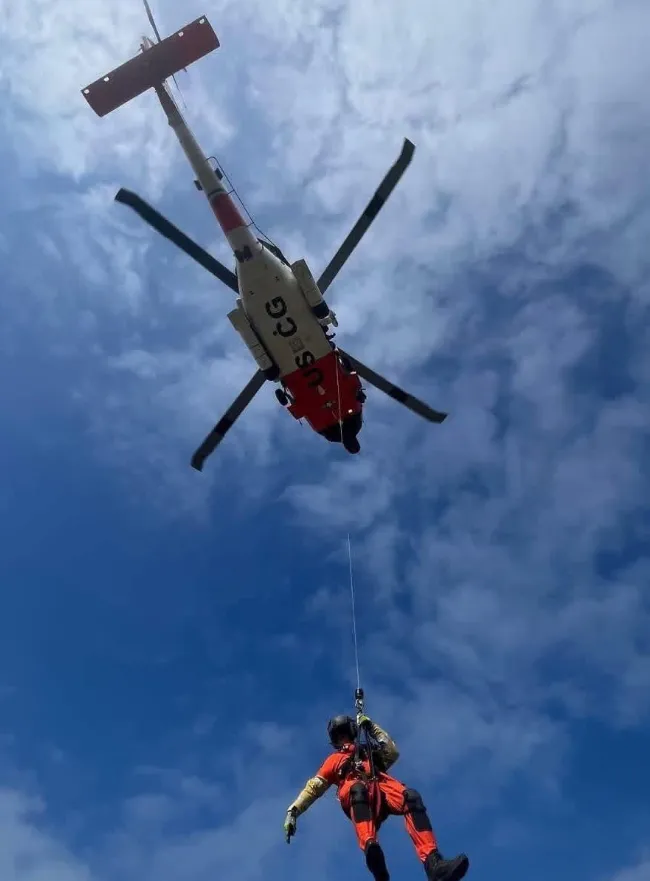
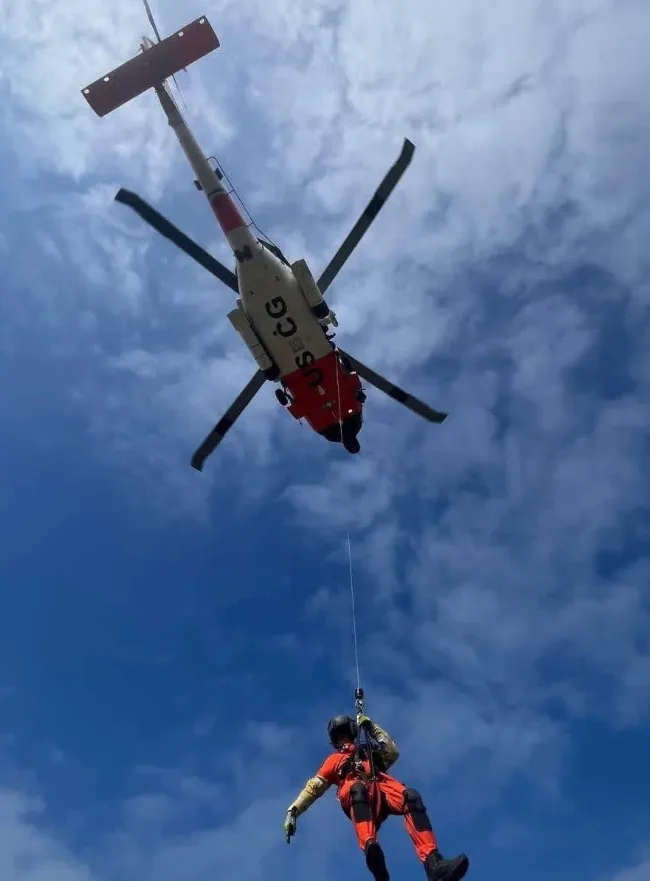
Tyler, a U.S. Coast Guard rescue swimmer, was the kind of man who ran toward danger because someone out there needed help. He was trained to do so, not out of recklessness, but because he had a calling to save others. On that fateful day, he was called into a dangerous rescue mission off the coast of Washington, over 125 miles from Cape Flattery. A cargo ship carrying a stroke victim was stranded, and Tyler, part of the aircrew, was sent to the site to help.
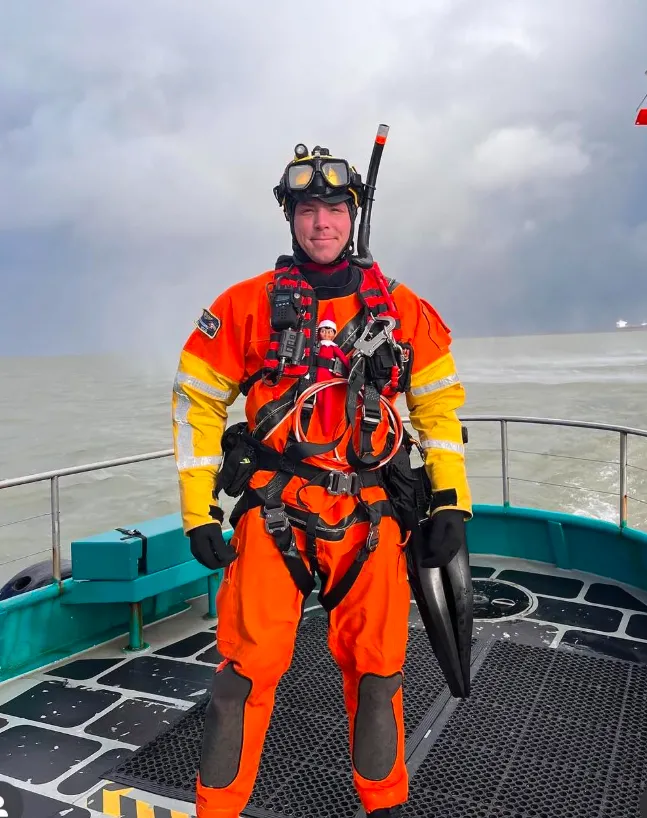
He wasn’t just any rescuer; he was the kind of person who defined courage not by grand gestures, but by quiet acts of heroism. He joined the Coast Guard in 2022, and from the start, his strength and discipline were evident. But more than that, Tyler had the rare instinct to place the needs of others before his own.
By April 2024, Tyler had been stationed at Coast Guard Air Station Astoria, a base that had become more than just a place of duty. It was a place where every action was measured in waves, rotor blades, and decisions made in the blink of an eye.
Tyler’s mission that day was a medical evacuation. The situation was dire; the cargo ship’s crew was struggling to keep the stroke victim stable. The sea was cold and unforgiving, the weather unpredictable, but Tyler did not hesitate. He was there to help, to save someone who was in need. His sense of duty to others was unshakable.
But somewhere in that mission, something went terribly wrong. The exact details are still under investigation, but what we do know is enough to break hearts. Tyler was injured during the helicopter rescue operation. How it happened remains unclear, but the injury was catastrophic. He was flown to Victoria General Hospital in British Columbia, where doctors worked tirelessly to stabilize him.
From there, Tyler was transferred to Joint Base Lewis-McChord in Washington, where he remained on life support. His family, friends, and fellow Coast Guard members gathered around him, holding onto hope.
Hospitals are a place where silence feels different. It’s a silence of machines breathing for bodies, of whispered updates in hallways, and of prayers that are hard to finish. For Tyler’s family, those days must have felt like an eternity. Each hour stretched painfully, as they balanced between medicine and miracles, between hope and heartache.
Among them was Cassandra Weaver, Tyler’s girlfriend, the woman who had always pictured a life with him, even before the hospital room became the place where their love was put to its ultimate test. Three days before Tyler passed, Cassandra shared a tender and heartbreaking truth. They had talked about getting married for a long time. It was not a sudden thought, nor was it born out of tragedy. It was a future they had quietly built with shared dreams, everyday moments, and the certainty that they would grow old together.
Cassandra didn’t care whether Tyler proposed with a ring pop; she just wanted him. That line, simple yet profound, spoke volumes about the depth of their connection. It wasn’t about grand gestures or perfect moments—it was about Tyler himself, the man she loved.
But Tyler, being the romantic he was, wanted to do things right. He had imagined a special proposal, one that would be worthy of the life they dreamed of sharing. And unknown to Cassandra, Tyler had already been planning to ask her to marry him. He was preparing for the perfect moment.
Yet, life had other plans. In the cruelest twist of fate, Tyler never got the chance to make the proposal himself. But in a moment of deep love and loss, his family honored his intention. With Tyler’s father by his bedside, the proposal was made on his behalf.
A ring, which Tyler had intended to give himself, was placed on Cassandra’s hand by his father. It was not the perfect proposal they had imagined, but in that moment, it was more than enough. Cassandra said yes.
No grand venue, no sunset beach, no candlelit dinner could have made that moment more sacred. Because what happened in that hospital room was not just a proposal—it was a vow. It was love spoken in the shadow of loss, a commitment made despite the knowledge that life might not unfold as they had hoped.
In that room, Cassandra said yes, not to a perfect fantasy, but to the man she loved. She said yes to the life they had envisioned, even as she faced the brutal truth that their future together might never come to be. She said yes because love, in its purest form, does not disappear just because the future is uncertain.
To stand in that room, holding the hand of the man you love, knowing that he had wanted to be the one to place that ring on your finger, and then to receive it from his father, was an experience too painful to put into words. It was both an engagement and a goodbye, a moment of love that would forever be tied to the memory of the man who had wanted to create that moment.
Heartbreak doesn’t always come as a single blow. Sometimes it arrives in a mix of beauty and pain, a bittersweet combination that makes it almost impossible to bear. In that room, surrounded by grief, there was still love. There was still tenderness. And there was still the sacred instinct to fulfill Tyler’s wishes, even when he could no longer speak them aloud.
Tyler’s life didn’t unravel in selfishness or recklessness. It was taken in service to others, in the act of saving a stranger’s life. He died doing what he had always done—answering the call to help, to rescue, to save.
On Thursday night, the Coast Guard confirmed that Tyler Jaggers had passed away from the injuries he sustained during the rescue mission. He died with his family and fellow Coast Guard members by his side.
Tyler may have died in the line of duty, but he did not die alone. That, perhaps, is the most important thing to remember. He was surrounded by those who knew him best—those who had heard his laugh, understood his dreams, and loved him unconditionally.
Tyler’s death was a loss to the Coast Guard community, but to his family, it was a personal and devastating blow. They lost not just a service member, but a son, a brother, and a loved one whose presence in their lives could never be replaced by medals or ceremonies.
For Cassandra, the pain was even more profound. She was now the fiancée of a man she had once envisioned a life with, a woman who had said yes in a hospital room to a love that was already slipping away.
That kind of heartbreak cannot be easily explained. It cannot fit neatly into language. But what Tyler and Cassandra’s story shows is that love endures, even when the future becomes unbearable.
Tyler’s story is a reminder of what true service means—not just in terms of duty, but in the willingness to give everything for others. He was a rescue swimmer, and rescue swimmers don’t get to choose the easy missions. They go into danger because others cannot survive without their help. Tyler did just that, and in the end, he gave everything.
His legacy is not just in his service but in the love he shared with the people who mattered most. He may not have had the chance to propose as he had planned, but his love still found a way to be spoken.
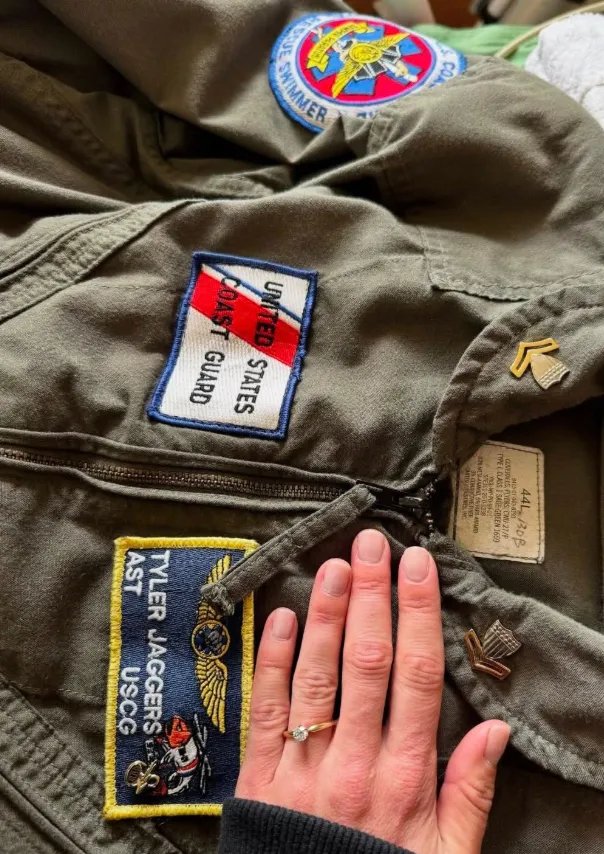
Tyler Jaggers didn’t get the ending he deserved. He deserved to come home. He deserved the life he had been moving toward. But even though that life was cut short, the love he had given will never be erased.
Tyler’s story is not just one of bravery and sacrifice—it is also one of love that transcended tragedy. It is a reminder that even in the face of the most heart-wrenching moments, love still finds a way to endure.
Tyler will be remembered not only as a hero but as a man who loved deeply, who gave everything for others, and whose legacy will live on in the hearts of those who knew him.